On 13 November 2025, several civil society organisations held a silent protest outside the Palais de Justice in Brussels to draw attention to the shortage of reception places for third-country nationals. Participants, including advocates, volunteers, and citizens, brought sleeping bags to symbolise people forced to sleep outdoors. The demonstration called for urgent measures to ensure that all individuals entitled to accommodation can access it.
Read more
Main Theme: Reception
Keywords: reception crisis, reception capacity, reception place, shortage

Belgium has laid the first stone of a new short-stay departure centre in Steenokkerzeel, aimed at housing individuals in irregular stay pending return. The 50-place facility is scheduled to open by the end of 2026. It forms part of a broader plan to expand and improve the country’s closed centres.
Read more
Main Theme: Return & Readmission
Keywords: closed centre, construction
The EMN Steering Board has voted on the topics to be analysed in studies and informs in 2026. In total, two studies and eight Informs will be developed next year. A Belgian proposal entitled "Enhancing Identity Management and Fraud Prevention in Migration Processes" was ranked first following the vote.
Read more
Main Theme: Cross-sectional, Asylum, Migration
Keywords: European Migration Network, study topic
The European Commission has launched the first Annual Migration Management Cycle under the Pact on Migration and Asylum. The cycle provides an annual overview of migration and asylum in the EU and identifies pressures on Member States. It includes the European Annual Asylum and Migration Report, a Commission decision on Member States’ migratory situations, and a proposal for the Annual Solidarity Pool.
Read more

From 3 to 7 November 2025, the Group of Experts on Action against Trafficking in Human Beings (GRETA) conducted an evaluation visit to Belgium under the fourth cycle of its monitoring of the Convention on Action against Trafficking in Human Beings. The evaluation focuses on vulnerabilities to trafficking, the measures taken to prevent and detect them, support victims, and sanction perpetrators, with particular attention to the role of information and communication technologies.
Read more

The Belgian Council of Ministers has approved a draft law providing for the possibility of imposing lifetime entry bans on individuals who pose a genuine security threat, based on an assessment by the Coordinating Body for Threat Analysis (OCAM). The measure is intended to implement a commitment set out in the government agreement and envisage amendments to several provisions of the Aliens Act of 15 December 1980. The draft law will now be submitted to the Council of State for its opinion.
Read more
Main Theme: Borders & Visa
Keywords: entry ban, security threat, terrorism
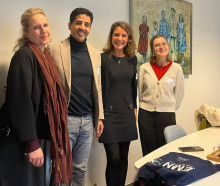
On 4 November 2025, two EMN Belgium colleagues met with the General Delegates for Children’s Rights, Caroline Vrijens (Flanders) and Souleymane Laqdim (French Community), accompanied by two of Ms Vrijens’ team members. The meeting was highly cordial and provided an opportunity for open discussion and in-depth dialogue on shared concerns and potential avenues for cooperation. Key topics included the challenges faced by migrant children in Belgium.
Read more
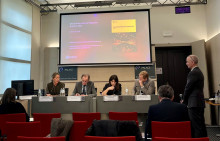
At the occasion of the publication of the 49th edition of the International Migration Outlook, the OECD organised a launch event including a press conference and a high-level panel discussion. Discussions revolved around the key findings of the report and the future outlook of migration in the EU.
Read more
Main Theme: Cross-sectional, Asylum, Migration
Keywords: international migration trend

The Office of the Commissioner General for Refugees and Stateless Persons (CGRS) is resuming the processing of applications for international protection from Syrian nationals from 1 November 2025. The suspension, in place since 9 December 2024, was implemented to gather sufficient information on the security situation in Syria.
Read more
Main Theme: International Protection
Keywords: application for international protection, Syria
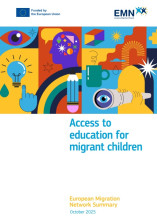
On 31 October 2025, the European Migration Network (EMN) released its latest Inform highlighting how 25 EMN Member and Observer Countries are addressing access to education for migrant children. The report shows that nearly all participating countries have adopted national measures to support linguistic, social, and emotional integration in schools. Despite persistent barriers, such as language difficulties and unequal learning outcomes, good practices are emerging across Europe, according to this Inform.
Read more
Main Theme: Integration
Keywords: migrant child, access to education, inclusion, language learning, psychosocial support, parental involvement

On Monday, Belgium repatriated 75 people from the Gaza Strip. They arrived at Ostend airport in the afternoon. Belgian authorities report that around 850 eligible individuals have already been evacuated from Gaza. About 150 people remain on the list awaiting evacuation.
Read more
Main Theme: Family reunification
Keywords: Gaza, evacuation, family member, Belgian, refugee, stateless persons
Belgium and Morocco have signed an agreement to strengthen cooperation across multiple areas, aiming for concrete and measurable results. The deal covers security, justice, economic development, and migration. Belgium has also committed to supporting Morocco’s autonomy proposal for Western Sahara, a region that has been at the centre of an international dispute for nearly fifty years.
Read more
Main Theme: Return & Readmission
Keywords: bilateral cooperation, Belgium, Morocco, irregularly staying third-country national

On 20 October 2025, around 200 Belgian actors and European partners gathered to mark thirty years of the fight against human trafficking in Belgium, highlighting both the strengths of a multidisciplinary and specialised system based on collaboration and information sharing, and the ongoing challenges, such as limited resources, difficulties in securing compensation for victims, the protection of minors, and adapting to emerging forms of trafficking.
Read more

On 16 October 2025, twenty EU Member States signed a joint letter urging the European Commission to take coordinated steps to enable voluntary and forced return to Afghanistan. The initiative, led by Belgian Minister for Asylum and Migration Anneleen Van Bossuyt, calls for a coherent European approach to address cases of Afghan nationals residing irregularly in the EU, particularly those posing a threat to public order or national security. The signatories stress that credible migration policies require effective return mechanisms and call for tangible progress by the end of the year.
Read more
Main Theme: Return & Readmission
Keywords: Afghanistan, voluntary return, forced return, public order, national security
In March 2025, the European Commission proposed a regulation establishing a common return system for third-country nationals staying illegally in the EU. Médecins du Monde and PICUM have published a report highlighting potential risks associated with the proposal, particularly concerning access to healthcare and data protection. The report outlines how the proposal may affect the rights of individuals, including vulnerable groups, and raises ethical concerns for professionals. The organisations call on EU lawmakers to ensure that the regulation respects fundamental rights and medical ethics.
Read more

From 13 to 18 October, PAG-ASA organises a series of activities in Brussels as part of the Human Trafficking Awareness Week. The events aim to raise awareness of human trafficking, its impact on victims, and the Belgian protection framework. Activities include exhibitions, film screenings, and professional trainings. EMN Belgium attended one of the film screenings, reflecting on forms of labour exploitation and the challenges involved in assisting and upholding the rights of victims.
Read more
Main Theme: Smuggling & Trafficking
Keywords: human trafficking awareness week, victim of trafficking, labour exploitation, labour right

Over 70 specialists from 26 countries took part in a Europol-supported hackathon aimed at detecting online activities linked to human trafficking. The operation, led by the Netherlands with the support of Germany and the United Kingdom, identified over 30 potential victims and more than 30 suspected perpetrators. The Belgian authorities also took part in this fourth edition of the EMPACT Trafficking in Human Beings Hackathon, which targeted both sexual and labour exploitation online.
Read more
Main Theme: Smuggling & Trafficking
Keywords: EMPACT, hackathon, trafficking victim, sexual exploitation, labour exploitation, online

On 12 October 2025, Belgium began implementing the European Entry-Exit System (EES) for third-country nationals travelling to Europe for short stays. Brussels Airport and Brussels-Midi station (for Eurostar passengers) have planned the necessary infrastructure and procedures to support border registration. EU and Schengen-area travellers are not affected. Full implementation across Europe is scheduled for 10 April 2026.
Read more
Main Theme: Borders & Visa
Keywords: entry exit system, Brussels Airport, border control, non-EU national, Eurostar passenger
According to Statbel, the Belgian statistical office, 6.535 persons obtained Belgian nationality in July 2025. The main countries of origin of people who acquired Belgian nationality in July are Morocco, Romania, Syria, Turkey and Afghanistan.
Read more
Main Theme: Data & Statistics, Citizenship & Nationality
Keywords: Belgian nationality, access to nationality
In the case of Sahiti v. Belgium, a Kosovar national has waited over 15 years for a final decision on his medical residence permit application in Belgium. He claimed that his health condition and the procedural delays exposed him to serious risks. The European Court of Human Rights found a violation of Article 8 of the Convention due to the prolonged uncertainty and precarious situation. The Court instructed Belgium, under Article 46, to ensure that a final decision is issued promptly while respecting domestic law.
Read more
Main Theme: Regularization
Keywords: application for a residence permit, medical ground, excessive delay, article 8 ECHR

Belgian Ministers of Justice and Asylum and Migration, Annelies Verlinden and Anneleen Van Bossuyt, visited Albania and Kosovo on 6–8 October 2025. Their discussions addressed migration management, prison overcrowding, and bilateral cooperation in justice and security. Meetings involved national authorities and highlighted ongoing collaboration between Belgium and the two countries.
Read more
Main Theme: Irregular Migration, Return & Readmission, Smuggling & Trafficking
Keywords: Belgium, Albania, Kosovo, cooperation, identification, forced return, detainee
The European Parliament has approved legislation making it easier to suspend visa-free travel to the EU in cases of security risks, hybrid threats or human rights breaches. The reform introduces new grounds for suspension, including the use of “golden passports” and violations of international law, and allows targeted suspensions for government officials deemed responsible for abuses. The agreement will take effect once formally adopted by the Council.
Read more
Main Theme: Borders & Visa
Keywords: visa suspension mechanism, new ground for suspension, targeted suspension, threshold for action
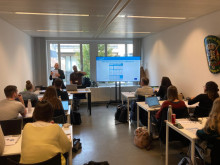
On 2 October 2025, EMN Belgium held an information session for new visa officers of the Federal Public Service Foreign Affairs. During this information session, the Belgian institutional framework for migration and asylum policies was presented.
Read more
Main Theme: Borders & Visa
Keywords: family reunification visa, visa code, student visa
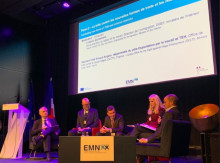
On 2 October 2025, EMN France brought together numerous French and European stakeholders to take stock of efforts to combat human trafficking at both national and European levels. The event provided an opportunity to identify emerging forms of trafficking and to examine international cooperation tools such as Common Operational Partnerships and EMPACT-coordinated actions.
Read more
On 30 September 2025, seven organisations, including humanitarian groups, published the fifth edition of their Belgian report on the country’s non-reception policy and its effects on asylum seekers. The report provides data on reduced access to accommodation and essential services during the first half of 2025, following policy changes introduced by the coalition government formed in January. It documents impacts on housing, healthcare, mental health, and legal support for people seeking international protection.