Publication date: 10 April 2026
This ad hoc query examines whether EMN Member Countries plan to change their age assessment procedures in light of Article 25 of Regulation (EU) 2024/1348 on multidisciplinary age assessments. It explores which authorities or external providers are involved in the procedure, and how multidisciplinary teams carry out the assessment in practice. The query also covers how applicants are interviewed and how conclusions are drawn and communicated.
Read more
Main theme: Vulnerable groups, International Protection
Publication Type: Ad Hoc Queries
Keywords: applicant for international protection, minor, age assessment, multidisciplinary approach
Publication date: 18 March 2026
This ad hoc query examines whether EMN Member and Observer Countries have age assessment procedures in place, how these procedures are conducted, and which actors are responsible. It also explores the challenges encountered and how they are addressed. Finally, it examines whether the respondent countries plan to introduce a new procedure or amend an existing one in the near future.
Read more
Main theme: Vulnerable groups, International Protection, Return & Readmission
Publication Type: Ad Hoc Queries
Keywords: minor, age assessment, medical examination, multidisciplinary approach
Publication date: 04 March 2026
The report compiles available figures for the period 2015–2024 and examines how data are recorded, shared and used. It provides a clearer statistical basis for understanding the situation of minors at risk of trafficking and aggravated forms of smuggling, while identifying structural gaps in current data systems.
Read more
Main theme: Vulnerable groups, Data & Statistics, Smuggling & Trafficking
Publication Type: Report
Keywords: victim of trafficking, victim of smuggling, minor, data collection, figures
Publication date: 15 October 2025
This ad hoc query maps the specific provisions concerning separated migrant children in the legislation of the Member States, including the possibility for the accompanying adult to be recognised as responsible for, or as the representative of, the accompanied separated child. It also covers the arrangements in place to preserve the relationship between the separated child and the accompanying adult, as well as the monitoring of separated children.
Read more
Main theme: Vulnerable groups
Publication Type: Ad Hoc Queries
Keywords: separated child, migrant child, care, representation, family member
Publication date: 11 October 2025
This ad hoc query examines where applicants for international protection (and beneficiaries of temporary protection) with special needs are accommodated. When accommodated in regular reception centres, the query explores the services provided in-house and the professionals employed in this regard. When applicants are accommodated in specialised facilities, the placement procedure is examined, including which stakeholders are involved and their respective roles and responsibilities. It also covers how these financial costs are borne.
Read more
Main theme: Vulnerable groups, Reception
Publication Type: Ad Hoc Queries
Keywords: applicant for international protection, beneficiary of temporary protection, special needs, physical health, mental health
Publication date: 13 May 2025
This EMN Inform maps how EMN Member Countries organise their first instance appeals procedures and examine operational changes implemented between 2018 and 2024. It delivers a comprehensive comparative analysis, reflecting on procedural safeguards, key challenges, and good practices observed across the EU.
Read more
Main theme: Vulnerable groups, International Protection
Publication Type: Informs
Keywords: right to an effective remedy, asylum procedure, procedure for international protection, first instance, appeal procedure, time limit, suspensive effect, procedural guarantee
Publication date: 17 April 2025
This ad hoc query explores how EMN Member and Observer Countries support legally residing migrant children (third-country nationals) in adapting to the cultural environment of primary and secondary schools. It focuses on national measures, including language support, teacher training, targeted initiatives, and the use of specific educational tools. It also examines challenges, good practices, and whether countries monitor migrant children's academic performance.
Read more
Main theme: Integration, Vulnerable groups
Publication Type: Ad Hoc Queries
Keywords: migrant child, school performance, adaptation, language learning
Publication date: 16 September 2024
In collaboration with the Red Cross EU Office and the Swedish Red Cross, this Inform provides an overview of EMN Member and Observer Countries’ guidance and training on early detection and identification of presumed victims of torture or other forms of inhuman or degrading treatment or punishment in international protection procedures. It outlines procedural safeguards and guidance for asylum authorities when requesting medico-legal documentation in international protection applications, and it also details practices for identifying victims among beneficiaries of temporary protection to provide medical care, in line with the Temporary Protection Directive.
Read more
Main theme: Vulnerable groups, International Protection, Temporary protection
Publication Type: Informs
Keywords: victim, torture, ill-treatment, applicant for international protection, beneficiary of temporary protection, Training, medico-legal documentation, mental health, credibility assessment

Publication date: 20 June 2024
In its annual report 2023, Fairwork Belgium reports on requests for assistance received in 2023 and provides further details on the profiles of the people concerned and the phenomena and abuses of which they are victims. Specific attention is paid to inter alia the misuse of the single permit system, the exploitation of posted workers, the false self-employment of applicants for international protection, and the au-pair employment as domestic worker.
Read more
Main theme: Vulnerable groups
Publication Type: Report
Keywords: foreign workers, undocumented worker, exploitation, domestic worker, au-pair
Publication date: 25 April 2024
Through this ad hoc query, the Slovak Republic collects information on EMN Member and Observer countries' experiences in recording data on the vulnerability of applicants for international protection and generating statistical reports related to vulnerability.
Read more
Main theme: Vulnerable groups, International Protection
Publication Type: Ad Hoc Queries
Keywords: applicant for international protection, vulnerability, data collection
Publication date: 13 October 2023
This ad hoc query focuses on the early detection and identification of presumed victims of torture or other forms of inhuman or degrading treatment or punishment in international and temporary protection procedures. It inter alia collects information from EMN Member Countries on guidance and training available to competent authorities, on referrals to medico-legal assessments and use of medico-legal documentation as well as on challenges and good practices in this field.
Read more
Main theme: Vulnerable groups, International Protection, Temporary protection
Publication Type: Ad Hoc Queries
Keywords: torture, ill-treatment, victim, international protection, temporary protection
Publication date: 05 September 2023
In the Netherlands, there is a special policy applicable to third-country national children based on a family supervision order (child protection order) that is imposed by the juvenile court. The Dutch authorities launched this query because they want to know whether it is possible for a minor third-country national who is covered by a similar order to receive a residence permit in other Member States.
Read more
Main theme: Vulnerable groups
Publication Type: Ad Hoc Queries
Keywords: accompanied children, family supervision order, protection order, vulnerable persons
Publication date: 01 September 2023
The Luxembourg Ombudsman for Children and Youth (OKaJu), together with UNICEF Luxembourg, is carrying out research on the situation of unaccompanied minors (UAMs) in Luxembourg. In this context, they would like to collect information on good practices in other EU Member States with a focus on the guardianship of UAMs.
Read more
Main theme: Vulnerable groups, International Protection
Publication Type: Ad Hoc Queries
Keywords: guardianship
Publication date: 20 June 2023
The Belgian authorities are looking to improve/review the special residence procedure for unaccompanied foreign minors, known as the Best Interest Procedure. In this context, Belgium launched three ad hoc queries to seek information from other Member States on (i) similar residence procedures specifically for UAMs, (ii) procedures followed in case return to the country of origin is considered and (iii) steps taken to implement return decisions.
Read more
Main theme: Vulnerable groups, International Protection
Publication Type: Ad Hoc Queries
Keywords: residence procedure, unaccompanied minors
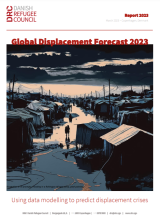
Publication date: 13 March 2023
The DRC Global Displacement Forecast 2023 Report, projects that the total number of people displaced will increase by 1.9 million in 2023 and an additional 3.5 million in 2024. This means that by 2024, the number of displaced people will have more than doubled since 2015 and increased by more than 50 million.
Read more
Publication date: 03 March 2023
The Dutch National Contact Point (NCP) to the European Migration Network launched an ad hoc query on the existing data on unaccompanied minors (UAMs) outside of international protection procedures in other Member Countries. With this query, the Dutch NCP wanted to get a better picture of the total influx of UAMs in a European perspective.
Read more
Main theme: Vulnerable groups, Data & Statistics, International Protection
Publication Type: Ad Hoc Queries
Keywords: unaccompanied minors, data collection
Publication date: 22 December 2022
This ad hoc query, launched by Luxembourg, examines what guidelines, procedures, and possible best practices are in place when LGBTIQ+ individuals are detained.
Read more
Main theme: Vulnerable groups, Return & Readmission
Publication Type: Ad Hoc Queries
Keywords: detention, vulnerable persons
Publication date: 24 November 2022
What measures, structures and systems are in place in the EU Member States and Norway to provide transitional support to unaccompanied minors after reaching the age of majority? This new EMN inform investigates the transition that unaccompanied minors face as they age out of care systems in the EU and Norway.
Read more
Publication date: 18 November 2022
This discussion paper stands against the immigration detention of minors, even used as a measure of last resort, and calls for implementing meaningful alternatives to detention during return procedures. It also recommends mandating the collection of data on this matter.
Read more
Main theme: Vulnerable groups
Publication Type: Opinion
Keywords: alternatives to detention, child detention, return directive
Publication date: 25 October 2022
Unaccompanied minors who have little or no perspective of receiving a residence permit within EU Member States, may have co-existing problems such as mental health issues or substance addiction. This ad hoc query examines how EU Member States deal with this specific group and how they could improve the reception and supervision of these young persons.
Read more
Main theme: Vulnerable groups, Reception, International Protection, Irregular Migration
Publication Type: Ad Hoc Queries
Keywords: unaccompanied minors, mental health, criminality
Publication date: 02 February 2022
How do Member States and Norway ensure the care and protection of children who arrive in their countries, and what measures are in place in relation to guardianship, education, access to justice, and more? This new report from the European Migration Network (EMN) provides an overview of the progress made during 2020 in the implementation of the recommendations laid out in the 2017 Communication on the protection of children in migration and is the second edition of a series of reports developed by the EMN.
Read more
Main theme: Vulnerable groups
Publication Type: EMN Reports & Studies
Publication date: 10 March 2021
How do Member States ensure the protection of children in migration procedures, and what measures are in place in relation to guardianship, accommodation, transition into adulthood, and many more? This report from the European Migration Network (EMN), published on 10 March 2021, maps the state of implementation in 2019 of the recommendations laid down in the 2017 European Commission Communication on the protection of children in migration.
Read more
Main theme: Vulnerable groups
Publication Type: EMN Reports & Studies
Keywords: children, unaccompanied minors, protection
Publication date: 24 September 2020
24 Member States provided information on national laws and practices regarding the detention of families with children in migration procedures, the possibility to detain one of the parents and detention in the context of the age assessment process.
Read more
Main theme: Vulnerable groups, Return & Readmission
Publication Type: Ad Hoc Queries
Keywords: detention, families
Publication date: 26 May 2020
These studies explore the types of national protection statuses existing in Belgium and the EU, as well as their key characteristics in terms of procedures and rights.
Read more
Main theme: Regularization, Vulnerable groups
Publication Type: Thematic Studies
Keywords: protection status
Publication date: 08 April 2020
The phenomenon of unaccompanied migrant children going missing has increasingly been in the focus of public attention in the EU. Several international organisations and European NGOs have raised concerns that the disappearance of unaccompanied minors is not always addressed in an effective manner. What policies and procedures are in place to register and follow up on cases of missing children, and how is data on missing children collected in EU Members States, Norway and the UK? The new Inform from the European Migration Network (EMN), in collaboration with international organisations, EU agencies and NGOs, offers a comprehensive picture of how the phenomenon is tackled currently in the EU.