Publication date: 04 March 2026
The report compiles available figures for the period 2015–2024 and examines how data are recorded, shared and used. It provides a clearer statistical basis for understanding the situation of minors at risk of trafficking and aggravated forms of smuggling, while identifying structural gaps in current data systems.
Read more
Main theme: Vulnerable groups, Data & Statistics, Smuggling & Trafficking
Publication Type: Report
Keywords: victim of trafficking, victim of smuggling, minor, data collection, figures
Publication date: 08 December 2025
Myria, the Federal Migration Centre and independent national rapporteur on trafficking in human beings, published its independent and public annual report “Victims: Seeing Them and Listening to Them” on 8 December 2025. The report draws attention to the psychological vulnerabilities of victims of human trafficking and calls, inter alia, for strengthened training and specialisation of professionals on the specific psychological vulnerabilities and needs of these victims.
Read more
Main theme: Smuggling & Trafficking
Publication Type: Report
Keywords: victim of trafficking, victim of smuggling, psychological vulnerability
Publication date: 14 August 2014
This Inform summarizes the main findings of the corresponding EMN study, which aimed at examining whether and how victims of trafficking are detected/identified in international protection and forced return procedures and further referred to specific procedures.
Read more
Main theme: Vulnerable groups
Publication Type: Informs
Keywords: detection, identification, referral, victim of trafficking

Publication date: 31 March 2014
This focussed study examines the mechanisms for detection, identification and referral of (potential) victims of trafficking in human beings in international protection (including Dublin) and forced return procedures.
Read more
Main theme: Smuggling & Trafficking
Publication Type: Thematic Studies
Keywords: detection, identification, national referral mechanism, referral, victim of trafficking
Publication date: 13 August 2013
Based on more than 100 interviews with service providers, policymakers and former victims of trafficking, the study analyses and compares the integration measures dedicated to victims of trafficking in Belgium, France, Hungary, Italy and the United Kingdom.
Read more
Main theme: Integration, Smuggling & Trafficking
Publication Type: Study
Keywords: victim of trafficking, Integration
Publication date:
Myria has released its first comprehensive mapping of quantitative data on minor victims of human trafficking and aggravated forms of smuggling in Belgium. The report aims to provide a clearer statistical basis for understanding the situation of minors at risk, while also highlighting structural gaps in current data collection and sharing practices.
Read more
Main theme: Vulnerable groups, Data & Statistics, Smuggling & Trafficking
Keywords: victim of trafficking, victim of smuggling, minor, data collection, figures
Publication date:
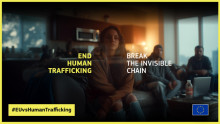
The European Commission has launched a new EU-wide awareness campaign to address human trafficking. Under the slogan “End human trafficking. Break the invisible chain”, the initiative seeks to make this often hidden crime more visible to the public. Around 10.000 victims are identified each year across the European Union, while many more remain undetected. The campaign calls on citizens to recognise the signs of exploitation, report concerns and help support victims.
Read more
Main theme: Smuggling & Trafficking
Keywords: awareness campaign, victim of trafficking, signs, indicators, national hotline

Publication date:
On 20 October 2025, around 200 Belgian actors and European partners gathered to mark thirty years of the fight against human trafficking in Belgium, highlighting both the strengths of a multidisciplinary and specialised system based on collaboration and information sharing, and the ongoing challenges, such as limited resources, difficulties in securing compensation for victims, the protection of minors, and adapting to emerging forms of trafficking.
Read more
Publication date:
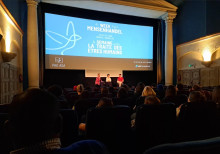
From 13 to 18 October, PAG-ASA organises a series of activities in Brussels as part of the Human Trafficking Awareness Week. The events aim to raise awareness of human trafficking, its impact on victims, and the Belgian protection framework. Activities include exhibitions, film screenings, and professional trainings. EMN Belgium attended one of the film screenings, reflecting on forms of labour exploitation and the challenges involved in assisting and upholding the rights of victims.
Read more
Main theme: Smuggling & Trafficking
Keywords: human trafficking awareness week, victim of trafficking, labour exploitation, labour right
Publication date:
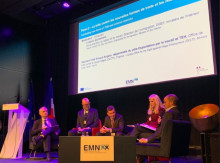
On 2 October 2025, EMN France brought together numerous French and European stakeholders to take stock of efforts to combat human trafficking at both national and European levels. The event provided an opportunity to identify emerging forms of trafficking and to examine international cooperation tools such as Common Operational Partnerships and EMPACT-coordinated actions.
Read more
Publication date:
This conference will explore three main areas: national policies and victim protection across Member States, strategies to address new forms of trafficking and dismantle criminal networks, and perspectives on international cooperation tools related to security. The event will bring together policymakers, experts, and civil society to discuss these challenges. Participants will also hear about the EU Strategy on combating trafficking in human beings.
Read more
Publication date:
In a coordinated effort to combat human trafficking, Europol hosted an international operational action from 25 to 28 February 2025, bringing together experts in analysis, OSINT (Open Source Intelligence), and investigations from 12 countries, including Belgium. The operation focused on detecting and disrupting human trafficking networks operating online, particularly those exploiting Ukrainian nationals.
Read more
Main theme: Smuggling & Trafficking
Keywords: sexual exploitation, Ukrainian, trafficker, victim of trafficking, digital technology

Publication date:
The European Commission published its fifth report on the progress made in the EU in combatting Trafficking in Human Beings. The report outlines, inter alia, that in 2021-2022, the majority of victims were non-EU citizens (54%). This demonstrates a shift compared to 2019-2020, when the majority of registered victims were EU citizens (55%).
Read more
Publication date:
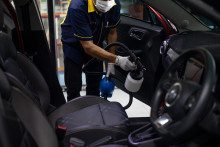
Tuesday 30 July is the International Day against Trafficking in Persons. On this occasion, the Halle-Vilvoorde public prosecutor's office, together with the Labour Auditor's Office, invite as many people as possible to be vigilant and to report suspicious situations via the Belgian helpline for victims of human trafficking or via the new telephone number: 078/055.800.
Read more
Main theme: Smuggling & Trafficking
Keywords: victim of trafficking, national helpline
Publication date:
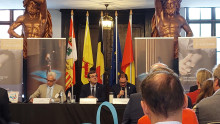
Today, the Minister of Justice, Mr. Vincent Van Quickenborne, officially launched the campaign in Liège. On this occasion, he inaugurated the new telephone number - 078 055 800 - of the Belgian helpline for victims of human trafficking.
Read more
Main theme: Smuggling & Trafficking
Keywords: blue heart campaign, victim of trafficking
Publication date:
18 October is EU Anti-Trafficking Day. To mark the Eight EU Anti trafficking Day, the European Commission has published a package on Trafficking in Human Beings and civil society organizations have launched a European campaign against human trafficking and labour exploitation.
Read more
Main theme: Smuggling & Trafficking
Keywords: anti-trafficking day, campaign against trafficking in human beings, victim of trafficking
Publication date:
Today the Royal Decree, signed by Ms Maggie de Block and Ms Annemie Turtelboom on 18 April 2013, recognizing Pakoke, Pag-Asa and Sürya as specialized centres for the reception of victims of trafficking in human beings, was published in the Belgian Official Gazette.