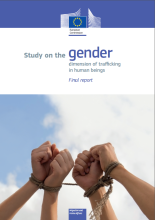
Publication date: 28 April 2016
The purpose of this study is to contribute to the identification and understanding of what it means to be ‘taking into account the gender perspective, to strengthen the prevention of this crime and protection of the victims thereof’ as required in the Art 1 of EU Directive 2011/36/EU.
Read more
Main theme: Vulnerable groups, Smuggling & Trafficking
Publication Type: Study
Keywords: gender, sexual exploitation

Publication date: 29 October 2015
This new EASO country of origin information (COI) report focuses on the modus operandi of the trafficking of Nigerian women to Europe for the purpose of prostitution and the situation of victims returning to Nigeria.
Read more
Main theme: Smuggling & Trafficking
Keywords: Nigeria, sexual exploitation

Publication date:
Over 70 specialists from 26 countries took part in a Europol-supported hackathon aimed at detecting online activities linked to human trafficking. The operation, led by the Netherlands with the support of Germany and the United Kingdom, identified over 30 potential victims and more than 30 suspected perpetrators. The Belgian authorities also took part in this fourth edition of the EMPACT Trafficking in Human Beings Hackathon, which targeted both sexual and labour exploitation online.
Read more
Main theme: Smuggling & Trafficking
Keywords: EMPACT, hackathon, trafficking victim, sexual exploitation, labour exploitation, online
Publication date:
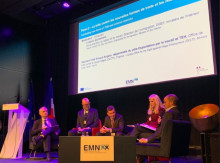
On 2 October 2025, EMN France brought together numerous French and European stakeholders to take stock of efforts to combat human trafficking at both national and European levels. The event provided an opportunity to identify emerging forms of trafficking and to examine international cooperation tools such as Common Operational Partnerships and EMPACT-coordinated actions.
Read more
Publication date:
Thirty-eight members of a Belgian-Chinese human trafficking network have been formally referred by the Ghent chamber of indictment to the correctional court. They face multiple charges including sexual exploitation, trafficking, pimping, money laundering, and document forgery. The Federal Migration Centre, Myria, has joined the case as a civil party, representing the interests of victims.
Read more
Main theme: Smuggling & Trafficking
Keywords: victims of human trafficking, criminal network, sexual exploitation

Publication date:
In a coordinated effort to combat human trafficking, Europol hosted an international operational action from 25 to 28 February 2025, bringing together experts in analysis, OSINT (Open Source Intelligence), and investigations from 12 countries, including Belgium. The operation focused on detecting and disrupting human trafficking networks operating online, particularly those exploiting Ukrainian nationals.
Read more
Main theme: Smuggling & Trafficking
Keywords: sexual exploitation, Ukrainian, trafficker, victim of trafficking, digital technology

Publication date:
The European Commission published its fifth report on the progress made in the EU in combatting Trafficking in Human Beings. The report outlines, inter alia, that in 2021-2022, the majority of victims were non-EU citizens (54%). This demonstrates a shift compared to 2019-2020, when the majority of registered victims were EU citizens (55%).
Read more
Publication date:
EMN Belgium visited the team of DEI Belgium - ECPAT to better understand each other's activities and deepen exchanges and opportunities for cooperation. EMN Belgium, for example, learned more about their work to protect migrant children and their parents in reception centres.
Read more
Main theme: Vulnerable groups
Keywords: migrant child, sexual abuse, sexual exploitation
Publication date:
18 November marks the European Day on the Protection of Children against Sexual Exploitation and Sexual Abuse. Children are the most vulnerable group in society and children who are migrating, especially if unaccompanied, face an increased risk of being subjected to violence, including sexual violence, exploitation, and human trafficking.
Read more
Main theme: Vulnerable groups
Keywords: migrant child, sexual abuse, sexual exploitation
Publication date:
From 2014 to 2023, Esperanto provided shelter and support to 156 foreign minors victims of human trafficking and/or aggravated smuggling. According to Myria, who analysed the figures, just over half of these 156 young people were victims of sexual exploitation or were forced to commit criminal acts.
Read more
Main theme: Smuggling & Trafficking
Keywords: child victim of trafficking, sexual exploitation, economic exploitation, exploitation of begging, Esperanto
Publication date:
An IOM-Harvard report shows that close to half of the child victims of trafficking were being trafficked for forced labour (mainly boys), in a wide range of industries, such as domestic work, begging and agriculture. Sexual exploitation, including through prostitution, pornography, and sexual servitude, is also prominent, affecting 20 per cent of trafficked children, predominantly girls.
Read more
Main theme: Smuggling & Trafficking
Keywords: child trafficking, vulnerability, forced labour, sexual exploitation
Publication date:
On 23 April 2024, the European Parliament voted in favor of an amended Directive concerning trafficking in human beings. The new text broadens the EU’s actions against human trafficking beyond labour and sexual exploitation, and also criminalises new forms of exploitation like forced marriage, illicit adoption, and the exploitation of surrogacy at the EU level.
Read more
Publication date:
Recent Eurostat figures show that in 2022, 10.093 victims of human trafficking were registered in the European Union. There were 8.064 suspected traffickers and 2.097 convicted traffickers. The statistics also shed light on gender distribution among traffickers and victims, as well as exploitation patterns.
Read more
Main theme: Smuggling & Trafficking
Keywords: human trafficking, victims of human trafficking, gender, sexual exploitation, forced labour, Eurostat

Publication date:
As part of an investigation into acts of trafficking in human beings, 30 brothels in the northern district of Brussels have been placed under judicial seal. 25 people were subject to judicial arrest and 23 others were administratively deprived of their liberty.
Read more
Main theme: Smuggling & Trafficking
Keywords: sexual exploitation, human trafficking
Publication date:
The special parliamentary Commission tasked to assess the Belgian legislation and policy on trafficking in and smuggling of human beings adopted today 100 recommendations dealing with various forms of exploitation such as economic exploitation, sexual exploitation, the exploitation of begging, forced criminality, illegal adoption, and forced marriage.
Read more
Publication date:
Today, 30 september, an Inter-Ministerial Conference on the application of the International Convention for the suppression of the traffic in persons and the exploitation of the prostitution of others, by the EU Member States, has taken place in Brussels, at the eve of it's 65th birthday.