
Publication date:
Eurostat released trafficking in human beings statistics, revealing that 10.793 victims were registered in the EU in 2023, an increase of 6.9% compared with 2022 and the highest recorded value in the period 2008-2023. Several countries explained that it is partly reflected through increased attention of the authorities and agencies that fight against trafficking in human beings.
Read more
Main theme: Data & Statistics
Keywords: victims of human trafficking, trafficker, forced labour

Publication date:
An IOM-Harvard report shows that close to half of the child victims of trafficking were being trafficked for forced labour (mainly boys), in a wide range of industries, such as domestic work, begging and agriculture. Sexual exploitation, including through prostitution, pornography, and sexual servitude, is also prominent, affecting 20 per cent of trafficked children, predominantly girls.
Read more
Main theme: Smuggling & Trafficking
Keywords: child trafficking, vulnerability, forced labour, sexual exploitation
Publication date:
On 23 April 2024, the European Parliament voted in favor of an amended Directive concerning trafficking in human beings. The new text broadens the EU’s actions against human trafficking beyond labour and sexual exploitation, and also criminalises new forms of exploitation like forced marriage, illicit adoption, and the exploitation of surrogacy at the EU level.
Read more

Publication date:
Recent Eurostat figures show that in 2022, 10.093 victims of human trafficking were registered in the European Union. There were 8.064 suspected traffickers and 2.097 convicted traffickers. The statistics also shed light on gender distribution among traffickers and victims, as well as exploitation patterns.
Read more
Main theme: Smuggling & Trafficking
Keywords: human trafficking, victims of human trafficking, gender, sexual exploitation, forced labour, Eurostat
Publication date:
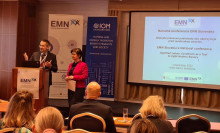
The Conference allowed participants to gain insight into legal provisions against labour exploitation and to examine the role of different actors in upholding the rights of foreign workers. Good practices and lessons learnt from selected countries were presented and discussed.