Publication date:
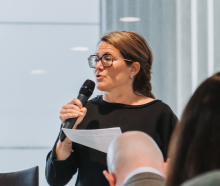
Belgium plans to progressively return several defence sites used for the reception of applicants for international protection to military use as part of a broader plan to expand defence infrastructure towards 2040. The measure concerns around 4.000 reception places located on military premises across the country. Authorities state that the reduction in capacity can be absorbed within the existing reception network. The transition will take place gradually, with closures scheduled at different times depending on the site.
Read more
Main theme: Reception
Keywords: reception place, reception capacity, defence, military site
Publication date:
Myria, the Federal Migration Centre, has advised against a draft law proposing to remove the legal possibility of activating a mandatory distribution plan for reception places in times of crisis. The plan allows the federal government to require municipalities to provide local reception initiatives according to objective allocation criteria. Myria stresses that this mechanism is important to safeguard human dignity and the right to reception, particularly during periods of structural shortages.
Read more
Main theme: Reception
Keywords: reception place, distribution plan
Publication date:
On 13 November 2025, several civil society organisations held a silent protest outside the Palais de Justice in Brussels to draw attention to the shortage of reception places for third-country nationals. Participants, including advocates, volunteers, and citizens, brought sleeping bags to symbolise people forced to sleep outdoors. The demonstration called for urgent measures to ensure that all individuals entitled to accommodation can access it.
Read more
Main theme: Reception
Keywords: reception crisis, reception capacity, reception place, shortage

Publication date:
The Committee of Ministers of the Council of Europe examined the execution of the European Court of Human Rights judgment in Camara v. Belgium. The case highlighted a systemic failure to enforce judicial decisions ordering the State to provide accommodation and material support to asylum-seekers. While some progress has been made in freeing up reception places and improving operational support, concerns persist over reductions in capacity and the risk to the rule of law. The Committee urged the Belgian authorities to adopt sustainable measures and provide detailed information on enforcement.
Read more
Main theme: Reception
Keywords: reception crisis, Camara, reception place, rule of law, reception network

Publication date:
The Dutch Council of State has ruled that single male asylum seekers may no longer be transferred to Belgium under the Dublin Regulation. The judgment cites systemic failures in Belgium’s reception and legal protection for this group, exposing them to a real risk of inhuman treatment. These individuals must now remain in the Netherlands while their asylum claims are processed.
Read more
Main theme: Reception, International Protection
Keywords: Dublin Regulation, Dublin transfer, shortage, reception place, inhuman treatment
Publication date:
Fedasil has announced a further reduction in the number of reception places for unaccompanied foreign minors (MENA), with 279 places set to be withdrawn from the network by 1 September 2025. The measure, approved in April, comes in response to the continuing decline in arrivals observed since 2023. Most of the places concerned will be converted into generic reception places.
Read more
Main theme: Reception
Keywords: reception place, unaccompanied foreign minor
Publication date:
The government approved on 24 March 2018 a new reduction plan for reception places for applicants for international protection. Today the reception network consists of 23,815 reception places. This should be reduced to 16,629 reception places in 2019, of which 10,044 collective places and 6,585 individual reception places. With this plan, the network returns to the level preceding the reception crisis.
Read more
Main theme: Reception
Keywords: reception place

Publication date:
Today, the Council of Ministers has approved the proposal of the State Secretary for Asylum Policy and Migration to gradually reduce the Belgian reception capacity.
Read more
Main theme: Reception
Keywords: Fedasil, reception place

Publication date:
To face the important inflow of asylum seekers in Belgium, the government has taken measures to create additional reception places.