EMN Belgium meets with Child Rights Delegates on migrant children
On 4 November 2025, two EMN Belgium colleagues met with the General Delegates for Children’s Rights, Caroline Vrijens (Flanders) and Souleymane Laqdim (French Community), accompanied by two of Ms Vrijens’ team members. The meeting was highly cordial and provided an opportunity for open discussion and in-depth dialogue on shared concerns and potential avenues for cooperation. Key topics included the challenges faced by migrant children in Belgium.
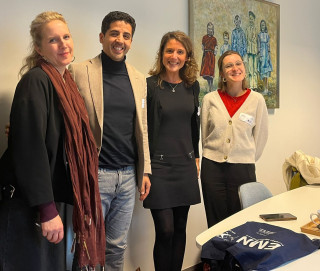
Caroline Vrijens and Souleymane Laqdim serve as the General Delegates for Children’s Rights in Flanders and the French Community, respectively. Their roles encompass strategic and political responsibilities, communication and advocacy on children’s rights, and field work to stay closely connected to the challenges faced by children and the organisations supporting them. EMN Belgium had the pleasure of meeting these two dedicated representatives, who skillfully combine policy insight with hands-on involvement.
The delegates shared several major concerns regarding migrant children in Belgium:
- Migrant children form a particularly vulnerable group, shaped by their young age, the challenges of long and uncertain migration routes, potential family separation, and exposure to unsafe or unstable conditions.
- They face increased risks of abuse and exploitation, including forced involvement in criminal activities, child labour (for instance, in markets or restaurants), sexual exploitation, and street begging.
- Reception conditions vary significantly across centres, and despite the strong commitment of Fedasil staff, shortcomings remain noticeable in certain facilities. The lack of independent audits of reception conditions is considered problematic.
- Children outside the reception system are at particular risk. This includes children who remain in the country under the radar, as well as those who have left reception centres or are in transit to reach other destinations. These children often face extremely precarious conditions (for example, living in squats or being coerced into involvement in drug-related activities). Reliable data on their numbers remains limited, but their situation is regarded as highly concerning.
- Serious mental health challenges are found among minors who often face multiple vulnerabilities: they come from conflict areas such as Syria or Afghanistan, have experienced traumatic migration journeys, and are sometimes victims of criminal networks.
- A coordinated approach is needed, with clearly defined responsibilities at the national level and stronger European-level cooperation and strategy to ensure that all migrant children receive consistent protection, regardless of the circumstances they face.
The European Migration Network (EMN) has consistently monitored issues affecting migrant children and maintains a robust set of objective and reliable information on the topic. This includes, for example, a recent ad hoc query on separated migrant children and an Inform on access to education for migrant children. EMN Belgium can support the delegates by launching new ad hoc queries and providing tailored information to address urgent or emerging needs. Further initiatives could include workshops or conferences bringing together relevant stakeholders to discuss specific challenges and examine possible approaches.
EMN Belgium warmly thanks the delegates for their time and constructive exchange, and looks forward to further collaboration.
Readers interested in learning more about the important work of the General Delegates for Children’s Rights are invited to attend or follow the presentation of their upcoming annual reports:
- Flemish Commissioner for Children’s Rights, Caroline Vrijens, will present her report, Rights on the Threshold, on Thursday, 20 November at 12:00 in the Flemish Parliament.
- General Delegate for Children’s Rights, Souleymane Laqdim, will present his 2024–2025 annual report on Tuesday, 18 November at 9:00 at the Parliament of the Wallonia-Brussels Federation.