Publication date:
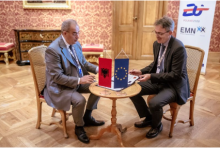
Albania has officially joined the European Migration Network (EMN) as an Observer Country. An Administrative Agreement was signed on 24 June between the European Commission and the Albanian Ministry of Interior. The arrangement was concluded on the margins of a conference co-organised by EMN Poland and establishes formal cooperation between the two parties within the EMN framework.
Read more
Main theme: Cross-sectional, Asylum, Migration
Keywords: European Migration Network, observer country, Albania
Publication date:
According to Statbel, the Belgian statistical office, 5.539 persons obtained Belgian nationality in March 2025. The main countries of origin of people who acquired Belgian nationality in March are Morocco, Romania, Syria, Turkey and Afghanistan.
Read more
Main theme: Data & Statistics, Citizenship & Nationality
Keywords: access to nationality, Belgian nationality
Publication date:
During this online event, the European Migration Network (EMN) will present the 2024 Asylum and Migration Overview (AMO). This comprehensive publication provides a clear overview of the main trends and developments in migration and asylum across EMN Member and Observer countries in 2024. Additionally, a new interactive format will be introduced to enhance the accessibility of the information for a broader audience. Participants will gain insight into the key policy changes and challenges that shaped migration and asylum in Europe over the past year.
Read more
Main theme: Cross-sectional, Asylum, Migration
Keywords: Asylum and Migration Overview, asylum trend, migration trend, annual report
Publication date:
As of 1 January 2025, more than one-third of Belgium’s population has a foreign background, according to the latest data from Statbel, the Belgian statistical office. While 64% of residents are Belgian with a Belgian background, the remainder includes Belgians with a foreign background and non-Belgians. Regional disparities and changes over the last two decades highlight evolving demographic patterns.
Read more
Main theme: Data & Statistics, Citizenship & Nationality
Keywords: population structure, diversity, Belgian nationality, foreign background, non-Belgian
Publication date:
On 11 June 2025, the European Commission published a report reviewing the implementation of the Pact on Migration and Asylum, halfway through its implementation phase, which is expected to be completed by June 2026. The report provides an overview of progress across the main elements of the Common Implementation Plan, while identifying remaining operational and legal challenges. A mid-term review of the Action Plan on Integration and Inclusion 2021–2027 was also released.
Read more
Main theme: Cross-sectional, Asylum, Migration
Keywords: New Pact on Migration and Asylum, implementation, Action Plan on Integration and Inclusion
Publication date:
According to a press release published on 11 June 2025, Statbel reported that 60.108 individuals acquired Belgian nationality in 2024. The five most common previous nationalities among those who became Belgian were Moroccan, Syrian, Romanian, Afghan and Turkish.
Read more
Main theme: Data & Statistics, Citizenship & Nationality
Keywords: access to nationality, Belgian nationality
Publication date:
The European Union Agency for Fundamental Rights (FRA) has released its 2025 Fundamental Rights Report, offering a detailed overview of key developments in the EU’s human rights landscape. Among the areas of concern, the report draws particular attention to migration and asylum at the EU’s external borders, where challenges continue to raise fundamental rights issues.
Read more
Publication date:
On 6 June 2025, the Flemish Government approved a communication advancing the development of pre-arrival integration trajectories for newcomers from their countries of origin. This step follows earlier pilot projects and aims to better prepare family reunification and labour migrants for life in Flanders through a digital societal orientation course.
Read more
Main theme: Integration
Keywords: integration programme, pre-arrival integration, pre-arrival orientation, pilot project, digital learning, Foreign newcomers
Publication date:
The European Union Agency for Asylum (EUAA) will host its first State of Asylum Conference, bringing together policymakers, EU institutions, international organisations, and experts to discuss the current landscape of international protection and migration in the EU, the challenges faced, and the evolving EU migration agenda, particularly with regard to the Pact on Migration and Asylum.
Read more
Main theme: Cross-sectional, Asylum, Migration
Keywords: EUAA, New Pact on Migration and Asylum, asylum trend, migration management

Publication date:
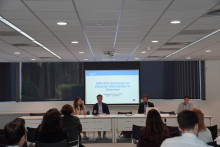
On 27 May 2025, the Belgian Contact Point to the European Migration Network (EMN) participated in a capacity-building session on guardianship and the quality of care for asylum-seeking children in the context of the EU Pact on Migration and Asylum. The seminar was organised by the European Network of Ombudspersons for Children (ENOC), in collaboration with OKaJu (Ombudsman for Children in Luxembourg – Ombudsman fir Kanner a Jugendlecher) and the Luxembourgish Contact Point to the EMN. The aim of the session was to discuss the impact of the new Pact on children in asylum procedures.
Read more
Publication date:
On 21 and 22 May 2025, the European Migration Network’s Return Experts Group (EMN REG) convened a two-day workshop, hosted by the Belgian Immigration Office and EMN Belgium. The event brought together 50 participants from EU Member States, EU agencies (including Frontex and the EU Asylum Agency), civil society organisations, and international organisations. The workshop focused on the development and implementation of effective alternatives to detention (ATDs) within the EU’s migration and return systems.
Read more
Publication date:
On 17 May, the International Day Against Homophobia, Biphobia and Transphobia (IDAHOBIT), the organisation Prisme has disclosed a set of recommendations highlighting the challenges faced by LGBTQIA+ individuals seeking international protection in Belgium. These findings point to several shortcomings in the reception and asylum system and outline measures to ensure more inclusive procedures.
Read more
Main theme: Vulnerable groups, Reception, International Protection
Keywords: LGBTQIA+, applicant for international protection, reception centre, special needs, Training, inclusion
Publication date:
The European Commission has approved an additional €3 billion in funding to assist Member States in implementing the Pact on Migration and Asylum and to support the hosting of beneficiaries of temporary protection from Ukraine. This amount is composed of €1.8 billion from the revision of the current Multiannual Financial Framework and a €1.2 billion top-up to the Asylum Migration and Integration Fund (AMIF) and the Border Management and Visa Instrument (BMVI).
Read more
Publication date:
In 2024, 19.435 people participated in the Social Orientation (Maatschappelijke Oriëntatie, MO) course in Flanders. This marks a significant increase in participation. Alongside the rising numbers of participants in the Social Orientation course, the demand for Dutch as a Second Language (NT2) courses also remains high, as evidenced by recent reports from AMAL vzw, Atlas Antwerp, and the Agency for Integration and Civic Integration.
Read more
Main theme: Integration
Keywords: civic integration course, Agency for Integration and Civic Integration, language learning, language course
Publication date:
On the occasion of Labour Day, Fedasil published new figures on the professional activity of applicants for international protection residing in reception centres. In 2024, 41% of those allowed to work were active on the Belgian labour market. The data show differences in employment rates depending on gender, age, and nationality.
Read more
Main theme: Integration
Keywords: applicant for international protection, access to employment, labour market access

Publication date:
On 28 April 2025, Samusocial launched a new shelter dedicated to unaccompanied foreign minors living on the streets, often referred to as “wandering” minors. This centre aims to provide a safe and supportive space for young people with complex needs who do not have access to existing aid structures.
Read more
Main theme: Vulnerable groups
Keywords: unaccompanied foreign minor, mental health, risk of exploitation, shelter

Publication date:
EMN Luxembourg, in cooperation with the Ombudsman for Children and Adolescents in Luxembourg and the European Network of Ombudsmen for Children, organise a joint capacity-building event to support Member States and their respective institutions in implementing the Pact, especially regarding children’s rights.
Read more
Main theme: Vulnerable groups
Keywords: New Pact on Migration and Asylum, children's right, child, guardianship
Publication date:
This event aims to help migration policymakers and practitioners better understand the potential of AI applications as well as the regulatory framework of the AI Act and its impact on the use of AI in migration management, and to discuss the impact of AI on policymaking.
Read more
Main theme: Cross-sectional
Keywords: migration policy, migration management, artificial intelligence, digitalisation, Artificial Intelligence Act
Publication date:
This data comes from Bruss’help’s eighth count, carried out through a large-scale collaboration across sectors and indicating a worsening trend of homelessness in Brussels. For the first time, data from reception centres for applicants for international protection were collected. Out of 5.135 individuals, 17 were required to leave their centre within 30 days without any housing solution, while 94 remained beyond their expected departure due to the lack of stable housing options.
Read more
Main theme: Vulnerable groups
Keywords: homelessness, homeless, housing shortage, emergency shelter

Publication date:
On 11 April 2025, the Belgian Council of Ministers agreed on a package of crisis measures aimed at addressing key issues in the field of asylum and migration. The measures include limitations on reception for asylum seekers, restrictions on subsequent applications for international protection, stricter family reunification conditions, and the termination of integration income for asylum seekers. The four draft bills and the draft royal decree have been submitted to the Council of State for review.
Read more
Publication date:
The EU Commission launched a call for proposals under the Asylum, Migration and Integration Fund (AMIF) to finance projects aiming to improve healthcare access for migrants, support migrant women through better labour market integration, enhance digital literacy, create accessible education, ensure the protection of migrant children. The available call budget is EUR 34 million.
Read more
Main theme: Integration
Keywords: asylum and migration fund, access to healthcare, labour market integration, digital literacy, education, migrant child
Publication date:
The Education Department of Caritas International Belgium, in collaboration with the non-profit organisation Sankaa, has launched "Building Bridges", an educational resource for secondary school teachers. This resource helps educators address key topics such as identity, prejudice, racism, and media representation. At its core, "Building Bridges" explores the central question: How can we create a more supportive and inclusive society where everyone has a place?
Read more
Main theme: Integration
Keywords: inclusion, secondary school, diversity, migratory background, discrimination
Publication date:
The conference will explore the future of Ukrainian displaced persons beyond temporary protection and will bring together policymakers, experts, and stakeholders to discuss strategies for policy transitions, address employment related integration challenges, share best practices, and examine the role of the diaspora in supporting long-term solutions.
Read more
Main theme: Integration, Temporary protection
Keywords: beneficiary of temporary protection, Ukraine
Publication date:
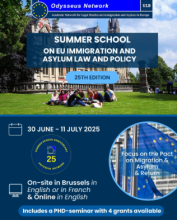
In July 2025, the Odysseus Network for Legal Studies on Migration and Asylum in Europe organises the 25th edition of its yearly summer school. It will focus on the European immigration and asylum policies from a legal perspective, including the latest developments in 2025. Special emphasis will be placed on the adoption of the New Pact on Migration and Asylum.
Read more
Main theme: Cross-sectional
Keywords: asylum law, migration law, New Pact on Migration and Asylum
Publication date:
Eurostat released trafficking in human beings statistics, revealing that 10.793 victims were registered in the EU in 2023, an increase of 6.9% compared with 2022 and the highest recorded value in the period 2008-2023. Several countries explained that it is partly reflected through increased attention of the authorities and agencies that fight against trafficking in human beings.