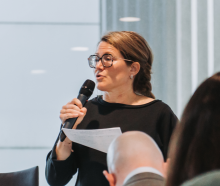
Belgian Minister for Asylum and Migration Anneleen Van Bossuyt is carrying out a visit to the Democratic Republic of Congo. The visit takes place in the context of a marked increase in asylum applications from Congolese nationals in Belgium in recent years. The mission aims to discourage unfounded asylum applications, address the misuse of visa procedures, counter document fraud and misleading messages from smugglers, and strengthen cooperation on return and the fight against irregular migration.
On 31 March 2026, the Office of the Commissioner General for Refugees and Stateless Persons (CGRS) announced that it would temporarily suspend the notification of certain decisions in cases concerning applicants from Lebanon, in view of the current situation in the country.
Hoofdthema: International Protection
Trefwoorden: application for international protection, Lebanon, suspension, refusal, refugee status, subsidiary protection status
The Netherlands has decided to resume Dublin transfers of single, non-vulnerable male asylum seekers to Belgium, following a period in which such transfers were suspended after a Dutch court ruling. In April 2025, the District Court of The Hague, sitting in Groningen, found that single male asylum seekers risked being deprived of adequate reception conditions in Belgium, which could expose them to inhumane or degrading treatment. The ruling led to a halt in transfers under the EU Dublin system.
Hoofdthema: Reception, International Protection
Trefwoorden: Dublin Regulation, Dublin transfer, Belgium, reception condition
The Office of the Commissioner General for Refugees and Stateless Persons (CGRS) has announced that it will resume processing cases from applicants originating from the West Bank who are not registered with UNRWA. The decision follows a temporary suspension in March 2025 due to the unstable situation in the region. The CGRS now has sufficient up-to-date and objective information to assess the need for international protection.
Hoofdthema: International Protection
Trefwoorden: West Bank, application for international protection, processing
According to the Latest Asylum Trends 2025 published by the European Union Agency for Asylum (EUAA), EU+ countries received approximately 822.000 applications for international protection in 2025, representing a 19 % decrease compared to 2024. Despite the overall decline, demand for protection remained significant in some groups and countries.
The European Parliament has approved new EU asylum rules to enable faster processing of asylum requests. The reform establishes a common list of safe countries of origin while allowing Member States to maintain or designate additional safe countries at national level. It also clarifies the conditions under which Member States can apply the safe third country concept. While the legislation has now passed Parliament, it still needs to be formally adopted by the Council before entering into force.
Hoofdthema: International Protection
Trefwoorden: list of safe countries of origin, safe third country, safe country of origin
In 2025, Belgium received 34.439 applications for international protection, a decline compared with 2024. The Office of the Commissioner General for Refugees and Stateless Persons (CGRS) took decisions on 31.457 people, with a protection rate falling to its lowest level in over a decade. Key factors behind this trend include the suspension of the processing of Syrian cases in the first ten months of 2025 and prioritisation of applications from individuals already protected in other EU Member States.
Hoofdthema: International Protection
Trefwoorden: application for international protection, asylum decisions, protection rate
The Office of the Commissioner General for Refugees and Stateless Persons (CGVS) announced on 15 January 2026 that it is temporarily suspending the processing of applications for international protection from Iranian nationals. The CGVS stated that, given the current situation in Iran and the difficulty in obtaining sufficiently reliable and up-to-date information, it is currently unable to assess the need for protection accurately.
Hoofdthema: International Protection
Trefwoorden: application for international protection, Iran, suspension, asylum decisions
On 8 January 2026, the Resettlement Coalition issued a joint statement expressing concern over the European Union’s newly adopted Union Resettlement and Humanitarian Admission Plan (URP) for 2026–2027. While welcoming the plan’s adoption as a step towards embedding resettlement in EU migration policy, the coalition highlighted that the number of pledges is dramatically lower than previous commitments and that the eligibility criteria are narrow. The statement calls on EU Member States to increase their contributions and ensure that protection needs remain central to resettlement efforts.
Hoofdthema: International Protection
Trefwoorden: Union Resettlement and Humanitarian Admission Plan, EU resettlement framework, pledge, eligibility
The Council of the European Union has agreed its position on two key proposals to strengthen the use of safe country concepts in EU asylum rules. One addresses the safe third country concept, and the other establishes the first EU‑wide list of safe countries of origin. They aim to accelerate asylum procedures and improve the management of applications from those unlikely to require protection. Negotiations with the European Parliament, which has also endorsed the list, will follow to agree on the final texts.
Hoofdthema: International Protection
Trefwoorden: safe third country, safe country of origin, list of safe countries of origin
During a session of the Chamber of Representatives’ Interior Committee on 2 December 2025, Minister Anneleen Van Bossuyt outlined the government’s decision regarding the list of safe countries of origin. She specified which countries are included in the 2025 list and explained that Morocco was added due to improvements in its human rights situation and the low recognition rate for asylum applications from Moroccan nationals.
Hoofdthema: International Protection
Trefwoorden: list of safe countries of origin
The Office of the Commissioner General for Refugees and Stateless Persons (CGRS) is resuming the processing of applications for international protection from Syrian nationals from 1 November 2025. The suspension, in place since 9 December 2024, was implemented to gather sufficient information on the security situation in Syria.
Hoofdthema: International Protection
Trefwoorden: application for international protection, Syria
Asylum applications in EU+ countries fell by nearly a quarter in the first half of 2025, according to the European Union Agency for Asylum (EUAA). A sharp decline in requests from Syrians, following political change in the country, shifted the profile of applicants across Europe. Venezuelans became the largest group seeking protection, while Germany lost its position as the main destination country. Recognition rates reached a record low, reflecting procedural factors and changes in applicant composition.
In August 2025, the European Union Agency for Asylum (EUAA) introduced a Self-Assessment Tool to help national authorities evaluate the quality of their asylum procedures. Based on EUAA operational standards and indicators, the tool provides a structured method for self-assessment. It aims to help administrations identify areas for improvement and ensure compliance with EU standards. A descriptive version of the tool is currently available to guide implementation.
Hoofdthema: International Protection
Trefwoorden: asylum procedure, international protection procedure, quality, self-assessment
From 4 August 2025, Belgium implements two changes affecting international protection procedures. The period to justify absence from personal interviews is reduced from 15 to 8 days. In addition, new applications submitted after a decision on a previous request in another EU Member State are now registered as subsequent applications.
The Court of Justice rules that designating a country as ‘safe’ must allow effective judicial review
The Court of Justice of the European Union has ruled that a Member State may designate a third country as a ‘safe country of origin’ by legislative act, provided that the designation can be subject to effective judicial review. The judgment clarifies that the sources used for such a designation must be accessible to both applicants and courts. The Court also stated that a country cannot be listed as ‘safe’ if it does not offer adequate protection to all its population.
Hoofdthema: International Protection
Trefwoorden: safe country of origin, right to an effective remedy

Het Commissariaat-Generaal voor de Vluchtelingen en Staatlozen (CGVS) heeft aangekondigd dat de opschorting van de verwerking van aanvragen om internationale bescherming van Syriërs, een maatregel die sinds december 2024 van kracht is, wordt verlengd tot eind oktober 2025.
Hoofdthema: Internationale bescherming
Trefwoorden: Syria, CGRS, asielaanvragen, asielbeslissingen
On 23 July, Belgium officially published two new laws aimed at reducing the burden on international protection procedures and limiting access to reception for certain applicants. In particular, these laws redefine which applications are considered subsequent by including those who have already received protection or a final decision in another EU country, and they limit access to reception facilities and material assistance for this group. The laws reflect the government’s intention to streamline asylum processing and manage reception capacity effectively.
Hoofdthema: Reception, International Protection
Trefwoorden: Aliens Act, subsequent application, Reception Act, material assistance, material reception condition
The Dutch Council of State has ruled that single male asylum seekers may no longer be transferred to Belgium under the Dublin Regulation. The judgment cites systemic failures in Belgium’s reception and legal protection for this group, exposing them to a real risk of inhuman treatment. These individuals must now remain in the Netherlands while their asylum claims are processed.
Hoofdthema: Reception, International Protection
Trefwoorden: Dublin Regulation, Dublin transfer, shortage, reception place, inhuman treatment
Op de Internationale Dag ter Ondersteuning van Slachtoffers van Foltering benadrukt NANSEN haar inzet voor aanvragers van internationale bescherming die foltering hebben ervaren. De organisatie biedt juridische informatie en maatwerkondersteuning om hen te helpen de beschermingsprocedure zo goed mogelijk te doorlopen. Slachtoffers van foltering hebben recht op specifieke procedurele waarborgen. NANSEN waakt ervoor dat deze rechten gedurende het gehele aanvraagproces worden gerespecteerd.
Wereldvluchtelingendag wordt elk jaar gevierd op 20 juni om stil te staan bij de situatie van vluchtelingen wereldwijd. De dag heeft als doel het vergroten van het publieke bewustzijn en het bevorderen van begrip voor de uitdagingen waarmee ontheemden worden geconfronteerd. Over de hele wereld – ook in België – vinden er getuigenissen, evenementen en initiatieven plaats. Dit jaar staat Wereldvluchtelingendag in het teken van solidariteit met vluchtelingen.
Hoofdthema: Internationale bescherming
Trefwoorden: Wereldvluchtelingendag, solidariteit, vluchteling
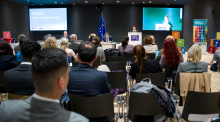
On 27 May 2025, the Belgian Contact Point to the European Migration Network (EMN) participated in a capacity-building session on guardianship and the quality of care for asylum-seeking children in the context of the EU Pact on Migration and Asylum. The seminar was organised by the European Network of Ombudspersons for Children (ENOC), in collaboration with OKaJu (Ombudsman for Children in Luxembourg – Ombudsman fir Kanner a Jugendlecher) and the Luxembourgish Contact Point to the EMN. The aim of the session was to discuss the impact of the new Pact on children in asylum procedures.
Hoofdthema: Vulnerable groups, International Protection
Trefwoorden: asylum-seeker, child, asylum procedure, New Pact on Migration and Asylum, age assessment, ombudsman for children, guardianship
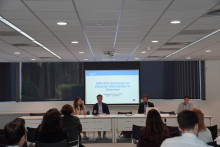
Op 21 en 22 mei 2025 organiseerde de Return Expert Group van het Europees Migratienetwerk (EMN REG), in samenwerking met de Dienst Vreemdelingenzaken en EMN België, een tweedaagse workshop die 50 experten van EU-lidstaten, EU-agentschappen (waaronder Frontex en de EUAA), maatschappelijke organisaties en internationale organisaties samenbracht. Het evenement richtte zich op de ontwikkeling en implementatie van effectieve alternatieven voor detentie (ATD’s) binnen het migratie- en terugkeerbeleid van de EU.
Hoofdthema: Kwetsbare groepen, Internationale bescherming, Migratie, Grenscontrole & Visa, Terugkeer & Readmissie
Trefwoorden: Nieuw Pact inzake Migratie en Asiel, alternatieven voor detentie, risico op onderduiken, fundamenteel recht, speciale behoeften, multistakeholder benadering, migrantenbetrokkenheid, naleving
On 20 May 2025, the European Commission put forward a proposal to revise the rules governing the application of the safe third country concept. The proposal, which inter alia removes the requirement to establish a connection between the applicant and the safe third country, is now subject to approval by the European Parliament and the Council. It has prompted a range of reactions, including expressions of support as well as more critical assessments.
Hoofdthema: International Protection
Trefwoorden: New Pact on Migration and Asylum, asylum procedure regulation, asylum procedure, safe third country, connection, suspensive effect
Op 17 mei, de Internationale Dag tegen Homofobie, Bifobie en Transfobie (IDAHOBIT), heeft de organisatie Prisme een reeks aanbevelingen bekendgemaakt die de uitdagingen benadrukken waarmee LGBTQIA+ personen die om internationale bescherming verzoeken in België worden geconfronteerd. Deze bevindingen wijzen op verschillende tekortkomingen in het opvang- en asielsysteem en schetsen maatregelen om inclusievere procedures te waarborgen.