Publication date:
The European Commission has released a proposal for a regulation establishing a common system for the return of third-country nationals staying illegally in the Union. The new rules introduce, among other things, stronger obligations for returnees and the legal possibility of returning individuals who are illegally staying in the EU and have received a final return decision to a return hub in a third country. The European Parliament and the Council of the EU must now examine and negotiate the proposal.
Read more
Publication date:
In a recent study, the European Parliament Research Service (EPRS) recommended clarifying the scope of criminal offences in the Facilitation Directive to ensure that only activities involving organised criminal networks are included and called for the explicit exemption of humanitarian actions aligned with international protection from criminalisation.
Read more
Main theme: Smuggling & Trafficking
Keywords: Facilitation Directive, criminal offence, criminalisation, humanitarian assistance, solidarity, exemption

Publication date:
In the note submitted to the Chamber of Representatives, Minister Anneleen Van Bossuyt described the current situation as operationally, financially, and socially untenable. She announced her intention to urgently submit, as an initial step, a package of crisis measures to address the ongoing asylum and reception crisis. Additionally, she outlined a broader range of measures covering key aspects, including asylum and reception, migration, the protection of vulnerable groups, return and security, the social welfare system, and access to Belgian nationality.
Read more
Main theme: Asylum, Migration
Keywords: policy orientation paper, asylum policy, migration policy, asylum crisis, reception crisis

Publication date:
The European Migration Network Luxembourg (EMN Luxembourg) and the UniGR-Center for Border Studies (UniGR-CBS) organise this conference to mark the 40th anniversary of the Schengen Agreement and to reflect on it critically in light of current developments. Places are limited.
Read more
Main theme: Borders & Visa
Keywords: Schengen Agreement, anniversary, internal border control, temporary reintroduction of border control

Publication date:
This workshop, jointly organised by the Migration Policy Center (MPC) and the Mercator Forum Migration and Democracy (MIDEM), will provide a platform for presenting and discussing empirical research on public attitudes toward migration, the sociopolitical mechanisms driving migration-related polarisation, and the policy responses addressing these challenges.
Read more
Main theme: Migration
Keywords: public attitude, public perception, polarisation, policy response
Publication date:
EU Home Affairs Ministers approved a roadmap for the gradual implementation of the Entry/Exit System (EES) starting in October 2025, the revised Eurodac database set to become operational in June 2026 and ETIAS in late 2026. Ministers also reached broad agreement on facilitating go-and-see visits for Syrians in the EU to assess conditions in their home country without losing their protection status, as well as on measures to return Syrian nationals who pose a security threat or have been convicted of crimes.
Read more
Main theme: Borders & Visa
Keywords: entry exit system, Eurodac, ETIAS

Publication date:
In a coordinated effort to combat human trafficking, Europol hosted an international operational action from 25 to 28 February 2025, bringing together experts in analysis, OSINT (Open Source Intelligence), and investigations from 12 countries, including Belgium. The operation focused on detecting and disrupting human trafficking networks operating online, particularly those exploiting Ukrainian nationals.
Read more
Main theme: Smuggling & Trafficking
Keywords: sexual exploitation, Ukrainian, trafficker, victim of trafficking, digital technology
Publication date:
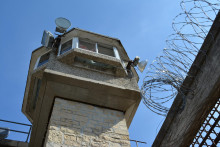
In 2024, 1.261 detainees were forcibly returned from Belgian prisons, down from 1.428 in 2023 and 1.511 in 2022, according to the Immigration Office. The most represented nationalities among those returned were Albanians, Moroccans, and Algerians. This decline comes amid ongoing challenges linked to prison overcrowding and changes in early-release policies.
Read more
Main theme: Return & Readmission
Keywords: third country national, illegally staying person, detainee, prison, forced return
Publication date:
Nine human rights associations, including 11.11.11 Belgium, published the European Pushback Report 2024. The report highlights that illegal pushbacks are a persistent practice at Europe's borders and calls for the establishment of independent monitoring mechanisms at borders to ensure compliance with human rights standards and to prevent further violations.
Read more
Main theme: Borders & Visa
Keywords: pushback, external border
Publication date:
The Benelux countries and Suriname have agreed to facilitate the return of individuals in irregular situations from the Benelux or Suriname to their country of origin. Additionally, they have decided to grant visa-free travel for diplomats and government officials between the Benelux countries and Suriname.
Read more
Main theme: Return & Readmission
Keywords: Benelux, readmission agreement, Suriname
Publication date:
The European Commission has launched a call of expression of interest to renew the composition of the “EU Civil Society Platform against trafficking in human beings”. Civil society organisations that are legally based in EU Member States and have demonstrated experience in the protection of and assistance to victims of trafficking in human beings are invited to apply before 5 March 2025.
Read more
Main theme: Smuggling & Trafficking
Keywords: EU Civil Society Platform against trafficking in human beings, membership
Publication date:
Statbel has published demographic projections for 2024-2070 and concluded that Belgium’s population will reach 12.9 million by 2070. International migration will be the main driver of growth after 2038, as the natural balance turns negative by the end of the 2030s.
Read more
Main theme: Migration
Keywords: population growth, natural balance, international migration balance, demographic growth

Publication date:
In a position paper published on 6 February 2024, the European Union Agency for Fundamental Rights (FRA) sets out the conditions that would have to be met for return hubs to respect fundamental rights and comply with EU law. This includes independent monitoring to reduce the risks of fundamental rights violations.
Read more
Main theme: Return & Readmission
Keywords: return hub, fundamental rights
EMN Belgium participates in a roundtable in the Senate on the abolition of female genital mutilation

Publication date:
On 5 February 2025, the Belgian Contact Point to the European Migration Network (EMN) took part in a roundtable in the Senate, focusing on the abandonment of sexual mutilation. The Group for the Abolition of Sexual Mutilation (GAMS) inter alia stressed that it has limited visibility on individuals arriving in Belgium through family reunification, making it more difficult to raise awareness and monitor cases of female genital mutilation in the country.
Read more
Main theme: Family reunification
Keywords: sexual mutilation, female genital mutilation
Publication date:
In 2024, Belgium saw a notable increase in the number of individuals choosing voluntary return to their country of origin. According to Fedasil’s press release from 3 February 2024, the total number of individuals opting for voluntary return rose by 11% compared to the previous year.
Read more
Main theme: Return & Readmission
Keywords: voluntary return
Capacity building workshop: Screening of third-country nationals at the EU external borders (2 days)

Publication date:
This workshop, jointly organised by the General Department of Immigration of the Ministry of Home Affairs of Luxembourg, the Detention Center of the Ministry of Home Affairs and EMN Luxembourg, will serve as a platform for Member States to exchange their first insights on progress made and challenges encountered while adapting to the new requirements put in place by the Screening Regulation.
Read more
Main theme: Borders & Visa
Keywords: New Pact on Migration and Asylum, screening regulation
Publication date:
The European Commission has developed a new interactive tool to map labour migration pathways across the 27 EU Member States. It helps to visualise the 290 pathways that were active at the time of the research and updated to February 2024.
Read more
Main theme: Economic migration
Keywords: labour migration, legal pathway, foreign job seeker

Publication date:
According to figures released by the Immigration Office, 20.724 decisions resulted in the granting of visas for family reunification in Belgium in 2024, compared to 18.738 in 2023 and 15.901 the year before. The increase concerns several categories, in particular family reunification with a refugee or beneficiary of subsidiary protection.
Read more
Main theme: Family reunification
Keywords: family reunification visa, upward trend

Publication date:
In a press release published on 27 January 2025, the Secretary of State for Asylum and Migration announced that Belgian authorities could organise the forced return of Afghans to Istanbul and that partners on the ground could then take them to Afghanistan. This collaboration and the budgets for it still need to be finalised by a new government.
Read more
Main theme: Return & Readmission
Keywords: forced return, Afghanistan

Publication date:
According to a report commissioned by the governor of West Flanders, a total of 632 transmigrants were caught in the province in 2024, while in 2023 there were fewer than 400. The province's share of interceptions also went up. West Flanders accounted for about 70% of all transit migrants intercepted in Belgium in 2024, compared to around 50% in previous years.
Read more
Main theme: Smuggling & Trafficking
Keywords: transmigrant, transit migrant, West Flanders
Publication date:
On 23 January 2023, the European Commissioner for Home Affairs participated in the European Parliament plenary session to discuss EU funding of physical border protection structures such as walls, fences or other barriers at the external border. According to him, the Commission will take border management needs into account “in a holistic manner”, whilst always ensuring proportionate measures and respect for fundamental rights.
Read more
Main theme: Borders & Visa
Keywords: external border, physical border protection structure

Publication date:
The European Commission published its fifth report on the progress made in the EU in combatting Trafficking in Human Beings. The report outlines, inter alia, that in 2021-2022, the majority of victims were non-EU citizens (54%). This demonstrates a shift compared to 2019-2020, when the majority of registered victims were EU citizens (55%).
Read more

Publication date:
With only 239 000 irregular crossings into the EU detected in 2024, Frontex reports the lowest number of irregular crossings since 2021, but warns about shifting dynamics and evolving challenges.
Read more
Main theme: Borders & Visa
Keywords: irregular border crossing

Publication date:
The UK Home Office released provisional figures showing that more than 36.000 people were detected in 2024, making the crossing of the English Channel in small boats. The International Organisation for Migration (IOM) estimates that at least 78 migrants died trying to cross the Channel in 2024.
Read more
Main theme: Irregular Migration
Keywords: English channel, illegal border crossing, small boat

Publication date:
In a recent judgment, the Court of Justice of the European Union stated that a Member State cannot exclude from the benefit of family allowances a foreign worker whose children, born in a third country, cannot prove that they have entered its territory lawfully.