Publication date:
Before 20 September 2024, Member States can apply for funding for projects focused on combating organised crime under the Internal Security Fund and for projects to reinforce border checks or border surveillance under the Border Management and Visa Instrument. EUR 17 million are intended for this purpose.
Read more
Main theme: Borders & Visa
Keywords: EU funding, internal security fund, Border Management and Visa Instrument, call for expression of interest
Publication date:
Before 21 August 2024, public institutions, private non-profit and international organisations may submit an application to receive funding under the Asylum, Migration and Integration Fund (AMIF) for a project strengthening the identification, assistance, support, and integration of third-country national victims of trafficking in human beings.
Read more
Main theme: Smuggling & Trafficking
Keywords: AMIF, call for proposals, human trafficking

Publication date:
From 20 to 27 April 2024, Belgium participated, with 30 other countries, in the EMPACT Joint Action Days targeting human trafficking for labour exploitation purposes. The action resulted inter alia in 160 perpetrators and 334 potential victims identified and led to the arrest of 51 persons.
Read more
Main theme: Smuggling & Trafficking
Keywords: joint action day, labour exploitation
Publication date:
On 27 May 2024, the Council of the European Union adopted a directive that inter alia adds new forms of exploitation and considers knowingly using the service provided by a trafficking victim as a criminal offense. It also strengthens prevention measures as well as the support for and assistance to victims.
Read more
Main theme: Smuggling & Trafficking
Keywords: Anti-Trafficking Directive
Publication date:
On 24 May 2024, the Council of the European Union, with Spain and Slovenia abstaining, finally adopted the reform of the Schengen Borders Code. The reform inter alia aims to make the Schengen area more resilient to present and future crises at its external borders.
Read more
Main theme: Borders & Visa
Keywords: Schengen borders code, migration instrumentalization, travel restriction, internal border control, external border

Publication date:
During this conference, representatives from the European Commission, EMN NCPs and universities, shared practices and critical reflections on information campaigns, new tools and innovative approaches as well as benefits and challenges in the current context. Particular attention was paid to evaluating the impact of information campaigns.
Read more
Main theme: Migration
Keywords: information campaign, prevention campaign, irregular migration, migrant smuggling
Publication date:
According to Statbel, the Belgian statistical office, 5.297 persons obtained Belgian nationality in February 2024. The main countries of origin of people who acquired Belgian nationality in February are Morocco, Romania, Syria, Afghanistan and Turkey.
Read more
Main theme: Citizenship & Nationality
Keywords: access to nationality, Belgian nationality

Publication date:
On 2 May 2024, the Chamber of Representatives adopted in plenary session the draft law relating to the competencies of the members of the European Border and Coast Guard Agency on the national territory. The law inter alia defines how Frontex members will support the Federal Police in the field of border controls and forced return of foreigners.
Read more
Main theme: Borders & Visa
Keywords: European Border and Coast Guard, Frontex, border control, forced return, escort

Publication date:
On 2 May 2024, the Chamber of Representatives adopted in plenary session the draft law for a proactive return policy. This law inter alia introduces the obligation for the foreigner to cooperate in the return process and it expands the pool of return escorts. The law also enshrines the principle according to which minor children aren't retained in closed centres.
Read more
Main theme: Return & Readmission
Keywords: proactive return policy

Publication date:
EMN Slovakia organises its 10th educational seminar to provide professionals working in the state institutions, non-governmental sector and other entities (e.g. research bodies, academia, media) with comprehensive and up-to-date information on migration. During three days, the seminar will foster networking, experience sharing and discussions among (inter)national experts and participants.
Read more
Main theme: Migration
Keywords: educational seminar, Slovakia
The Council of Ministers approves the public procurement for new closed centers in Jabbeke and Jumet

Publication date:
On 26 April 2024, the Council of Ministers approved, upon proposal by the Secretary of State for Asylum and Migration Nicole de Moor and the Secretary of State in charge of the Buildings Administration Mathieu Michel, the public procurement for new closed centers in Jabbeke and Jumet.
Read more
Main theme: Return & Readmission
Keywords: closed centre, forced return, State Secretary for Asylum Policy and Migration
Publication date:
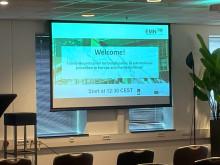
On 24 April 2024, EMN Netherlands, in cooperation with EMN Belgium, organised a conference on family reunification with beneficiaries of international protection. The conference highlighted the EMN Inform on “Family Reunification for Beneficiaries of International Protection”, which was elaborated in light of the 20th anniversary of the Family Reunification Directive.
Read more
Main theme: Family reunification
Keywords: Family Reunification Directive, beneficiary of international protection, family tie, documentary proof, children
Publication date:
On 23 April 2024, the European Parliament voted in favor of an amended Directive concerning trafficking in human beings. The new text broadens the EU’s actions against human trafficking beyond labour and sexual exploitation, and also criminalises new forms of exploitation like forced marriage, illicit adoption, and the exploitation of surrogacy at the EU level.
Read more
Publication date:
On 16 April 2024, the Commission published its 2024 State of Schengen report. The report elaborates on major legislative and policy developments in the area of Schengen from the past year, including the Pact on Migration and Asylum. It also reflects on challenges and sheds light on future priorities for the EU in the field of Schengen.
Read more
Main theme: Borders & Visa
Keywords: Schengen area, State of Schengen, Schengen governance, internal border, external border

Publication date:
A large delegation from the federal government, accompanied by senior police officers and senior administration officials, is leading a mission to Morocco. The fight against illegal immigration and the return policy are among the priority issues discussed with the Moroccan authorities.
Read more
Main theme: Return & Readmission
Keywords: irregularly staying third-country national, Morocco, prison, identification
Publication date:
On Friday 12 April 2024, the Council of the European Union adopted the revised Single Permit Directive which defines the procedure for obtaining a single permit to work and reside in the EU with a common set of rights for third-country workers. The revision provides for a shortened application procedure and aims to strengthen the rights of third-country workers by allowing a change of employer and a limited period of unemployment.
Read more
Main theme: Economic migration
Keywords: single permit directive, recast
Publication date:
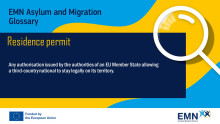
The European Migration Network (EMN) Glossary is an essential resource, which offers an EU-wide multidisciplinary vocabulary of approximately 500 terms and concepts related to asylum and migration. Let's focus today on the term "residence permit" to make sure we have a common understanding and use of the term!
Read more
Main theme: Migration
Keywords: legal migration, residence permit
Publication date:
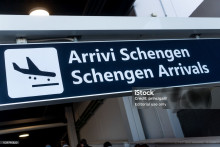
On 31 March 2024, Bulgaria and Romania become Schengen members: the Schengen rules will apply in both Member States including on issuing Schengen visas and controls at the internal air and sea borders will be lifted. Discussions on a date for a possible lifting of the checks on persons at internal land borders will continue in 2024.
Read more
Main theme: Borders & Visa
Keywords: Schengen, Schengen acquis, Bulgaria, Romania
Publication date:
On a proposal from Interior Minister Annelies Verlinden, the Council of Ministers approved a preliminary draft law defining the powers that members of the European Border and Coast Guard would have on national territory during official missions.
Read more
Main theme: Return & Readmission
Keywords: European Border and Coast Guard, Frontex, border control, forced return, escort

Publication date:
On 28 March 2024, the House of Representatives, during the plenary session, approved by a majority the ETIAS law which establishes the Belgian ETIAS National Unit and defines its organisation and functioning. It will enforce the ETIAS (European Travel Information and Authorisation System) regulation adopted by the European Union in 2018.
Read more
Main theme: Borders & Visa
Keywords: ETIAS, European Travel Information and Authorisation System
Publication date:
As labour and skills shortages have been increasing and are expected to continue rising over the coming decades in all EU Member States, the European Commission published an action plan setting out key measures that the EU, Member States and social partners should take in the short to medium term to address this challenge.
Read more
Main theme: Economic migration
Keywords: labour shortage, skills shortage, social partner, labour market integration, skills development, intra EU mobility, talent partnership

Publication date:
The Expert Conference on Return and Reintegration, jointly organised by Belgium’s Federal Agency for the Reception of Asylum Seekers (Fedasil), the International Centre for Migration Policy Development (ICMPD), the European Border and Coast Guard Agency (Frontex), and the Migration Policy institute Europe (MPI-E) marked a significant moment during the Belgian Presidency of the Council of the EU.
Read more
Main theme: Return & Readmission
Keywords: Belgian Presidency, sustainable return, reintegration

Publication date:
This conference organised by EMN Netherlands, in cooperation with EMN Belgium, will focus on family reunification of beneficiaries of international protection in EMN Member and Observer Countries. The influence of European case law in this field will also be examined in more detail.
Read more
Main theme: Family reunification
Keywords: family reunification right, beneficiary of international protection
Publication date:
At a meeting of the Council’s Permanent Representatives Committee (COREPER), Member States agreed their position on a draft regulation which updates a mechanism that allows the EU to suspend visa-free travel for third countries whose nationals are exempt from the visa obligation when travelling to the Schengen area.
Read more
Main theme: Borders & Visa
Keywords: visa-free travel, suspension mechanism
Publication date:
As the demand for migrant workers increases amid persistent labour shortages and geopolitical shifts in Central and Eastern Europe, this conference will delve into the ways countries attempt to attract migrants, ensure ethical recruitment, and implement labour market integration policies.