
Belgian Minister for Asylum and Migration Anneleen Van Bossuyt is carrying out a visit to the Democratic Republic of Congo. The visit takes place in the context of a marked increase in asylum applications from Congolese nationals in Belgium in recent years. The mission aims to discourage unfounded asylum applications, address the misuse of visa procedures, counter document fraud and misleading messages from smugglers, and strengthen cooperation on return and the fight against irregular migration.

Belgian judicial and law enforcement authorities contributed to an operation targeting a criminal network supplying small boats for migrant crossings. Four high-level suspects were arrested in Germany and are expected to be extradited to Belgium for prosecution in Bruges. Searches in Germany and Belgium resulted in the seizure of boats, engines, life jackets, cash, and other equipment used in the smuggling activities.
Main Theme: Smuggling & Trafficking
Keywords: smuggling network, small boat, English channel, crossing, transit country, Belgium

On 24 March 2026, Europol has launched the European Centre Against Migrant Smuggling (ECAMS) in The Hague. The centre is intended to strengthen the EU’s response to migrant smuggling networks. It focuses on intelligence-led, data-driven and financial investigations. The initiative builds on over a decade of operational work, including the European Migrant Smuggling Centre established in 2016, which supported Member States through arrests, network dismantling and joint operations.
Main Theme: Smuggling & Trafficking
Keywords: European Centre Against Migrant Smuggling, ECAMS
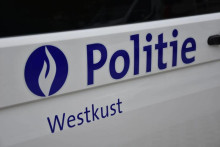
Authorities in Belgium have reported a notable increase in migrant smuggling attempts along the country’s North Sea coast in recent weeks, prompting enhanced law enforcement action and efforts to strengthen international cooperation. Federal and local police forces have stepped up patrols and arrests as part of a broader response to the phenomenon, while Belgium and the United Kingdom are exploring closer collaboration to address the cross-border dimension.
Main Theme: Smuggling & Trafficking
Keywords: Belgian coast, migrant smuggling, police operation, international cooperation
Myria has released its first comprehensive mapping of quantitative data on minor victims of human trafficking and aggravated forms of smuggling in Belgium. The report aims to provide a clearer statistical basis for understanding the situation of minors at risk, while also highlighting structural gaps in current data collection and sharing practices.
Main Theme: Vulnerable groups, Data & Statistics, Smuggling & Trafficking
Keywords: victim of trafficking, victim of smuggling, minor, data collection, figures
Child Focus and Payoke have signed a collaboration protocol to better detect, support, and protect minors who are victims of sexual exploitation. The agreement establishes fixed contact points, faster coordination for urgent cases, and tailored referrals, aiming to ensure that victims receive appropriate assistance without having to repeat their story.
Main Theme: Smuggling & Trafficking
Keywords: child sexual exploitation, victims of human trafficking, coordination, referral
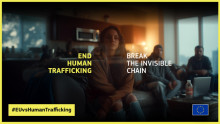
The European Commission has launched a new EU-wide awareness campaign to address human trafficking. Under the slogan “End human trafficking. Break the invisible chain”, the initiative seeks to make this often hidden crime more visible to the public. Around 10.000 victims are identified each year across the European Union, while many more remain undetected. The campaign calls on citizens to recognise the signs of exploitation, report concerns and help support victims.
Main Theme: Smuggling & Trafficking
Keywords: awareness campaign, victim of trafficking, signs, indicators, national hotline

From 3 to 7 November 2025, the Group of Experts on Action against Trafficking in Human Beings (GRETA) conducted an evaluation visit to Belgium under the fourth cycle of its monitoring of the Convention on Action against Trafficking in Human Beings. The evaluation focuses on vulnerabilities to trafficking, the measures taken to prevent and detect them, support victims, and sanction perpetrators, with particular attention to the role of information and communication technologies.

On 20 October 2025, around 200 Belgian actors and European partners gathered to mark thirty years of the fight against human trafficking in Belgium, highlighting both the strengths of a multidisciplinary and specialised system based on collaboration and information sharing, and the ongoing challenges, such as limited resources, difficulties in securing compensation for victims, the protection of minors, and adapting to emerging forms of trafficking.

From 13 to 18 October, PAG-ASA organises a series of activities in Brussels as part of the Human Trafficking Awareness Week. The events aim to raise awareness of human trafficking, its impact on victims, and the Belgian protection framework. Activities include exhibitions, film screenings, and professional trainings. EMN Belgium attended one of the film screenings, reflecting on forms of labour exploitation and the challenges involved in assisting and upholding the rights of victims.
Main Theme: Smuggling & Trafficking
Keywords: human trafficking awareness week, victim of trafficking, labour exploitation, labour right

Over 70 specialists from 26 countries took part in a Europol-supported hackathon aimed at detecting online activities linked to human trafficking. The operation, led by the Netherlands with the support of Germany and the United Kingdom, identified over 30 potential victims and more than 30 suspected perpetrators. The Belgian authorities also took part in this fourth edition of the EMPACT Trafficking in Human Beings Hackathon, which targeted both sexual and labour exploitation online.
Main Theme: Smuggling & Trafficking
Keywords: EMPACT, hackathon, trafficking victim, sexual exploitation, labour exploitation, online

Belgian Ministers of Justice and Asylum and Migration, Annelies Verlinden and Anneleen Van Bossuyt, visited Albania and Kosovo on 6–8 October 2025. Their discussions addressed migration management, prison overcrowding, and bilateral cooperation in justice and security. Meetings involved national authorities and highlighted ongoing collaboration between Belgium and the two countries.
Main Theme: Irregular Migration, Return & Readmission, Smuggling & Trafficking
Keywords: Belgium, Albania, Kosovo, cooperation, identification, forced return, detainee
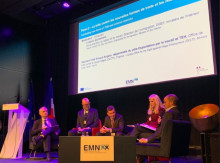
On 2 October 2025, EMN France brought together numerous French and European stakeholders to take stock of efforts to combat human trafficking at both national and European levels. The event provided an opportunity to identify emerging forms of trafficking and to examine international cooperation tools such as Common Operational Partnerships and EMPACT-coordinated actions.
The Presidency of the Council and European Parliament negotiators have reached a provisional agreement to enhance Europol’s role in supporting Member States against migrant smuggling and human trafficking. The deal focuses on improving information sharing and operational coordination at EU level. A European Centre Against Migrant Smuggling will be established within Europol. The agreement must still be formally approved by both the Council and the European Parliament.
Main Theme: Smuggling & Trafficking
Keywords: Europol, mandate, information sharing, European Centre Against Migrant Smuggling
In the first half of 2025, West Flanders saw 72 transit migrants intercepted, a significant decrease compared with previous years. Most were from Ethiopia, while earlier periods involved people from Sudan, Iraq and Vietnam. Authorities cite preventive policing and cross-border controls as key factors.
Main Theme: Irregular Migration, Smuggling & Trafficking
Keywords: transit migrant, transmigrant, interception, border control
The European Commission has formally established the Network for the Prevention of Child Sexual Abuse. This expert group will bring together policymakers, practitioners and researchers to tackle abuse both online and offline. Prevention efforts aim to protect children and address potential offending behaviour. The initiative forms part of the EU Strategy for a more effective fight against child sexual abuse.

The “Blue Heart” is recognised as the international symbol of the fight against human trafficking. On 28 July 2025, the Blue Heart Campaign was launched at Leuven City Hall. EMN Belgium joined local authorities, the three specialised centres for victims of human trafficking, Myria, the UNODC and many other stakeholders on this occasion. The theme of this year is “Human Trafficking is Organized Crime – End the Exploitation”.
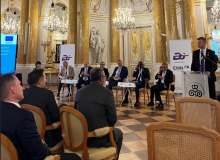
On 24 June 2025, EMN Belgium participated in the Polish Presidency Conference on countering irregular migration. The discussions examined this phenomenon from three perspectives: strengthening the EU’s external borders to prevent irregular entries, combating migrant smuggling to dismantle criminal networks, and addressing the root causes of irregular migration and providing safe and legal alternatives.
Main Theme: Borders & Visa, Irregular Migration, Smuggling & Trafficking
Keywords: external border, border control, migrant smuggling, criminal network, root causes, legal pathway
Thirty-eight members of a Belgian-Chinese human trafficking network have been formally referred by the Ghent chamber of indictment to the correctional court. They face multiple charges including sexual exploitation, trafficking, pimping, money laundering, and document forgery. The Federal Migration Centre, Myria, has joined the case as a civil party, representing the interests of victims.
Main Theme: Smuggling & Trafficking
Keywords: victims of human trafficking, criminal network, sexual exploitation
On 3 June 2025, the Court of Justice of the European Union (CJEU) delivered a judgment clarifying the scope of the offence of facilitation of unauthorised entry into the EU. The Court ruled that a third-country national cannot be criminally penalised for bringing minors under their care into an EU Member State, even if this entry breaches border rules. This decision emphasises the protection of family responsibilities and fundamental rights within EU law.

On 13 May 2025, Belgian authorities arrested six individuals in West Flanders as part of a coordinated international operation targeting an organised migrant smuggling network suspected of facilitating the irregular entry of up to 300 non-EU nationals into the European Union. In total, fifteen suspects were apprehended in Belgium, Germany and Poland, in a series of actions supported by Europol and Eurojust and involving close cooperation between law enforcement and judicial authorities in the participating countries.
Main Theme: Smuggling & Trafficking
Keywords: migrant smuggling, smuggling network, joint action day, Europol, Eurojust

On 7 May 2025, the Court of First Instance of West Flanders, Bruges division, sentenced the Vietnamese national, N. Van Kim (34), in absentia to twelve years’ imprisonment and a fine of €616,000 for human smuggling under aggravating circumstances. The court also ordered the deprivation of his civil rights for ten years and issued a warrant for his immediate arrest.
Main Theme: Smuggling & Trafficking
Keywords: Essex lorry tragedy, Bruges criminal court, Vietnamese migrants, smuggling network, migrant death

An unprecedented international law enforcement operation has led to the dismantling of Kidflix, one of the world’s largest child sexual exploitation platforms. With the support of Europol, authorities from over 35 countries – including Belgium – coordinated efforts to shut down the site and identify the perpetrators. The platform had nearly two million registered users and facilitated the distribution of vast amounts of child sexual abuse material (CSAM).
Main Theme: Smuggling & Trafficking
Keywords: child sexual exploitation, law enforcement, joint action day

Several raids were carried out on 19 March 2025 by German authorities, with the support of investigators from the Belgian Federal Police. The operation targeted a criminal network based in Germany, facilitating the crossing of the English Channel by small boats. It resulted in 6 arrests under Belgian judicial orders.
Main Theme: Smuggling & Trafficking
Keywords: Europol, joint operation, English channel, small boat
In a recent study, the European Parliament Research Service (EPRS) recommended clarifying the scope of criminal offences in the Facilitation Directive to ensure that only activities involving organised criminal networks are included and called for the explicit exemption of humanitarian actions aligned with international protection from criminalisation.