
In a coordinated effort to combat human trafficking, Europol hosted an international operational action from 25 to 28 February 2025, bringing together experts in analysis, OSINT (Open Source Intelligence), and investigations from 12 countries, including Belgium. The operation focused on detecting and disrupting human trafficking networks operating online, particularly those exploiting Ukrainian nationals.
Main Theme: Smuggling & Trafficking
Keywords: sexual exploitation, Ukrainian, trafficker, victim of trafficking, digital technology
According to a report commissioned by the governor of West Flanders, a total of 632 transmigrants were caught in the province in 2024, while in 2023 there were fewer than 400. The province's share of interceptions also went up. West Flanders accounted for about 70% of all transit migrants intercepted in Belgium in 2024, compared to around 50% in previous years.
Main Theme: Smuggling & Trafficking
Keywords: transmigrant, transit migrant, West Flanders

The European Commission published its fifth report on the progress made in the EU in combatting Trafficking in Human Beings. The report outlines, inter alia, that in 2021-2022, the majority of victims were non-EU citizens (54%). This demonstrates a shift compared to 2019-2020, when the majority of registered victims were EU citizens (55%).
During the Justice and Home Affairs Council on 13 December 2024, Member States agreed on a proposal aimed at bringing their criminal law closer together on issues such as the definition and sanctioning of migrant smuggling. The text will now be used by the Council in “trilogue” negotiations with the European Parliament.
Main Theme: Smuggling & Trafficking
Keywords: migrant smuggling, criminal offence, penalty, humanitarian clause
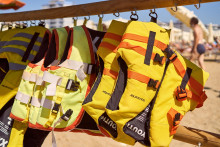
In London, the UK, Germany, France, Netherlands and Belgium, in the presence of the European Commission and its agencies, Europol and Frontex, agreed on a five-point priority plan to tackle irregular migration and migrant smuggling in 2025. Key priorities include targeting illicit financial flows that sustain smuggling networks and tackling organised crime groups' use of social media to recruit and advertise dangerous journeys across Europe and the Channel.
Main Theme: Smuggling & Trafficking
Keywords: Calais Group, irregular migration, English channel, smuggling network, action plan

A man suspected of running an operation that supplied small boats and engines to human smugglers who were active in Belgium and northern France was arrested in the Netherlands. The 44-year-old Turkish national faces extradition to Belgium to face charges of human smuggling in the context of the activities of a criminal organisation.
Main Theme: Smuggling & Trafficking
Keywords: small boat, smugglers, English channel
From 2014 to 2023, Esperanto provided shelter and support to 156 foreign minors victims of human trafficking and/or aggravated smuggling. According to Myria, who analysed the figures, just over half of these 156 young people were victims of sexual exploitation or were forced to commit criminal acts.
Main Theme: Smuggling & Trafficking
Keywords: child victim of trafficking, sexual exploitation, economic exploitation, exploitation of begging, Esperanto

On the occasion of European Anti-Trafficking Day, the Council of Europe’s Group of Experts on Action against Trafficking in Human Beings (GRETA) has warned of the increased risk of human trafficking created by restrictive immigration policies and failure to address the vulnerabilities of migrants and asylum seekers.
Main Theme: Smuggling & Trafficking
The current weather conditions increase the risk that human smugglers will send groups of transmigrants, including small children, out to sea in overcrowded rubber boats, often with inadequate life jackets. To avoid this, the West Coast police zone and the Federal Police require special attention for people who cross the Channel from the Belgian coast to the United Kingdom in small boats.
Main Theme: Smuggling & Trafficking
Keywords: transmigrant, small boat, English channel
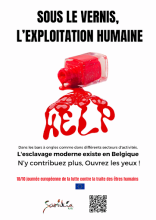
While not a new phenomenon, the exploitation of workers employed in the nail industry has gained increased attention in recent years. Multiple reports point to this sector as being a target of choice for human trafficking and economic exploitation.
Main Theme: Smuggling & Trafficking
Keywords: economic exploitation, nail bar
An IOM-Harvard report shows that close to half of the child victims of trafficking were being trafficked for forced labour (mainly boys), in a wide range of industries, such as domestic work, begging and agriculture. Sexual exploitation, including through prostitution, pornography, and sexual servitude, is also prominent, affecting 20 per cent of trafficked children, predominantly girls.
Main Theme: Smuggling & Trafficking
Keywords: child trafficking, vulnerability, forced labour, sexual exploitation
Tuesday 30 July is the International Day against Trafficking in Persons. On this occasion, the Halle-Vilvoorde public prosecutor's office, together with the Labour Auditor's Office, invite as many people as possible to be vigilant and to report suspicious situations via the Belgian helpline for victims of human trafficking or via the new telephone number: 078/055.800.
Main Theme: Smuggling & Trafficking
Keywords: victim of trafficking, national helpline
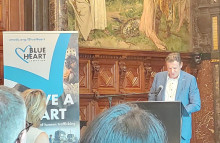
On 22 July 2024, the Minister of Justice officially launched the Blue Heart Campaign at the Antwerp city hall. EMN Belgium joined local authorities, the three specialised centres for victims of human trafficking, Myria, the Social Intelligence and Investigation Service and the IOM on this occasion. As one in three victims of human trafficking globally is a child, this year's global campaign urges accelerated action to end child trafficking.
Main Theme: Smuggling & Trafficking
Keywords: blue heart campaign, child victim of trafficking, victims of human trafficking

On 14 July 2024, the revised EU Anti-Trafficking Directive enters into force with stronger rules to fight trafficking in human beings. The revised Directive introduces stricter criminalisation and provides stronger tools for public authorities to investigate and prosecute new forms of exploitation, including those that take place online, and ensure better assistance and support to victims.
Main Theme: Smuggling & Trafficking
Keywords: Anti-Trafficking Directive

From 20 to 27 April 2024, Belgium participated, with 30 other countries, in the EMPACT Joint Action Days targeting human trafficking for labour exploitation purposes. The action resulted inter alia in 160 perpetrators and 334 potential victims identified and led to the arrest of 51 persons.
Main Theme: Smuggling & Trafficking
Keywords: joint action day, labour exploitation
On 27 May 2024, the Council of the European Union adopted a directive that inter alia adds new forms of exploitation and considers knowingly using the service provided by a trafficking victim as a criminal offense. It also strengthens prevention measures as well as the support for and assistance to victims.
Main Theme: Smuggling & Trafficking
Keywords: Anti-Trafficking Directive
On 23 April 2024, the European Parliament voted in favor of an amended Directive concerning trafficking in human beings. The new text broadens the EU’s actions against human trafficking beyond labour and sexual exploitation, and also criminalises new forms of exploitation like forced marriage, illicit adoption, and the exploitation of surrogacy at the EU level.

A large-scale operation involving law enforcement and judicial authorities from Belgium, France and Germany, coordinated by Europol and Eurojust, led to the dismantling of one of the most active networks involved in the smuggling of migrants across the English Channel in small boats.
Main Theme: Smuggling & Trafficking
Keywords: migrant smuggling, English channel, Europol, Eurojust, joint action day
Recent Eurostat figures show that in 2022, 10.093 victims of human trafficking were registered in the European Union. There were 8.064 suspected traffickers and 2.097 convicted traffickers. The statistics also shed light on gender distribution among traffickers and victims, as well as exploitation patterns.
Main Theme: Smuggling & Trafficking
Keywords: human trafficking, victims of human trafficking, gender, sexual exploitation, forced labour, Eurostat

Today the Belgian presidency of the Council and representatives of the European Parliament reached a provisional agreement on the revision of the EU Anti-Trafficking Directive from 2011. The updated rules were called to better respond to developments in the forms and means of trafficking in human beings and to combat this crime more effectively.
At a conference today, the European Commission proposed new legislation to prevent and fight migrant smuggling and also launched a call to action for a Global Alliance to Counter Migrant Smuggling.
Main Theme: Smuggling & Trafficking
Keywords: migrant smuggling, criminal network, Europol
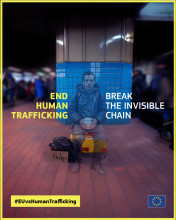
For the EU Anti-Trafficking Day, the European Commission is launching an awareness-raising campaign to inform citizens on the reality of this crime. The European Commission invites every citizen to help raise awareness by becoming part of the ‘End human trafficking. Break the invisible chain’ campaign.
Main Theme: Smuggling & Trafficking
Keywords: anti-trafficking day, awareness campaign
As part of an investigation into acts of trafficking in human beings, 30 brothels in the northern district of Brussels have been placed under judicial seal. 25 people were subject to judicial arrest and 23 others were administratively deprived of their liberty.
Main Theme: Smuggling & Trafficking
Keywords: sexual exploitation, human trafficking
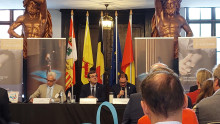
Today, the Minister of Justice, Mr. Vincent Van Quickenborne, officially launched the campaign in Liège. On this occasion, he inaugurated the new telephone number - 078 055 800 - of the Belgian helpline for victims of human trafficking.
Main Theme: Smuggling & Trafficking
Keywords: blue heart campaign, victim of trafficking

With this awareness campaign entitled "Working together in the fight against human smuggling – Help save lives!", the Police want to encourage both nautical equipment dealers and citizens to report suspicious purchases or movements on the beach to the police via 112, via the 112 app or directly via the 101.