
Publication date:
The Office of the Commissioner General for Refugees and Stateless Persons (CGRS) has announced that it will resume processing cases from applicants originating from the West Bank who are not registered with UNRWA. The decision follows a temporary suspension in March 2025 due to the unstable situation in the region. The CGRS now has sufficient up-to-date and objective information to assess the need for international protection.
Read more
Main theme: International Protection
Keywords: West Bank, application for international protection, processing
Publication date:
Myria, the Federal Migration Centre, has advised against a draft law proposing to remove the legal possibility of activating a mandatory distribution plan for reception places in times of crisis. The plan allows the federal government to require municipalities to provide local reception initiatives according to objective allocation criteria. Myria stresses that this mechanism is important to safeguard human dignity and the right to reception, particularly during periods of structural shortages.
Read more
Main theme: Reception
Keywords: reception place, distribution plan
Publication date:
CIRÉ, together with partner organisations, has lodged an urgent appeal at the Council of State challenging a ministerial instruction that continues to exclude asylum seekers who have already been granted protection in another EU member state from reception facilities. The move follows a recent temporary suspension of the measure by the Constitutional Court. CIRÉ argues the instruction undermines judicial authority and the rule of law.
Read more
Main theme: Reception
Keywords: limitation, material reception condition, appeal procedure, Council of State
Publication date:
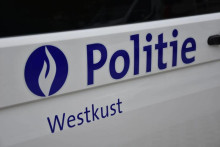
Authorities in Belgium have reported a notable increase in migrant smuggling attempts along the country’s North Sea coast in recent weeks, prompting enhanced law enforcement action and efforts to strengthen international cooperation. Federal and local police forces have stepped up patrols and arrests as part of a broader response to the phenomenon, while Belgium and the United Kingdom are exploring closer collaboration to address the cross-border dimension.
Read more
Main theme: Smuggling & Trafficking
Keywords: Belgian coast, migrant smuggling, police operation, international cooperation

Publication date:
The Council of Ministers approved, at second reading, two draft bills aimed at implementing the European Pact on Migration and Asylum in Belgian law. The texts were adopted with a view to their submission to the Chamber of Representatives of Belgium under an urgent procedure. The first draft bill aims to apply or transpose eight legislative instruments of the Pact into Belgian law, while the second concerns procedures before the Council for Alien Law Litigation.
Read more
Main theme: Cross-sectional, Asylum, Migration
Keywords: New Pact on Migration and Asylum, implementation, transposition, Belgian law

Publication date:
According to Belgian Minister for Asylum and Migration Anneleen Van Bossuyt, the minimum proof of sufficient means of subsistance for non-EU students wishing to study in Belgium has been increased. She said the measure aims to strengthen study migration as a gateway for international talent while preventing financial abuse and protecting students from precarious situations.
Read more
Main theme: Study § Training
Keywords: student migration, sufficient financial resources, sufficient means of subsistance, guarantor
Publication date:
Myria has released its first comprehensive mapping of quantitative data on minor victims of human trafficking and aggravated forms of smuggling in Belgium. The report aims to provide a clearer statistical basis for understanding the situation of minors at risk, while also highlighting structural gaps in current data collection and sharing practices.
Read more
Main theme: Vulnerable groups, Data & Statistics, Smuggling & Trafficking
Keywords: victim of trafficking, victim of smuggling, minor, data collection, figures

Publication date:
The Antwerp Family Court has annulled the decisions of local civil registry officials that sought to revoke the Belgian nationality of children born in Belgium to Palestinian parents. In five rulings issued on 27 February 2026, the court emphasised that depriving these children of nationality would be contrary to their best interests.
Read more
Main theme: Statelessness, Citizenship & Nationality
Keywords: Belgian nationality, misuse, withdrawal, Palestinian, child, best interests of the child
Publication date:
The Belgian Constitutional Court has temporarily suspended legislative measures introduced in 2025 that tightened rules on material reception conditions for asylum seekers and family reunification for beneficiaries of subsidiary protection. The suspensions concern two separate laws, and the Court has referred several preliminary questions to the Court of Justice of the European Union (CJEU) to clarify their compatibility with EU law.
Read more
Publication date:
Child Focus and Payoke have signed a collaboration protocol to better detect, support, and protect minors who are victims of sexual exploitation. The agreement establishes fixed contact points, faster coordination for urgent cases, and tailored referrals, aiming to ensure that victims receive appropriate assistance without having to repeat their story.
Read more
Main theme: Smuggling & Trafficking
Keywords: child sexual exploitation, victims of human trafficking, coordination, referral

Publication date:
Four years after Russia launched its full-scale invasion of Ukraine on 24 February 2022, Belgium has granted more than 101.500 temporary protection certificates to people fleeing the conflict. Today, around 70.600 of these displaced Ukrainians remain in the country. While the temporary protection scheme has been extended until March 2027, uncertainty remains over what will happen afterwards, raising questions for both the authorities and Ukrainian beneficiaries.
Read more
Main theme: Temporary protection
Keywords: beneficiary of temporary protection, accommodation, transition, legal status, voluntary return, reintegration
Publication date:
The medical office run by Médecins du Monde within the Humanitarian Hub in Brussels will cease its activities on 31 March 2026. The closure follows the recent shutdown of the Athena Medical Centre. According to the organisation, this will further reduce access to primary healthcare for vulnerable groups in the capital. Médecins du Monde has warned of likely consequences for emergency services and for people with limited access to care.
Read more
Main theme: Vulnerable groups, Asylum, Migration
Keywords: Humanitarian Hub, Brussels, access to healthcare, vulnerable persons
Publication date:
Refugee Walk 2026 is an annual fundraising walking event organised by Vluchtelingenwerk Vlaanderen. Thousands of participants will walk either 20 km or 40 km on 4 October, choosing to join the central event in Brussels or to follow a self-selected route elsewhere. Walkers participate individually or with friends, colleagues, or organisations, combining physical activity with a visible show of solidarity for refugees.
Read more
Main theme: Asylum
Keywords: Refugee Walk, solidarity, refugee

Publication date:
The Klarafestival 2026 in Brussels brings together audiences, musicians, and participants from diverse backgrounds around the theme “Where is Home?”. The festival combines classical music concerts with additional activities such as conferences and discussions. It also engages in social initiatives, giving young talents a platform and reaching communities that do not usually experience live classical music. In 2026, particular attention is given to refugees, highlighting the importance of having a safe home and a sense of belonging.
Read more
Main theme: International Protection
Keywords: Klarafestival, UNHCR, refugee, home, safety

Publication date:
The Summer School in Brussels brings together around 100 participants, including students, academics, and professionals from EU Member States and EU institutions, as well as refugee-students supported by the RefYOUgees initiative. It combines a series of courses on EU Migration and Asylum Law with debates on recent policy developments. Participants also attend seminars presenting PhD research projects and discuss complex legal and policy issues. The programme provides opportunities for interaction and networking among students, academics, practitioners, and refugee participants.
Read more
Main theme: Cross-sectional, Asylum, Migration
Keywords: Odysseus Network, summer school
Publication date:
Civil society organisations, as highlighted by Vluchtelingenwerk Vlaanderen, have urged the federal government to abandon the draft law allowing home searches for enforcement of return decisions, citing serious concerns raised by the Council of State. The draft law, first adopted by the Council of Ministers in July 2025, has faced scrutiny from several advisory bodies, including Myria, the Children’s Rights Delegate, and the Data Protection Authority. Municipal motions in various cities, including Brussels, Verviers, and La Hulpe, have also questioned its provisions.
Read more
Main theme: Return & Readmission
Keywords: home search, forced return, privacy, inviolability of the home

Publication date:
Flanders granted around 21.460 work permits to non-EU nationals in 2025, the highest level in recent years. Seasonal work and medium- to high-skilled positions accounted for a large share of the permits. New rules introduced in January 2026 give priority to domestic and EU labour before non-EU recruitment. Stakeholders, including employer organisations and political parties, have expressed differing perspectives on these developments.
Read more
Main theme: Data & Statistics, Economic migration
Keywords: Flanders, work permit, single permit, third-country nationals, seasonal work, shortage occupation
Publication date:
Fedasil has released its management plan for 2025–2030. Approved in December 2025 and submitted by Director General Pieter Spinnewijn to the Minister for Asylum and Migration, the plan sets out the Agency’s priorities, including restoring the core functioning of the reception system, strengthening its capacity to respond to fluctuations in the number of applicants to be accommodated, and improving the quality, resilience, and effectiveness of services.
Read more
Main theme: Reception
Keywords: Fedasil, management plan, reception policy
Publication date:
On 9 February 2026, the Minerva think tank published a report assessing the economic and demographic impacts of current asylum and migration policies in Belgium, while also considering comparative cases in other European countries. It examines how policy choices in this field interact with labour market needs, demographic trends and public finances, and explores potential medium- to long-term effects associated with different policy approaches. The publication contributes to the broader policy debate by presenting available data and modelling selected scenarios.
Read more
Main theme: Cross-sectional, Asylum, Migration
Keywords: asylum policy, migration policy, labour market, demography, population ageing, welfare
Publication date:
Twenty-five organisations have submitted a petition to the Belgian Constitutional Court challenging the new family reunification law, which entered into force in August 2025. The petition highlights concerns that the law creates barriers that may prevent families from reuniting, potentially separating children from their parents indefinitely.
Read more
Main theme: Family reunification
Keywords: family reunification law, access to family reunification, petition, Constitutional Court

Publication date:
On 1 February 2026, Belgian Ministers Anneleen Van Bossuyt (Asylum and Migration) and Bernard Quintin (Interior) announced the extension of targeted internal checks, in place since July 2025, until at least 31 July 2026. The measures aim to curb irregular migration and secondary movements into Belgium while enforcing residence requirements and enhancing security. Targeted checks are conducted on major roads, long‑distance buses, selected trains, and intra‑Schengen flights.
Read more
Publication date:
On 3 February 2026, Fedasil published its statistics on voluntary returns for 2025. A total of 3.122 people chose to return to their country of origin. The number is slightly lower than in 2024 but higher than in 2023. The top destination countries include Brazil, Moldova, Syria, Colombia, and Turkey.
Read more
Main theme: Return & Readmission
Keywords: voluntary return, reintegration assistance

Publication date:
Myria, the Federal Migration Centre, has published a new thematic booklet as part of its annual report "Migration in figures and rights 2025". The publication presents recent figures on return, detention and removal, while analysing major legislative developments in Belgian return policy. It also examines the situation of detainees without legal residence in Belgian prisons and reviews the creation of the National Preventive Mechanism against ill-treatment in detention. According to Myria, return indicators have continued to rise after the pandemic, while new laws significantly expand the use of control and coercive measures.
Read more
Main theme: Return & Readmission
Keywords: return policy, detention, voluntary return, forced return, National Preventive Mechanism, Convention against Torture

Publication date:
In 2025, Belgium received 34.439 applications for international protection, a decline compared with 2024. The Office of the Commissioner General for Refugees and Stateless Persons (CGRS) took decisions on 31.457 people, with a protection rate falling to its lowest level in over a decade. Key factors behind this trend include the suspension of the processing of Syrian cases in the first ten months of 2025 and prioritisation of applications from individuals already protected in other EU Member States.
Read more
Main theme: International Protection
Keywords: application for international protection, asylum decisions, protection rate

Publication date:
Belgium has confirmed its participation in an exploratory administrative mission to Afghanistan, representing 20 European Union Member States. The announcement was made by Minister of Asylum and Migration Anneleen Van Bossuyt. The mission, organised by the European Commission, aimed to establish technical administrative contacts with Afghan authorities. The initiative has drawn attention from refugee organisations, which have expressed concern about engagement with the Taliban regime.