Publication date:
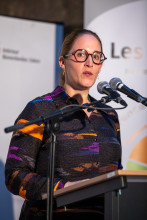
The Secretary of State for Asylum and Migration has announced that she would use all possible means to reduce the number of applications from persons who already have protection in another EU Member State. She intends to oppose the Council for Aliens Law Litigation's rulings leading to the admissibility of these applications and the recognition of a protected status.
Read more
Main theme: International Protection
Keywords: applicant for international protection, refugee, protection status

Publication date:
The Federal Institute for Human Rights launched an investigation into "the growing tendency of Belgian authorities not to implement court decisions that condemn them", inter alia regarding the reception of applicants for international protection. The report following the investigation will be sent to the Chamber of Representatives.
Read more
Main theme: Reception
Keywords: reception crisis, court decision, non-compliance
Publication date:
Fedasil announced that the Belgian reception network has now a higher capacity than that recorded during the asylum crisis of 2015-2016. However, this capacity is insufficient to accommodate all applicants for international protection who are entitled to reception. At present, 2.650 single men are still on the waiting list for a reception place.
Read more
Main theme: Reception
Keywords: reception capacity, reception centre, shortage

Publication date:
Eurostat released data on unaccompanied minors granted temporary protection in 21 EU Member States and all EFTA countries between March 2022 and September 2024. Austria, the Netherlands and Lithuania have granted the most temporary protection statuses, in absolute terms, to unaccompanied minors since March 2022. Belgium has granted temporary protection status to 1600 unaccompanied minors during the same period.
Read more
Main theme: Data & Statistics, Temporary protection
Keywords: temporary protection, beneficiary of temporary protection, unaccompanied minors, Ukraine
Publication date:
The High-Level Committee on Resettlement and Humanitarian Admission held its first meeting on 7 November 2024. It will help the Commission define the EU’s two-year Plan that will determine the number of refugees to be admitted to the EU, and the countries and regions from which resettlements and humanitarian admissions should take place.
Read more
Main theme: International Protection
Keywords: resettlement, humanitarian admission, Union Framework Regulation, New Pact on Migration and Asylum
Publication date:
Fedasil announced that it can temporarily make use of centres in Bredene (Flanders) and in Theux (Wallonia) to accommodate applicants for international protection until March 2025. Both sites have already been used by Fedasil in the past, each time for a period of a few months.
Read more
Main theme: Reception
Keywords: reception capacity, reception centre, shortage
Publication date:
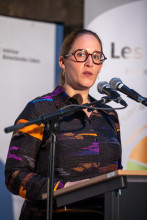
Nicole de Moor said that applications relating to 859 persons have already been processed in accelerated procedure since February 2024. In 96 % of cases, applicants were not granted protection status. Ms de Moor wants to focus more on prevention to prevent people who do not need protection from applying for international protection in Belgium.
Read more
Publication date:
As of 24 October 2024, the centre for registering applications for international protection is located at rue Belliard 68 in 1000 Brussels. Applications can still be registered in the Pacheco building until Wednesday, 23 October 2024.
Read more
Main theme: International Protection
Keywords: applicant for international protection, registration, registration centre

Publication date:
The 2024 national conference of EMN Finland shall examine the state of play as well as the future prospects of the situation of Ukrainians in Finland and in EU countries. The conference aims to address the challenges of integration in a situation where beneficiaries of temporary protection find themselves between two countries. The conference seeks to support these persons in the limbo between integration and return.
Read more
Main theme: Integration, Temporary protection, Return & Readmission
Keywords: beneficiary of temporary protection, Ukraine, legal status, voluntary return
Publication date:
Fedasil has a budget for financing specific projects relating to the reception of asylum seekers (and other reception beneficiaries). The Agency has launched its call for projects for the year 2025. In 2025, the focus will be on projects that focus on support, activation, and housing.
Read more
Main theme: Reception
Keywords: call for projects, applicant for international protection, support, activation, housing
Publication date:
In a recent judgement in Case C‑134/23, the Court of Justice of the European Union (CJEU) clarified that Article 38 of Directive 2013/32/EU does not preclude legislation of a Member State designating a third country as generally safe for certain categories of applicants for international protection, even if that third country has suspended, in general terms and without any prospect of a contrary development, the admission or readmission of those applicants to its territory.
Read more
Main theme: International Protection
Keywords: applicant for international protection, safe third country, Turkey, readmission
Publication date:
In a recent judgement, the Court of Justice of the European Union concluded that some of the discriminatory measures against women in Afghanistan, namely forced marriage and the lack of protection against gender-based violence and domestic violence, must be classified alone as "acts of persecution" and that other measures, taken as a whole, given their cumulative effect and the fact that they are applied deliberately and systematically, constitute such acts.
Read more
Main theme: International Protection
Keywords: Afghan woman, act of persecution, gender, nationality

Publication date:
The Office of the Commissioner General for Refugees and Stateless Persons (CGVS) announced on 2 October 2024 that the notification of decisions granting or refusing subsidiary protection status to applicants from Lebanon is suspended until the CGRS has sufficient objective information to assess the security situation in Lebanon.
Read more
Main theme: International Protection
Keywords: applicant for international protection, Lebanon, refugee status, subsidiary protection status

Publication date:
In their jobs, front-line workers sometimes have to deal with the trauma of applicants for international protection and are confronted with conflicts, tensions and sometimes personal safety risks. Hence, they are exposed to a high risk of personal stress levels and burnout, moral injury, depression, trauma, and other mental health challenges. This conference aims to bring together stakeholders at national and EU level to share experiences, challenges and practical solutions in this field.
Read more
Main theme: Reception
Keywords: staff wellbeing, frontline worker, stress, burnout

Publication date:
On 1 October 2024, Nicole de Moor stated that proportionally speaking, more Palestinian applicants for international protection come to Belgium than to other European Member States. She also confirmed that the protection rate for Palestinian applicants had increased in recent years.
Read more
Main theme: International Protection
Keywords: Palestinian, applicant for international protection, New Pact on Migration and Asylum
Publication date:
After nearly two years of closure, Fedasil’s Info Point reopened on 27 September 2023, at its new location in rue Héger-Bordet, 3. The Info Point offers information and counseling for applicants for international protection living outside the reception network, but also migrants in transit and persons without a residence permit.
Read more

Publication date:
In a statement from 19 September 2024, the Council of Europe notes that Belgium has taken steps to address the wider reception crisis (such as creating 3.500 additional reception places and accelerating the examination of certain asylum applications to free up existing reception places), but these measures are insufficient.
Read more
Main theme: Reception
Keywords: reception crisis, accommodation, material assistance, judicial decision
Publication date:
The European Union Agency for Asylum (EUAA) released the latest asylum trends for the first half of 2024. By June 2024, EU countries had received 513.000 applications for international protection. While the figure remained stable compared to the first six months of 2023, some changes occurred at the national level.
Read more
Main theme: International Protection
Keywords: application for international protection, asylum trend, asylum recognition rate

Publication date:
Cindy Ngamba, a 25-year-old Cameroonian refugee living in the United Kingdom, won the bronze medal in the boxing discipline at the Paris Olympics. She is the first athlete in any sport to secure a medal while representing the refugee team.
Read more
Main theme: International Protection
Keywords: Olympic Games, boxing, refugee olympic team
Publication date:
In the 2024 Rule of Law Report, especially in the country chapter on the rule of law situation in Belgium, the European Commission recommends that Belgium takes measures to ensure compliance by public authorities with final rulings of national courts and the European Court of Human Rights, referring in particular to judgments finding the State responsible for not ensuring adequate reception of asylum seekers.
Read more
Main theme: Reception
Keywords: rule of law, reception, applicant for international protection
Publication date:
On 9 July, almost 100 NGOs, which include ECRE and several ECRE member organisations, published a joint statement urging all EU Member States to guarantee the right to seek and enjoy asylum and uphold their commitments to the international refugee protection system.
Read more
Main theme: International Protection
Keywords: application for international protection, outsourcing, externalisation
Publication date:
From 1 July 2024, adult asylum seekers who stay in a reception centre and who have a working income will have to contribute to this reception. Those who do not wish to contribute may consider staying outside the reception centre. They are free to leave the centre and find their own accommodation.
Read more
Main theme: Reception
Keywords: reception centre, financial contribution, material assistance
Publication date:
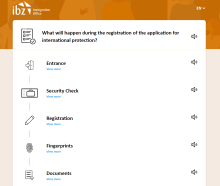
The Immigration Office disclosed a new website aimed at informing applicants for international protection about the purpose and course of the registration. Each step of the process is explained in 16 languages via texts, audio, and videos. The website was co-funded by the European Union.
Read more
Main theme: International Protection
Keywords: registration, application for international protection
Publication date:
In order to structurally shorten the duration of reception in Belgium, an amendment was made to the Reception Act. Anyone who receives a final negative asylum decision must leave the reception place within a period of 30 days.