Publication date:
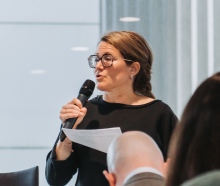
On 11-12 May 2025, Belgian Minister for Asylum and Migration Anneleen Van Bossuyt visited Chisinau to emphasise that asylum applications from Moldovan nationals—coming from a country considered safe—are processed through an accelerated procedure in Belgium. She also announced the immediate discontinuation of the return incentive, which is seen as encouraging misuse of the asylum system.
Read more
Main theme: International Protection, Irregular Migration
Keywords: unfounded asylum application, moldova, safe country of origin, return incentive
Publication date:
The European Commission has approved an additional €3 billion in funding to assist Member States in implementing the Pact on Migration and Asylum and to support the hosting of beneficiaries of temporary protection from Ukraine. This amount is composed of €1.8 billion from the revision of the current Multiannual Financial Framework and a €1.2 billion top-up to the Asylum Migration and Integration Fund (AMIF) and the Border Management and Visa Instrument (BMVI).
Read more
Publication date:
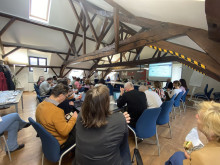
During a lunch & learn session, the EMN Belgium team met with around 30 Fedasil staff members to present the work of the European Migration Network, encourage active participation in the national network, and provide updates on recent and upcoming publications and activities.
Read more
Main theme: Reception

Publication date:
On 23 April 2025, the Office of the Commissioner General for Refugees and Stateless Persons (CGRS) announced an extension of the suspension of the processing of applications for international protection from Syrian nationals. The suspension, initially introduced on 9 December 2024, will remain in place until at least the end of July 2025.
Read more
Main theme: International Protection
Keywords: application for international protection, Syria
Publication date:
The European Commission has issued a proposal to accelerate the implementation of certain aspects of the Pact on Migration and Asylum, with the aim of helping Member States process asylum claims more quickly, particularly for applicants whose claims are likely to be unfounded. In addition, the proposal includes the establishment of an EU-wide list of safe countries of origin. Human rights organisations have raised concerns, especially about the inclusion of Egypt, Tunisia, and Morocco, which they argue have ongoing human rights issues.
Read more
Publication date:
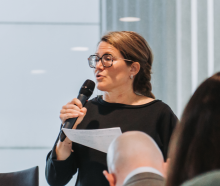
Recent data requested by Green party MP Matti Vandemaele from the Minister for Asylum and Migration, Anneleen Van Bossuyt (N-VA), indicate a notable increase in the time taken to process applications for international protection. This trend has implications for applicants, who remain in prolonged uncertainty, and for the national reception system, which continues to face significant pressure.
Read more
Main theme: International Protection
Keywords: application for international protection, processing time, backlog, reception centre

Publication date:
In a judgment issued on 11 April 2025, the District Court of The Hague, sitting in Groningen, found that single, non-vulnerable male asylum seekers face a real risk of being deprived of adequate reception facilities in Belgium, which could lead to inhumane or degrading treatment. This ruling follows previous decisions by Dutch judges who determined that Dublin transfers to Belgium could not be carried out due to insufficient guarantees of proper accommodation.
Read more
Main theme: Reception
Keywords: Dublin Regulation, reception condition, reception crisis, inhuman or degrading treatment, Article 3 ECHR

Publication date:
The conference will explore the future of Ukrainian displaced persons beyond temporary protection and will bring together policymakers, experts, and stakeholders to discuss strategies for policy transitions, address employment related integration challenges, share best practices, and examine the role of the diaspora in supporting long-term solutions.
Read more
Main theme: Integration, Temporary protection
Keywords: beneficiary of temporary protection, Ukraine
Publication date:
Last year, Fedasil’s mobile and multilingual Reach Out team provided information to 1.702 migrants in precarious situations in Brussels and Flanders. Representing more than 75 nationalities, these individuals received counselling on a wide range of topics, from international protection and reception to healthcare, employment, and voluntary return.
Read more
Main theme: Reception
Keywords: migrant, precarious situation, Reach Out Team, counselling
Publication date:
In a new report, Amnesty International urges the Belgian government to ensure that all people seeking asylum are given adequate housing and that they have access to adequate healthcare services, including specialised psychological support, regardless of their housing situation. Belgian authorities are also called to activate the "dispersal plan" outlined in domestic law and implement contingency plans to manage fluctuations in the number of asylum applications.
Read more
Main theme: Reception
Keywords: reception crisis, reception capacity, housing, access to healthcare

Publication date:
On 25 March 2025, the Belgian Contact Point to the European Migration Network (EMN) participated in a study morning dedicated to the presentation of a new tool: "The Reception Centre as Seen by Children." The new tool provides practical methods for capturing children's experiences, enabling professionals to better understand their needs and enhance the quality of care in these centres.
Read more
Main theme: Reception
Keywords: reception centre, child, child-friendly environment
Publication date:
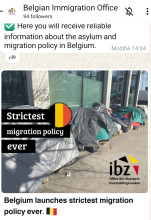
The Belgian Minister of Asylum and Migration, Anneleen Van Bossuyt, has launched dissuasion campaigns on YouTube and via a WhatsApp channel that directly disseminates deterrence messages to potential asylum seekers. Several organisations have reacted to these campaigns, particularly criticising the messages conveyed by them.
Read more
Main theme: International Protection
Keywords: dissuasion campaign, deterrence campaign
Publication date:
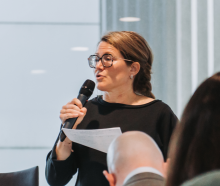
The Minister for Asylum and Migration has decided to discontinue the Impuls Fund, which had been established to provide additional support to local authorities in covering the extra costs associated with opening new Local Reception Initiatives. The Minister will now move towards a more collective approach to reception, with existing Local Reception Initiatives being gradually phased out.
Read more
Main theme: Reception
Keywords: reception crisis, local reception initiative, subsidy
Publication date:
In their report 2024, seven humanitarian and civil society organisations raise concerns over the Belgian government's plan to reduce reception places for applicants for international protection, warning that this measure could increase homelessness, negatively impact individuals' health and integration prospects, and generate significant hidden costs for society.
Read more
Main theme: Reception
Keywords: reception crisis, homelessness

Publication date:
In the note submitted to the Chamber of Representatives, Minister Anneleen Van Bossuyt described the current situation as operationally, financially, and socially untenable. She announced her intention to urgently submit, as an initial step, a package of crisis measures to address the ongoing asylum and reception crisis. Additionally, she outlined a broader range of measures covering key aspects, including asylum and reception, migration, the protection of vulnerable groups, return and security, the social welfare system, and access to Belgian nationality.
Read more
Main theme: Asylum, Migration
Keywords: policy orientation paper, asylum policy, migration policy, asylum crisis, reception crisis

Publication date:
On 12 March 2025, the Office of the Commissioner General for Refugees and Stateless Persons (CGRS) announced that it would temporarily suspend the notification of decisions granting subsidiary protection, refusing refugee status and refusing subsidiary protection status from applicants from the West Bank until they have access to sufficient objective information to accurately assess the general situation in the West Bank.
Read more
Main theme: International Protection
Keywords: West Bank, refugee status, subsidiary protection status

Publication date:
The European Union Agency for Asylum (EUAA) has released its annual analysis of asylum trends in 2024. The EU+ received approximately 1.014 million asylum applications, reflecting an 11% decrease compared to 2023. This decrease concentrated in the second half of the year as the application trend deviated from the typical seasonal pattern.
Read more
Main theme: International Protection
Keywords: asylum trend, asylum applications, nationality, destination country
Publication date:
Since the start of the war in Ukraine, Belgium has granted temporary protection to 93.343 Ukrainians, with a sharp decline beginning in 2023 and continuing into 2024 and early 2025. As the number of arrivals has slowed and the focus shifts to integration efforts, both the Flemish and Walloon governments plan to gradually reduce reception capacity for beneficiaries of temporary protection in the coming months.
Read more
Main theme: Data & Statistics, Temporary protection
Keywords: temporary protection, beneficiary of temporary protection, accommodation

Publication date:
A recent report published by the European Union Agency for Asylum (EUAA), which analyses case law from 2020-2024, highlights that EU-level and national court decisions are guiding national practices to shift to a more gender-sensitive approach in international protection.
Read more
Main theme: International Protection
Keywords: gender-based violence, gender, membership of a particular social group, ground for persecution
Publication date:
Fedasil revealed that Belgium resettled 487 people in 2024, exceeding the 287 resettled in 2023. The refugees resettled in 2024 mainly came from countries such as Syria, Congo, Eritrea and Sudan.
Read more
Main theme: Reception
Keywords: resettlement, resettled refugee

Publication date:
On 16 January 2025, the Office of the Commissioner General for Refugees and Stateless Persons (CGRS) released asylum statistics for the whole year 2024. According to the figures, 39.615 persons, mainly from Palestine, Syria, Afghanistan, Eritrea and Turkey, applied for international protection in Belgium. The Secretary of State for Asylum and Migration stressed that a large number of these applicants were already registered in another Member State.
Read more
Main theme: International Protection
Keywords: asylum applications, asylum decisions, asylum figures
Publication date:
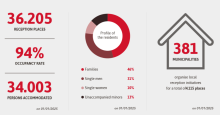
While Belgium continues to face a reception crisis, ongoing since the summer of 2021, the latest figures from Fedasil show that the number of places for asylum seekers made available by municipalities continues to decrease.
Read more
Main theme: Reception
Keywords: local reception initiative, reception crisis, housing shortage

Publication date:
From 1 January 2025 until 31 December 2026, the European Union Agency for Asylum (EUAA) will support Belgium to increase the capacities of the national asylum and reception authorities. Asylum support teams will be deployed to support the registration and processing of cases as well as the design, update and implementation of specific systems and tools.
Read more
Main theme: Asylum
Keywords: EUAA, operational plan, operational assistance, technical assistance

Publication date:
As of 9 December 2024, the Office of the Commissioner General for Refugees and Stateless Persons will temporarily suspend processing cases of applicants originating from Syria. Planned personal interviews will be cancelled and assessments will be temporarily put on hold.
Read more
Main theme: International Protection
Keywords: application for international protection, Syria
Publication date:
On the occasion of International Volunteer Day, Fedasil highlights the importance of volunteers who give their time to residents in reception centres and of sponsors who create links with these residents outside of the centres. If you have free time, join them and contact a reception centre in your neighbourhood!