"Migration and asylum in Europe" allows to explore, visualise and compare indicators on migration and asylum at the EU and country levels. Key data and trends are proposed on topics such as population diversity, protection and asylum, irregular migration and return, and skills of migrants.
Read more
Main Theme: Data & Statistics
Keywords: migration trend, asylum trend
During the Justice and Home Affairs Council on 13 December 2024, Member States agreed on a proposal aimed at bringing their criminal law closer together on issues such as the definition and sanctioning of migrant smuggling. The text will now be used by the Council in “trilogue” negotiations with the European Parliament.
Read more
Main Theme: Smuggling & Trafficking
Keywords: migrant smuggling, criminal offence, penalty, humanitarian clause
The Council of the European Union adopted a decision to lift checks on persons at the internal land borders with and between Bulgaria and Romania from 1 January 2025. Bulgaria and Romania will so become full Schengen members.
Read more
Main Theme: Borders & Visa
Keywords: Schengen, Bulgaria, Romania
The situation at the Union’s borders with Russia and Belarus remains of concern with persistent threats related to the weaponisation of migrants. In a new Communication, the European Commission sets the framework for actions to guarantee the security of the Union and the territorial integrity of the Member States.
Read more
Main Theme: Borders & Visa
Keywords: border security, external border, weaponization of migration, migration instrumentalization
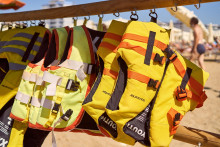
In London, the UK, Germany, France, Netherlands and Belgium, in the presence of the European Commission and its agencies, Europol and Frontex, agreed on a five-point priority plan to tackle irregular migration and migrant smuggling in 2025. Key priorities include targeting illicit financial flows that sustain smuggling networks and tackling organised crime groups' use of social media to recruit and advertise dangerous journeys across Europe and the Channel.
Read more
Main Theme: Smuggling & Trafficking
Keywords: Calais Group, irregular migration, English channel, smuggling network, action plan

As of 9 December 2024, the Office of the Commissioner General for Refugees and Stateless Persons will temporarily suspend processing cases of applicants originating from Syria. Planned personal interviews will be cancelled and assessments will be temporarily put on hold.
Read more
Main Theme: International Protection
Keywords: application for international protection, Syria

From 9 December 2024 until 8 June 2025, the Royal Netherlands Marechaussee will conduct temporary checks at its borders with Belgium and Germany to, among other things, stem irregular immigration into the country and combat migrant smuggling. Travellers intending to cross the border are advised to carry their ID documents with them.
Read more
Main Theme: Borders & Visa
Keywords: internal border control, Schengen borders code
On the occasion of International Volunteer Day, Fedasil highlights the importance of volunteers who give their time to residents in reception centres and of sponsors who create links with these residents outside of the centres. If you have free time, join them and contact a reception centre in your neighbourhood!
Read more
Main Theme: Reception
Keywords: reception centre, volunteer
On 4 December 2024, the European Commission released a proposal for a Regulation enabling a progressive start of operations for Europe’s new digital border system - the Entry/Exit System (EES). According to the proposal, the Member States will start registering at least ten per cent of border crossings, and by the end of the given six-month period, they will need to reach the full registration of all people.
Read more
Main Theme: Borders & Visa
Keywords: entry exit system, start of operations, external border, border control
Myria has published the fifth thematic section of its 2024 annual report. In this section, entitled « International protection », Myria pays particular attention inter alia to the new residence procedure for stateless persons. The Federal Migration Centre underlines that the new procedure is subject to strict conditions and that it provides reduced procedural guarantees for stateless persons.
Read more
Main Theme: Statelessness
Keywords: stateless persons, residence procedure, procedural guarantee, equal treatment, interview

The Secretary of State for Asylum and Migration has announced that she would use all possible means to reduce the number of applications from persons who already have protection in another EU Member State. She intends to oppose the Council for Aliens Law Litigation's rulings leading to the admissibility of these applications and the recognition of a protected status.
Read more
Main Theme: International Protection
Keywords: applicant for international protection, refugee, protection status
On 27 November 2024, members of the European Parliament elected the College of Commissioners as a whole by roll-call vote. The College of Commissioners is expected to take office on 1 December 2024. Magnus Brunner will be the new Commissioner for Internal Affairs and Migration, marking the end of Ylva Johansson's mandate.
Read more
Main Theme: Cross-sectional
Keywords: Commissioner for Home Affairs
On 26 November 2024, the European Commission launched a new programme to support a Talent Partnership between the EU and Pakistan. The programme, that is funded with EUR 3 million from the EU, will enable the EU, its Member States, and Pakistan to develop a coherent set of actions on labour mobility and skills development.
Read more
Main Theme: External Dimension
Keywords: talent partnership, talent mobility, labour market need, skill need

The EMN Steering Board has voted on the topics to be analysed in studies and informs in 2025. In total, one study and nine informs, particularly in connection with the implementation of the Pact on Migration and Asylum, will be developed next year. A Belgian proposal inviting us to rethink the reception of applicants for international protection was selected.
Read more
Main Theme: Cross-sectional
EMN Belgium visited the team of DEI Belgium - ECPAT to better understand each other's activities and deepen exchanges and opportunities for cooperation. EMN Belgium, for example, learned more about their work to protect migrant children and their parents in reception centres.
Read more
Main Theme: Vulnerable groups
Keywords: migrant child, sexual abuse, sexual exploitation
The Federal Public Service Justice is currently able to assign a guardian to an unaccompanied foreign minor within the normal period of 8 weeks. However, the demand for guardians remains high in Limburg, Antwerp and Brussels, and the Guardianship Service is still urgently looking for additional guardians.
Read more
Main Theme: Vulnerable groups
Keywords: unaccompanied minors, guardianship

The Federal Institute for Human Rights launched an investigation into "the growing tendency of Belgian authorities not to implement court decisions that condemn them", inter alia regarding the reception of applicants for international protection. The report following the investigation will be sent to the Chamber of Representatives.
Read more
Main Theme: Reception
Keywords: reception crisis, court decision, non-compliance
18 November marks the European Day on the Protection of Children against Sexual Exploitation and Sexual Abuse. Children are the most vulnerable group in society and children who are migrating, especially if unaccompanied, face an increased risk of being subjected to violence, including sexual violence, exploitation, and human trafficking.
Read more
Main Theme: Vulnerable groups
Keywords: migrant child, sexual abuse, sexual exploitation
The latest International Migration Outlook 2024 includes a special focus on immigrant entrepreneurship. It highlights that migrants represent a growing share of total entrepreneurs in OECD countries. In 2022, 17% of the self-employed in OECD countries on average were migrants, up from 11% in 2006.
Read more
Main Theme: Cross-sectional
Keywords: migrant entrepreneurship, self-employment, job creation

A man suspected of running an operation that supplied small boats and engines to human smugglers who were active in Belgium and northern France was arrested in the Netherlands. The 44-year-old Turkish national faces extradition to Belgium to face charges of human smuggling in the context of the activities of a criminal organisation.
Read more
Main Theme: Smuggling & Trafficking
Keywords: small boat, smugglers, English channel
According to Statbel, the Belgian statistical office, 4.048 persons obtained Belgian nationality in August 2024. The main countries of origin of people who acquired Belgian nationality in August are Morocco, Romania, Syria, Italy and France.
Read more
Main Theme: Data & Statistics
Keywords: access to nationality, Belgian nationality
Fedasil announced that the Belgian reception network has now a higher capacity than that recorded during the asylum crisis of 2015-2016. However, this capacity is insufficient to accommodate all applicants for international protection who are entitled to reception. At present, 2.650 single men are still on the waiting list for a reception place.
Read more
Main Theme: Reception
Keywords: reception capacity, reception centre, shortage
Eurostat released data on unaccompanied minors granted temporary protection in 21 EU Member States and all EFTA countries between March 2022 and September 2024. Austria, the Netherlands and Lithuania have granted the most temporary protection statuses, in absolute terms, to unaccompanied minors since March 2022. Belgium has granted temporary protection status to 1600 unaccompanied minors during the same period.
Read more
Main Theme: Data & Statistics, Temporary protection
Keywords: temporary protection, beneficiary of temporary protection, unaccompanied minors, Ukraine
The High-Level Committee on Resettlement and Humanitarian Admission held its first meeting on 7 November 2024. It will help the Commission define the EU’s two-year Plan that will determine the number of refugees to be admitted to the EU, and the countries and regions from which resettlements and humanitarian admissions should take place.
Read more
Main Theme: International Protection
Keywords: resettlement, humanitarian admission, Union Framework Regulation, New Pact on Migration and Asylum
On 5 November, the LIBE Committee questioned Magnus Brunner, the Austrian candidate for the Internal Affairs and Migration portfolio. Brunner committed to speeding up the implementation of some elements of the New Pact on Migration and Asylum and showed himself open to considering new ideas to complement it. He also announced that he would table a new Return Directive and strengthen legal pathways to attract the skills that EU labour markets need.