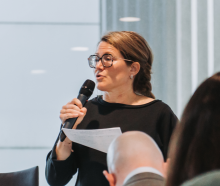
Belgian Minister for Asylum and Migration Anneleen Van Bossuyt is carrying out a visit to the Democratic Republic of Congo. The visit takes place in the context of a marked increase in asylum applications from Congolese nationals in Belgium in recent years. The mission aims to discourage unfounded asylum applications, address the misuse of visa procedures, counter document fraud and misleading messages from smugglers, and strengthen cooperation on return and the fight against irregular migration.

On 27 March 2026, EMN Belgium participated in a seminar organised by Myria and the National Institute of Criminalistics and Criminology (NICC) entitled "The status of victim of smuggling under the microscope", where the results of the research report on the practical application of this status were presented.
Main Theme: Irregular Migration
Keywords: human smuggling, legal status, residence permit, Belgium

On 1 February 2026, Belgian Ministers Anneleen Van Bossuyt (Asylum and Migration) and Bernard Quintin (Interior) announced the extension of targeted internal checks, in place since July 2025, until at least 31 July 2026. The measures aim to curb irregular migration and secondary movements into Belgium while enforcing residence requirements and enhancing security. Targeted checks are conducted on major roads, long‑distance buses, selected trains, and intra‑Schengen flights.
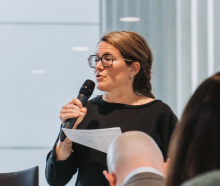
Belgian Ministers of Justice and Asylum and Migration, Annelies Verlinden and Anneleen Van Bossuyt, visited Albania and Kosovo on 6–8 October 2025. Their discussions addressed migration management, prison overcrowding, and bilateral cooperation in justice and security. Meetings involved national authorities and highlighted ongoing collaboration between Belgium and the two countries.
Main Theme: Irregular Migration, Return & Readmission, Smuggling & Trafficking
Keywords: Belgium, Albania, Kosovo, cooperation, identification, forced return, detainee
The Fedasil Info Point in Brussels has been supporting asylum seekers and other migrants for two years, providing accessible and centralised information in one location. Since reopening on 27 September 2023 at the former Bordet Hospital site, it has welcomed over 22.000 visitors, mostly single men with ongoing asylum procedures. Visitors most frequently ask about accommodation, medical care, legal support, and other practical matters. Partners such as Caritas International and the European Union Agency for Asylum (EUAA) assist in providing guidance and support.
Minister Van Bossuyt updates Parliament on internal checks against irregular and secondary migration

Belgium introduced targeted internal checks in July 2025 to address irregular and secondary migration. The measures are applied at airports, international bus and rail stations, and motorway rest areas. Over 11.000 individuals have been checked, with some ordered to leave the territory or placed in closed centres. The government plans to continue the checks and to conduct a six‑month evaluation.
Main Theme: Borders & Visa, Irregular Migration
Keywords: checks, Belgian territory, irregularly staying third-country national, secondary movement
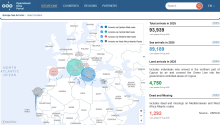
Did you know that the UNHCR Operational Data Portal provides detailed, up-to-date information on sea arrivals in Europe? As of 24 August 2025, a total of 89.189 people have reached European shores by sea. The majority of these arrivals have been recorded in Italy and Greece, while Spain also received significant numbers. In 2024, a total of 187.337 sea arrivals were reported, illustrating the continued importance of Mediterranean and North-West African routes.
Main Theme: Irregular Migration
Keywords: UNHCR, operational data portal, sea arrival, land arrival
In the first half of 2025, West Flanders saw 72 transit migrants intercepted, a significant decrease compared with previous years. Most were from Ethiopia, while earlier periods involved people from Sudan, Iraq and Vietnam. Authorities cite preventive policing and cross-border controls as key factors.
Main Theme: Irregular Migration, Smuggling & Trafficking
Keywords: transit migrant, transmigrant, interception, border control

On 24 June 2025, EMN Belgium participated in the Polish Presidency Conference on countering irregular migration. The discussions examined this phenomenon from three perspectives: strengthening the EU’s external borders to prevent irregular entries, combating migrant smuggling to dismantle criminal networks, and addressing the root causes of irregular migration and providing safe and legal alternatives.
Main Theme: Borders & Visa, Irregular Migration, Smuggling & Trafficking
Keywords: external border, border control, migrant smuggling, criminal network, root causes, legal pathway

On 19 June 2025, Interior Minister Bernard Quintin and Asylum and Migration Minister Anneleen Van Bossuyt announced that, starting from summer 2025, federal police, local police, and the Immigration Office will collaborate to conduct targeted checks within Belgium. These measures aim to combat irregular migration and secondary movements towards Belgium. Reactions have emerged regarding the capacity required to implement such checks, their actual effectiveness in reducing irregular migration, and whether they can deliver a real deterrent effect or remain largely symbolic.
On 3 June 2025, the Court of Justice of the European Union (CJEU) delivered a judgment clarifying the scope of the offence of facilitation of unauthorised entry into the EU. The Court ruled that a third-country national cannot be criminally penalised for bringing minors under their care into an EU Member State, even if this entry breaches border rules. This decision emphasises the protection of family responsibilities and fundamental rights within EU law.
According to preliminary data published by Frontex, the number of irregular border crossings into the European Union decreased by 27% between January and April 2025, compared to the same period in 2024. Nearly 47.000 crossings were detected during the first four months of 2025.
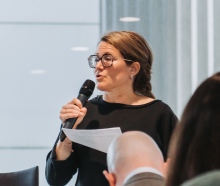
On 11-12 May 2025, Belgian Minister for Asylum and Migration Anneleen Van Bossuyt visited Chisinau to emphasise that asylum applications from Moldovan nationals—coming from a country considered safe—are processed through an accelerated procedure in Belgium. She also announced the immediate discontinuation of the return incentive, which is seen as encouraging misuse of the asylum system.
Main Theme: International Protection, Irregular Migration
Keywords: unfounded asylum application, moldova, safe country of origin, return incentive
The UK Home Office released provisional figures showing that more than 36.000 people were detected in 2024, making the crossing of the English Channel in small boats. The International Organisation for Migration (IOM) estimates that at least 78 migrants died trying to cross the Channel in 2024.
Main Theme: Irregular Migration
Keywords: English channel, illegal border crossing, small boat
According to a new report by the European Court of Auditors (ECA), EU Emergency Trust Fund for Africa (EUTF) projects have reported the delivery of many of the planned outputs and partially achieved their objectives. Despite this, the financial support from the EUTF support is still insufficiently focused on the agreed priorities. Furthermore, there are challenges in relation to reporting, ensuring the sustainability of results and safeguarding human rights.
Main Theme: Irregular Migration
Keywords: EU Emergency Trust Fund, EU Trust Fund for Africa, audit

In a press release from 9 September 2024, the Secretary of State for Asylum and Migration Nicole de Moor reacted to the Hungarian government’s recent threats to send migrants to Brussels. She advocated for a joint, coordinated policy, in which respect for European values and international obligations are central.
Main Theme: Irregular Migration
Keywords: migration instrumentalization, European cooperation, mutual trust
On 1 July 2024, Hungary took over the rotating presidency of the Council of the European Union for a duration of six months. Among the country’s seven priorities for its EU presidency are " stemming illegal migration” and bringing the Western Balkans countries “one step closer” to EU membership.
Main Theme: Irregular Migration
Keywords: Hungarian Presidency
According to data collected by IOM’s Missing Migrants Project, 2023, with at least 8565 deaths and disappearances, is the deadliest year since the project's inception in 2014. IOM highlights the urgent need for action to prevent further loss of life.
Main Theme: Irregular Migration
Keywords: migration route, migrant death, Mediterranean

The campaign aims to raise awareness among people in Guinea of the dangers of irregular migration, such as the risk of exploitation and dangerous crossings. People are also made aware of local employment opportunities and legal migration channels.
Main Theme: Irregular Migration
Keywords: prevention campaign, awareness campaign, Guinea

Fencing work has started today along the Westkerke and Mannekensvere highway car parks on the E40 to prevent transmigrants from crossing the highway to climb into lorries aiming to reach the UK.
Main Theme: Irregular Migration
Keywords: transmigration, transmigrant, transit migrant

The department "Alternatives To Detention" (ATD) from the Immigration Office organises walk-in counters for illegally staying persons who wish to receive ICAM coaching, every Wednesday from 9 until 12h in Brussels, Antwerp and Liège.
Main Theme: Irregular Migration
Keywords: individual case management, durable solution, illegally staying person

The Secretary of State for Asylum and Migration tasked the Immigration Office to implement a prevention campaign to make people in Nigeria aware of the dangers of human trafficking, exploitation and the risks associated with irregular migration.
Main Theme: Irregular Migration
Keywords: prevention campaign, human trafficking, Nigeria

In a press release today, Frontex reported 330 000 irregular border crossings detected in 2022. This is the highest number since 2016 and an increase of 64% from the previous year.
Main Theme: Irregular Migration
Keywords: irregular border crossing, external border
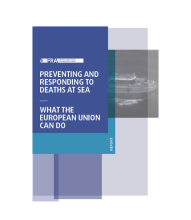
Following the recent tragic loss of life off the Greek coast, a short report of the EU Agency for Fundamental Rights (FRA) suggests what the EU should do to prevent more deaths at sea. FRA calls on the European Commission, EU Member States and EU Agencies to act now to prevent future tragedies and save lives.
Main Theme: Irregular Migration
Keywords: migrant death, fundamental right, search and rescue
Through a toolbox, the Commission wants to support Member States with strategic measures to address cases where transport means are misused to facilitate irregular migration to the EU, with a particular focus on airways.