Publication date:
The law of 10 March 2024 amending the law of 15 December 1980 on the right to family reunification comes into force on 1 September 2024. The changes have an impact among other things on the right to family reunification for parents of accompanied minors with international protection, the right to family reunification for stateless persons, the assessment of minorhood in the asylum procedure or residence procedure for stateless person, etc.
Read more
Main theme: Family reunification
Keywords: right to family reunification, application for family reunification
Publication date:
The law of 10 March 2024 which creates a residence status as a stateless person in Belgium, comes into force on 1 September 2024. Applications for admission to stay on the grounds of statelessness must now be submitted directly to the Immigration Office by registered mail.
Read more
Main theme: Statelessness
Keywords: application for statelessness, admission to stay, stateless persons
Publication date:
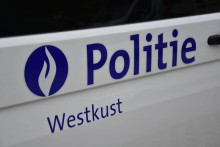
The current weather conditions increase the risk that human smugglers will send groups of transmigrants, including small children, out to sea in overcrowded rubber boats, often with inadequate life jackets. To avoid this, the West Coast police zone and the Federal Police require special attention for people who cross the Channel from the Belgian coast to the United Kingdom in small boats.
Read more
Main theme: Smuggling & Trafficking
Keywords: transmigrant, small boat, English channel
Publication date:
According to Statbel, the Belgian statistical office, 5.037 persons obtained Belgian nationality in May 2024. The main countries of origin of people who acquired Belgian nationality in May are Morocco, Romania, Syria, Afghanistan and Turkey.
Read more
Main theme: Data & Statistics
Keywords: access to nationality, Belgian nationality

Publication date:
Tuesday 30 July is the International Day against Trafficking in Persons. On this occasion, the Halle-Vilvoorde public prosecutor's office, together with the Labour Auditor's Office, invite as many people as possible to be vigilant and to report suspicious situations via the Belgian helpline for victims of human trafficking or via the new telephone number: 078/055.800.
Read more
Main theme: Smuggling & Trafficking
Keywords: victim of trafficking, national helpline

Publication date:
This election year will be the fourth time that non-Belgians who reside in Belgium can vote in municipal elections. Yet participation remains low, as shown by the figures released by the FPS Interior ahead of the registration deadline, on 31 July 2024.
Read more
Main theme: Integration
Keywords: election, vote, foreign national

Publication date:
On 22 July 2024, the Minister of Justice officially launched the Blue Heart Campaign at the Antwerp city hall. EMN Belgium joined local authorities, the three specialised centres for victims of human trafficking, Myria, the Social Intelligence and Investigation Service and the IOM on this occasion. As one in three victims of human trafficking globally is a child, this year's global campaign urges accelerated action to end child trafficking.
Read more
Main theme: Smuggling & Trafficking
Keywords: blue heart campaign, child victim of trafficking, victims of human trafficking
Publication date:
According to Statbel, the Belgian statistical office, 4.988 persons obtained Belgian nationality in April 2024. The main countries of origin of people who acquired Belgian nationality in April are Morocco, Syria, Romania, Afghanistan and Turkey.
Read more
Main theme: Data & Statistics
Keywords: access to nationality, Belgian nationality
Publication date:
From 1 July 2024, adult asylum seekers who stay in a reception centre and who have a working income will have to contribute to this reception. Those who do not wish to contribute may consider staying outside the reception centre. They are free to leave the centre and find their own accommodation.
Read more
Main theme: Reception
Keywords: reception centre, financial contribution, material assistance
Publication date:
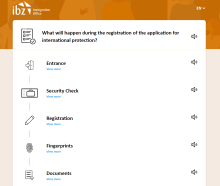
The Immigration Office disclosed a new website aimed at informing applicants for international protection about the purpose and course of the registration. Each step of the process is explained in 16 languages via texts, audio, and videos. The website was co-funded by the European Union.
Read more
Main theme: International Protection
Keywords: registration, application for international protection
Publication date:
In order to structurally shorten the duration of reception in Belgium, an amendment was made to the Reception Act. Anyone who receives a final negative asylum decision must leave the reception place within a period of 30 days.
Read more
Main theme: Reception
Keywords: reception centre, material assistance

Publication date:
The Federal Judicial Police reveals that unaccompanied foreign minors in Belgium and throughout Europe are recruited by criminal organisations and forced to carry out theft or drug trafficking. The Federal Police draws attention to this invisible phenomenon and asks to make it a priority for action.
Read more
Main theme: Vulnerable groups
Keywords: unaccompanied minors, forced criminality
Publication date:
According to Statbel, the Belgian statistical office, 5.882 persons obtained Belgian nationality in March 2024. The main countries of origin of people who acquired Belgian nationality in March are Morocco, Syria, Romania, Afghanistan and Turkey.
Read more
Main theme: Data & Statistics
Keywords: access to nationality, Belgian nationality
Publication date:
According to the figures released by Statbel, the Belgian statistical office, the share of Belgians with a Belgian background has decreased from 79,9% in 2004 to 64,8% in 2024. The share of Belgians with a foreign background increased by 5,1 percentage points between 2004 and 2014. The proportion of non-Belgians increased from 8.3% in 2004 to 13.7% in 2024.
Read more
Main theme: Data & Statistics
Keywords: population structure, origin, Belgian, foreign background, non-Belgian
Publication date:
The international migration balance, i.e. the difference between the number of immigrations and emigrations, was positive in Belgium in 2023. The positive international migration balance offset the negative natural balance and ensured a fairly strong population growth by 66.093 inhabitants, or by 0.57%.
Read more
Main theme: Data & Statistics
Keywords: population movement, immigration, emigration
Publication date:
The list of safe countries of origin, which is revised once a year, was updated on 12 May 2024 and is now published in Belgium’s Official Journal. At present, the following countries are considered as safe countries of origin: Albania, Bosnia and Herzegovina, the Republic of North Macedonia, Kosovo, Montenegro, Serbia, India and Moldova.
Read more
Main theme: International Protection
Keywords: list of safe countries of origin

Publication date:
In its 2023 annual report, the Federal Institute for Human Rights draws attention, among other things, to the failure of the authorities to enforce the rulings of the Belgian and European courts and tribunals, in particular in the context of the reception crisis. The lack of resources for the judiciary, threats to human rights defenders and weaknesses in the right to information are also underlined.
Read more
Main theme: Reception
Keywords: human rights, reception crisis, right to information

Publication date:
On 22 May 2024, a joint conference hosted by Fedasil and the EUAA highlighted innovative collaboration models designed to strengthen migration systems. The event brought together diverse participants from various EU Member States, including government bodies, international organisations, civil society groups, and private entities. It focused on strategies to improve the reception, information provision, and pre-integration of international protection applicants.
Read more
Main theme: Reception
Keywords: New Pact on Migration and Asylum, multistakeholder approach, reception, information provision, preintegration

Publication date:
In Palestinian cases, several elements prevent the Office of the Commissioner General for Refugees and Stateless persons (CGRS) from taking a decision within the initial six-month period after receiving the application for international protection. The CGRS commits to ensuring that Palestinian cases are processed more quickly and that a decision can be taken within 21 months of the submission of the application for protection.
Read more
Main theme: International Protection
Keywords: application for international protection, Palestinian, processing time
Publication date:
The Expert Conference, that is jointly hosted by Belgium’s Federal Agency for the Reception of Asylum Seekers (Fedasil), and the European Union Agency for Asylum (EUAA), in cooperation with the Migration Policy Institute Europe (MPI Europe), aims to explore multi-stakeholder strategies in three specific areas: reception, information provision, and pre-integration.
Read more
Main theme: Reception
Keywords: multistakeholder approach, reception, information provision, preintegration
Publication date:
According to Statbel, the Belgian statistical office, 5.297 persons obtained Belgian nationality in February 2024. The main countries of origin of people who acquired Belgian nationality in February are Morocco, Romania, Syria, Afghanistan and Turkey.
Read more
Main theme: Citizenship & Nationality
Keywords: access to nationality, Belgian nationality

Publication date:
The Secretary of State for Asylum and Migration announced that applications for international protection from people from safe countries of origin have been processed in 12 working days and those from people originating from countries for which a low rate of protection is granted in 39 days, since 1 February 2024. This aims to free up places in the reception network for those who actually need protection.
Read more
Main theme: International Protection
Keywords: application for international protection, accelerated procedure
Publication date:
On Friday 3 May 2024, the Council of Ministers approved a draft royal decree appointing Pieter Spinnewijn as Director General of the Federal Agency for the Reception of Asylum Seekers (Fedasil). His mandate will begin on 1 July 2024 for a period of six years.
Read more
Main theme: Reception
Keywords: Fedasil, Director General

Publication date:
On 2 May 2024, the Chamber of Representatives adopted in plenary session the draft law relating to the competencies of the members of the European Border and Coast Guard Agency on the national territory. The law inter alia defines how Frontex members will support the Federal Police in the field of border controls and forced return of foreigners.
Read more
Main theme: Borders & Visa
Keywords: European Border and Coast Guard, Frontex, border control, forced return, escort

Publication date:
On 2 May 2024, the Chamber of Representatives adopted in plenary session the draft law for a proactive return policy. This law inter alia introduces the obligation for the foreigner to cooperate in the return process and it expands the pool of return escorts. The law also enshrines the principle according to which minor children aren't retained in closed centres.