
France notified that controls would take place at its borders with Belgium, Luxembourg, Germany, the Swiss Confederation, Italy, and Spain (land, air, and sea) from 1 November 2024 until 30 April 2024. Similar checks were already underway between 1 May 2024 and 31 October 2024 due to the Olympic and Paralympic Games organised in France during the summer 2024.
Main Theme: Borders & Visa
Keywords: Schengen, internal border control, border control, border check

According to preliminary data collected by Frontex, the most significant declines in irregular border crossings were observed on the Western Balkan and Central Mediterranean routes, with a 79% and 64% decline, respectively. The Eastern Land Border and Western African routes saw the highest increases, at 192% and 100%, respectively.
Main Theme: Borders & Visa
Keywords: irregular border crossing, migratory route
EU Commissioner Ylva Johansson announced that the Entry-Exit System (EES) which aims to modernise EU border management and which was supposed to start on 10 November 2024, has been postponed with no new date set. Ms Johansson suggested that the EU may roll out the EES gradually.
Main Theme: Borders & Visa
Keywords: entry exit system, border management, biometric check
During the plenary debate on the reintroduction of internal border controls in the Schengen area and its impact on EU free movement, Commissioner Ylva Johansson underlined that internal border controls must be temporary, proportionate and a measure of last resort. She underlined that alternative measures should always be prioritised.
Main Theme: Borders & Visa
Keywords: free movement, internal border control

Checks are being temporarily reintroduced at Germany's borders with Belgium, France, Luxembourg, the Netherlands, and Denmark. They will run from 16 September 2024 until 15 March 2025 to, among other things, reduce irregular migration and combat people smuggling.
Main Theme: Borders & Visa
Keywords: border control, border check, Schengen, internal border control

The latest report from the EU Agency for Fundamental Rights (FRA) identifies systemic gaps and obstacles to investigating rights violations at EU borders. The report suggests concrete steps to ensure more effective investigations into incidents of loss of life and ill-treatment at the EU’s borders.
Main Theme: Borders & Visa
Keywords: fundamental rights, violation, investigation, external border

The number of irregular border crossings into the European Union in the first six months of 2024 fell to roughly 94.000, according to preliminary data collected by Frontex. The Western Balkans and the Central Mediterranean recorded the largest decreases in detections of irregular border crossings, while the West African and the Eastern Land Border have seen the largest increases.
Main Theme: Borders & Visa
Keywords: Frontex, European Border and Coast Guard, irregular border crossing
On 24 May 2024, the Council of the European Union, with Spain and Slovenia abstaining, finally adopted the reform of the Schengen Borders Code. The reform inter alia aims to make the Schengen area more resilient to present and future crises at its external borders.
Main Theme: Borders & Visa
Keywords: Schengen borders code, migration instrumentalization, travel restriction, internal border control, external border

On 2 May 2024, the Chamber of Representatives adopted in plenary session the draft law relating to the competencies of the members of the European Border and Coast Guard Agency on the national territory. The law inter alia defines how Frontex members will support the Federal Police in the field of border controls and forced return of foreigners.
Main Theme: Borders & Visa
Keywords: European Border and Coast Guard, Frontex, border control, forced return, escort
On 16 April 2024, the Commission published its 2024 State of Schengen report. The report elaborates on major legislative and policy developments in the area of Schengen from the past year, including the Pact on Migration and Asylum. It also reflects on challenges and sheds light on future priorities for the EU in the field of Schengen.
Main Theme: Borders & Visa
Keywords: Schengen area, State of Schengen, Schengen governance, internal border, external border
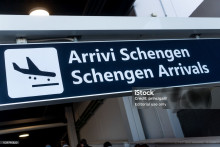
On 31 March 2024, Bulgaria and Romania become Schengen members: the Schengen rules will apply in both Member States including on issuing Schengen visas and controls at the internal air and sea borders will be lifted. Discussions on a date for a possible lifting of the checks on persons at internal land borders will continue in 2024.
Main Theme: Borders & Visa
Keywords: Schengen, Schengen acquis, Bulgaria, Romania

On 28 March 2024, the House of Representatives, during the plenary session, approved by a majority the ETIAS law which establishes the Belgian ETIAS National Unit and defines its organisation and functioning. It will enforce the ETIAS (European Travel Information and Authorisation System) regulation adopted by the European Union in 2018.
Main Theme: Borders & Visa
Keywords: ETIAS, European Travel Information and Authorisation System
At a meeting of the Council’s Permanent Representatives Committee (COREPER), Member States agreed their position on a draft regulation which updates a mechanism that allows the EU to suspend visa-free travel for third countries whose nationals are exempt from the visa obligation when travelling to the Schengen area.
Main Theme: Borders & Visa
Keywords: visa-free travel, suspension mechanism
Today, the Belgian Presidency of the Council and European Parliament negotiators have provisionally agreed on two regulations that govern the collection and use of air passenger data for border management and law enforcement.
Main Theme: Borders & Visa
Keywords: advanced passenger information, border management

On 28 February 2024 the European Ombudsman published a press release regarding the completion of its inquiry about the Adriana shipwreck in June 2023, which also included recommendations regarding broader systemic issues. The Ombudsman called on EU legislators to address fundamental rights gaps and to establish an independent commission of inquiry to assess the reasons for the large numbers of deaths in the Mediterranean.
Main Theme: Borders & Visa
Keywords: Mediterranean, shipwreck, fundamental rights, search and rescue

In its pushback report 2023 published today, the human rights organisation 11.11.11. says there were 346.004 illegal pushbacks of people migrating to Europe in 2023 - that is 947 every day. The organisation used information provided by NGOs, human rights bodies and UN agencies to report this figure.
Main Theme: Borders & Visa
Keywords: external border, pushback, human rights
The Belgian presidency of the Council of the EU and European Parliament negotiators today reached a provisional deal on amending the Schengen Borders Code. The update in particular clears up rules related to the reintroduction of border controls and offers solutions to situations where migrants are instrumentalised.
Main Theme: Borders & Visa
Keywords: Schengen, Schengen borders code, migration instrumentalization, border control
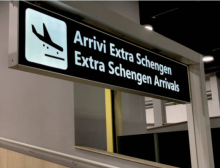
As of today, 1 January 2024, the people of Kosovo with biometric passports no longer require visas when travelling for short stays of up to 90 days in any 180-day period to all 27 Schengen Area countries.
Main Theme: Borders & Visa
Keywords: visa liberalisation, Schengen area, Kosovo
Today, the European Parliament adopted a resolution wrapping up the fact-finding investigation by the Working Group on Frontex Scrutiny with 366 votes in favour, 154 against, and 15 abstaining. The Members of the European Parliament (MEPs) inter alia share concerns over the situation in Greece, Lithuania and Hungary.
Main Theme: Borders & Visa
Keywords: Frontex, fundamental rights, EU border agency, search and rescue

Fencing work has started today along the Westkerke and Mannekensvere highway car parks on the E40 to prevent transmigrants from crossing the highway to climb into lorries aiming to reach the UK.
Main Theme: Irregular Migration
Keywords: transmigration, transmigrant, transit migrant

A Belgian expert participated in the conference of the Austrian Contact Point to the European Migration Network (EMN) focusing on opportunities and challenges in the management of EU's external borders. Participants inter alia identified the weaponization of migration as a major challenge concerning the protection of EU's external borders.

Frontex revealed today that the number of detections of irregular border crossings at EU’s external borders rose by one fifth (+18%) in the first eight months of 2023 to over 232 350 and that this increase was primarily driven by the number of arrivals through the Central Mediterranean, which remains the main migratory route into the EU.
Main Theme: Borders & Visa
Keywords: irregular border crossing, external border, migratory route
Today, the Commission adopted a Communication on the monitoring of the EU's visa-free travel regimes setting out a consultation process. To address challenges and prevent risks effectively, existing rules concerning the monitoring of the functioning of visa-free regimes with third countries and the suspension of visa exemptions should be re-assessed and improved.
Main Theme: Borders & Visa
Keywords: visa-free travel, visa suspension mechanism
This report is part of the Commission's initiative to further reinforce the Schengen governance through a yearly reporting exercise presenting the state of Schengen, identifying challenges and best practices, as well as priority areas for action. The State of Schengen Report 2023 will serve as basis for political discussions and steer at the Council on 8 June 2023.
Main Theme: Borders & Visa
Keywords: Schengen

Myria has published the first thematic section of its 2023 annual report. This section entitled "Access to the territory" presents the main key figures relating to short and long-stay visas as well as the different reasons and nationalities that stood out in 2022.