Publication date:
This conference will address the pressing issue of human trafficking affecting young people in Belgium, including sexual exploitation, forced criminality, and economic exploitation. It will bring together international experts, as well as Minister Yves Coppieters, responsible for Women’s Rights and Equal Opportunities, to discuss the current situation, share experiences, and highlight effective measures to protect youth. The Samilia Prize will be presented later in the evening.
Read more
Main theme: Smuggling & Trafficking
Keywords: human trafficking, awareness-raising, young people, Samilia Prize

Publication date:
On 8 January 2026, the Resettlement Coalition issued a joint statement expressing concern over the European Union’s newly adopted Union Resettlement and Humanitarian Admission Plan (URP) for 2026–2027. While welcoming the plan’s adoption as a step towards embedding resettlement in EU migration policy, the coalition highlighted that the number of pledges is dramatically lower than previous commitments and that the eligibility criteria are narrow. The statement calls on EU Member States to increase their contributions and ensure that protection needs remain central to resettlement efforts.
Read more
Main theme: International Protection
Keywords: Union Resettlement and Humanitarian Admission Plan, EU resettlement framework, pledge, eligibility
Publication date:
Fragomen will host a webinar on recent changes to Belgium’s immigration policies. The session will cover two main areas: first, new rules in the Flanders Region concerning economic migration, including labour migration pathways, contractual liability, and labour market testing; and second, nationwide modifications affecting family reunification, such as stricter financial criteria for visa applications. The webinar will also highlight practical implications for businesses employing foreign nationals.
Read more
Publication date:
From 1 January 2026, the Onder1Dak project, which promotes co-housing between private homeowners and recognised refugees in Flanders, has restarted following renewed support from the Flemish Minister for Civic Integration and Integration. The initiative aims to facilitate access to housing while supporting the social and professional integration of recognised refugees.
Read more
Main theme: Integration
Keywords: refugee, access to housing
Publication date:
On 1 January 2026, Cyprus assumes the Presidency of the Council of the European Union for six months. The Presidency’s programme includes the implementation of the EU Pact on Migration and Asylum, the efficiency of asylum and return systems, and cooperation with third countries. International organisations have issued recommendations to the Cyprus Presidency on migration and asylum.
Read more
Main theme: Cross-sectional, Asylum, Migration
Keywords: Cyprus, presidency, Council of the European Union

Publication date:
As 2025 comes to a close, the EMN Belgium team warmly thanks you for your continued interest in and engagement with the work of the European Migration Network. Your active participation has been essential in supporting exchanges and fostering a shared understanding of key developments and challenges in asylum and migration.
Read more
Main theme: Cross-sectional, Asylum, Migration
Keywords: holiday season greetings, EMN Belgium, New Year wishes

Publication date:
On 23 December 2025, the Belgian Council of Ministers approved a draft law linking social assistance to integration efforts. For recognised refugees, the draft law foresees that the Individual Social Integration Project (ISIP) should include, at a minimum, participation in an integration path. Other newcomers, including third-country students and economically inactive EU citizens, would now need to have legally resided in Belgium for five years before becoming eligible for social assistance.
Read more
Main theme: Integration
Keywords: integration income, Integration path, integration programme, requirement, efforts to integrate

Publication date:
The Belgian Council of Ministers has taken note of a strategic vision for the reorganisation and centralisation of the federal administrative landscape. The plan foresees the regrouping of asylum and migration services under a dedicated Federal Public Service (FPS) Migration. The Council of Ministers has approved a timeline for the reorganisation and centralisation and has tasked the Minister for Public Administration with overseeing its implementation.
Read more
Main theme: Cross-sectional, Asylum, Migration
Keywords: federal administration, Belgium, Federal Public Service Migration
Publication date:
In its judgment in Case C-679/23 P (WS and Others v Frontex), the Court of Justice of the European Union found that Frontex has specific obligations under EU law in joint return operations, including verifying the existence of enforceable return decisions for all persons involved. The ruling also emphasised that infringements of fundamental rights during such operations may give rise to the agency’s liability.
Read more
Main theme: Return & Readmission
Keywords: joint return operation, Frontex, liability, enforceable return decision, fundamental right
Publication date:
In a judgment delivered in Case C-184/24 (Sidi Bouzid), the Court of Justice of the European Union has clarified the limits of sanctions that may be imposed on applicants for international protection who refuse to be transferred to another accommodation centre. The Court found that such a refusal cannot justify the withdrawal of all material reception conditions. While Member States may impose sanctions for serious breaches of reception rules, these must remain proportionate and respect the applicant’s dignity.
Read more
Main theme: Reception
Keywords: reception centre, transfer, refusal, sanction, material reception condition, withdrawal
Publication date:
The Council of the European Union has formally adopted the Annual Solidarity Pool for 2026 under the EU Pact on Migration and Asylum. The mechanism aims to support Member States under migratory pressure through relocation of asylum seekers, financial contributions and alternative solidarity measures. Belgium has committed around €12.9 million to the pool.
Read more
Main theme: Cross-sectional, Asylum, Migration
Keywords: solidarity pool, New Pact on Migration and Asylum, relocation, financial contribution

Publication date:
On 15 and 16 December 2025, EMN Belgium organised a conference in Brussels bringing together stakeholders from Belgium, EMN Member and Observer Countries, as well as European and international organisations. The event provided a forum to examine reception and support for applicants for international protection other than in-kind from legal, policy, and operational perspectives, exploring how these forms of support are organised, implemented, and linked to broader reception systems.
Read more
Main theme: Reception
Keywords: material reception condition, reception modality, housing, community-based approach, cash-based approach, financial allowance
Publication date:
According to Statbel, the Belgian statistical office, 5.925 persons obtained Belgian nationality in September 2025. The main countries of origin of people who acquired Belgian nationality in September are Morocco, Romania, Syria, Poland and Italy.
Read more
Main theme: Data & Statistics, Citizenship & Nationality
Keywords: Belgian nationality, access to nationality
Publication date:
The Council of the European Union has agreed its position on a proposal for an EU regulation establishing a common system for the return of third‑country nationals staying in the EU illegally. The proposed regulation introduces common procedures, obligations for those without the right to stay, and tools for cooperation between Member States. It also allows for the creation of return hubs in third countries. Negotiations with the European Parliament will follow to agree on the final text.
Read more
Publication date:
EU Home Affairs Ministers have reached a political agreement on the 2026 solidarity pool, a central component of the Pact on Migration and Asylum. The deal sets binding targets of 21.000 relocations or €420 million in contributions, aimed at supporting Member States under migratory pressure. Greece, Cyprus, Italy and Spain are identified as beneficiaries once the Pact becomes applicable in June 2026. The agreement marks a step forward for the solidarity dimension of the Pact, although its practical impact will depend on future implementation.
Read more
Main theme: Cross-sectional, Asylum, Migration
Keywords: solidarity pool, New Pact on Migration and Asylum, migratory pressure, relocation, financial contribution
Publication date:
The Council of the European Union has agreed its position on two key proposals to strengthen the use of safe country concepts in EU asylum rules. One addresses the safe third country concept, and the other establishes the first EU‑wide list of safe countries of origin. They aim to accelerate asylum procedures and improve the management of applications from those unlikely to require protection. Negotiations with the European Parliament, which has also endorsed the list, will follow to agree on the final texts.
Read more
Main theme: International Protection
Keywords: safe third country, safe country of origin, list of safe countries of origin
Publication date:
The TRAQ study day will take a close look at the status of victims of smuggling in human beings under aggravating circumstances in Belgium. Introduced in 2006, this residence status for victims who cooperate with authorities has seen limited use and has never been thoroughly analysed. Within the framework of « TRAQ » (Trafic Analyses Qualitatives), Myria and the National Institute of Criminalistics and Criminology (INCC) conducted a study on its implementation. The findings will be shared to stimulate discussion and reflection among experts and stakeholders.
Read more
Main theme: Smuggling & Trafficking
Keywords: victim of smuggling, aggravated circumstances, legal status
Publication date:
On 3 December, CIRÉ launched a campaign to inform the public about a draft law that would permit police, under judicial authorisation, to carry out home searches in specific cases involving foreign nationals subject to enforceable return decisions. The organisation highlights potential concerns regarding privacy and constitutional rights. Several Brussels municipalities have already expressed opposition to the measure. The campaign aims to encourage parliamentary scrutiny and public debate on the proposal.
Read more
Main theme: Return & Readmission
Keywords: forced return, home search, illegally staying person, threat to public order
Publication date:
During a session of the Chamber of Representatives’ Interior Committee on 2 December 2025, Minister Anneleen Van Bossuyt outlined the government’s decision regarding the list of safe countries of origin. She specified which countries are included in the 2025 list and explained that Morocco was added due to improvements in its human rights situation and the low recognition rate for asylum applications from Moroccan nationals.
Read more
Main theme: International Protection
Keywords: list of safe countries of origin
Publication date:
On 1 December 2025, the Council of the European Union and the European Parliament reached a provisional agreement on the revision of the EU’s Generalised Scheme of Preferences (GSP). The updated framework introduces, for the first time, a link between trade benefits and the cooperation of developing countries on migration and readmission of their nationals. The legislation is expected to apply from 1 January 2027.
Read more
Main theme: Return & Readmission
Keywords: Generalised Scheme of Preferences, trade policy, readmission, cooperation
Publication date:
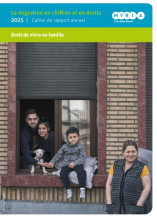
Myria, the Federal Migration Centre, has published a new thematic report on the right to family life as part of its annual report "Migration in Figures and Rights 2025". The report provides updated data on first residence permits and visas for family reasons. It also examines recent legislative reforms, which Myria stresses will need close monitoring due to their potential impact on access to family reunification, integration outcomes, and the risk of poverty.
Read more
Main theme: Family reunification
Keywords: family life, first residence permit, family reunification visa
Publication date:
The EMN Hungary Conference will explore how EU temporary protection frameworks are evolving and how these changes are implemented in practice across Central Europe. It aims to connect high-level policy developments with on-the-ground realities for displaced persons and host communities. The conference will examine potential transitions from the EU temporary protection regime and highlight regional practices, challenges, and successful approaches.
Read more
Main theme: Temporary protection
Keywords: temporary protection, Central Europe, displaced person, host community
Publication date:
On 26 November 2025, several civil society organisations, including Caritas International and Vluchtelingenwerk Vlaanderen, published a statement warning about rising refusals of temporary protection applications. Between January and October, 2.380 applications were rejected, compared with 1.578 in 2022. The organisations highlighted difficulties in accessing accommodation and support for displaced persons affected. Authorities attribute the increase to changes in European rules and stricter administrative requirements.
Read more
Main theme: Temporary protection
Keywords: application for temporary protection, refusal

Publication date:
The Federal Ombudsman has highlighted persistent challenges for individuals required to submit visa applications in person at Belgian diplomatic or consular posts. These requirements can create significant financial, administrative, and security burdens, particularly for applicants living far from a competent post or in conflict-affected regions. The Ombudsman recommends reviewing visa submission procedures to improve accessibility and consistency.
Read more
Main theme: Family reunification, Borders & Visa
Keywords: visa application, diplomatic post, consular post, submission, Afrin

Publication date:
On 20 November 2025, EMN Belgium attended the launch of the annual report "Rechten op de drempel" by the Flemish Children’s Rights Commissioner, on the occasion of International Children’s Rights Day. The report highlights persistent challenges affecting foreign children and young people in reception centres, including disparities in living conditions, safety, hygiene, and access to basic needs.