EMN Belgium brings together asylum and migration experts to discuss key developments in 2023 and challenges for 2024
During its annual policy event, the Belgian Contact Point of the European Migration Network (EMN) invited experts in the field of asylum and migration in Belgium to reflect on developments in 2023 and prospects for 2024. Subgroups examined in more detail measures in response to the reception crisis, the new right of residence for stateless persons, information campaigns in third countries, one-stop desk models for information provision, ongoing challenges and projects in the CGRS, Belgium’s talent mobility projects and emerging trends in the field of labour migration.
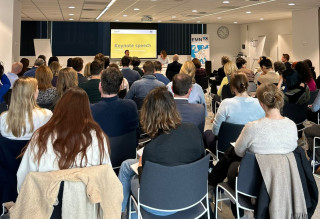
On Thursday 18 April 2024, EMN Belgium gathered around 90 experts engaged in the field of asylum and migration in Belgium. Taking advantage of their expertise and experience relating to various aspects of the subject, they were able to reflect transversally on recent significant developments and current challenges and opportunities in the field.
Peter Robberecht, head of the Cabinet of the Secretary of State for Asylum and Migration, first delivered a keynote speech. Mr Robberecht stressed that “working together is the only way to really manage migration”. At the European level, this cooperation will now be based on the New Pact on Migration and Asylum, with priority given to its implementation and operationalization. Agreements must also be set up with neighbouring countries of Europe and countries of origin. In this regard, Mr Robberecht referred to the agreements concluded with Tunisia, Mauritania and Egypt. At the national level, he emphasized the titanic work and broad cooperation that was needed to establish a new migration code. He also highlighted the work in progress to achieve closer cooperation between the various asylum and migration services in Belgium, through an integrated digital working environment and a chain approach, and in the long term through the possible establishment of a single Migration Agency.
Participants then had the opportunity to participate in sub-groups working on the following themes:
- Measures in response to the reception crisis: Fedasil’s Director-general a.i. presented the different measures that were taken in 2023 to increase the reception capacity, accelerate the outflow from the reception network, and improve the support for single male applicants without reception. It was noted that despite the many measures, the reception shortage persisted throughout 2023 leading to significant legal consequences and humanitarian implications for both applicants and personnel. It was made clear that creating additional reception places alone will not be enough and that reforms, strong chain cooperation between asylum and migration authorities and possibly even an alternative reception model will be needed to get out of this longest reception crisis ever.
- New right of residence for stateless persons: The Office of the Commissioner General for Refugees and Stateless Persons (CGRS), Nansen and UNHCR explained the legislative initiative, supported by the expertise of the Immigration Office. The initiative was well-received, particularly due to the involvement of new stakeholders with expertise in international protection. However, some unresolved issues also emerged regarding the accessibility of the procedure, procedural guarantees, adding conditions, and the burden of proof. Given the system’s complexity, the key to its success will primarily lie in its implementation.
- Information campaigns in third countries: The information campaigns carried out in 2023 in Vietnam, Guinea and Nigeria were presented, showing the diversity of the target groups, partners, messages, means, tools, and geographical areas concerned. The impact of the campaigns was inter alia discussed, highlighting the fact that it can hardly be measured. It was noted that, even when people are informed of the risks linked to irregular migration and trafficking in human beings, it is not certain that this information induces a change in behavior and migratory intention. In this regard, repeating campaigns in the same place or elsewhere (when the problem moves from one region to the other) achieves a greater impact.
- One-stop desk models for information provision: Fedasil and the city of Charleroi presented their one-stop desk models, aimed at improving information provision and service referrals for migrants in precarious situations. Active in Brussels and soon to launch in Charleroi, these hubs prioritize collaboration and inclusivity. They benefit from strong institutional partnerships with various stakeholders (cities, asylum agencies, civil society organizations, …). Discussions explored the local context in which the one-stop desks operate, strategies to reach out to hard-to-reach migrants, and avenues to collaborate with other actors and initiatives to ensure correct and coherent information provision (such as Individual Case Management Offices of the Immigration Office, Humanitarian Hubs, etc.).
- Ongoing challenges and projects in the Office of the Commissioner General for Refugees and Stateless Persons (CGRS): The Commissioner General explained the challenging context in which the CGRS found itself (high influx of applicants for international protection, secondary migration, saturated reception network, complex procedures, and a growing backlog). She emphasized that the CGRS therefore needs to be an agile organization, able to adapt to fluctuations in applications for international protection. She further elaborated on the processes being revised in an enhanced integrated chain approach and her retention policy for employees.
- Belgium’s talent mobility projects: Enabel, IOM Belgium and Luxembourg and the Belgian Immigration Office presented some of the mobility projects that they launched in 2023. More, specifically, Enabel talked about its Projects on Entrepreneurial Mobility in Côte d’Ivoire and Senegal, while IOM presented its DT4E-project. Finally, the Immigration Office presented an upcoming healthcare project with Suriname and an entrepreneurial mobility project that they set up with Georgia last year. Beyond these projects, they also talked about the importance of partnerships and presented their individual approach to their own projects and programmes. For all discussants, the mobility component of their projects was only a means to an end: the schemes aimed at enhancing sustainable development, building sustainable bridges between stakeholders, or promoting safe legal pathways.
- Emerging trends in the field of labour migration: The immigration law firm Fragomen presented the practitioner and business perspective and critical reflections on emerging trends in the field of labour migration in Belgium, including attracting and retaining highly qualified talent, labour shortages and immigration pathways for medium- and low-skilled jobs, digitisation and process optimisation of immigration processes and combatting fraud and abuse and protecting workers’ rights. In 2023, policy changes were mainly framed as facilitating labour migration to tackle labour shortages in the local labour market, while combatting abuse and protecting workers' rights. However, it was noted that almost all facilitating policies are actually implementation of EU Directives, while at the national level the measures adopted are more restrictive/protective.
If you are interested in any of the above topics, please feel free to send an email to emn@ibz.be for additional information and documentation.
All key developments will soon be compiled in the Belgian annual report on asylum and migration 2023 which will be published around June 2024. The comparative EU report will also be published at that time.
EMN Belgium wishes to warmly thank the experts who attended the event and who daily contribute to the work of the European Migration Network!