At their meeting on 13 June 2025, EU Home Affairs Ministers reached a political agreement to extend by one year, until March 2027, the temporary protection for people displaced from Ukraine. They also discussed ways to improve readmission cooperation with third countries and endorsed new priorities for the Schengen area.
Main Theme: Temporary protection, Borders & Visa, Return & Readmission
Keywords: Justice and Home Affairs Council, Ukraine, cooperation, third country, Schengen area
In response to a recent call by several European Heads of State to reinterpret the European Convention on Human Rights, six Belgian human rights institutions have voiced strong concerns. They warn that such initiatives risk undermining the authority and independence of the European Court of Human Rights. The institutions urge the Belgian federal government to remain consistent with its international commitments and to clearly reaffirm its support for the Court and the Convention.

Backed by Italy and Denmark, a group of nine EU Member States has issued a letter calling for a new interpretation of the European Convention on Human Rights (ECHR) to facilitate the expulsion of foreign nationals convicted of crimes. While the letter's authors frame it as a call for open discussion, the move has raised concerns over judicial independence and the protection of fundamental rights in Europe.
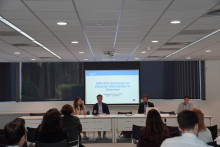
On 21 and 22 May 2025, the European Migration Network’s Return Experts Group (EMN REG) convened a two-day workshop, hosted by the Belgian Immigration Office and EMN Belgium. The event brought together 50 participants from EU Member States, EU agencies (including Frontex and the EU Asylum Agency), civil society organisations, and international organisations. The workshop focused on the development and implementation of effective alternatives to detention (ATDs) within the EU’s migration and return systems.
The European Commission has released a proposal for a regulation establishing a common system for the return of third-country nationals staying illegally in the Union. The new rules introduce, among other things, stronger obligations for returnees and the legal possibility of returning individuals who are illegally staying in the EU and have received a final return decision to a return hub in a third country. The European Parliament and the Council of the EU must now examine and negotiate the proposal.

In 2024, 1.261 detainees were forcibly returned from Belgian prisons, down from 1.428 in 2023 and 1.511 in 2022, according to the Immigration Office. The most represented nationalities among those returned were Albanians, Moroccans, and Algerians. This decline comes amid ongoing challenges linked to prison overcrowding and changes in early-release policies.
Main Theme: Return & Readmission
Keywords: third country national, illegally staying person, detainee, prison, forced return
The Benelux countries and Suriname have agreed to facilitate the return of individuals in irregular situations from the Benelux or Suriname to their country of origin. Additionally, they have decided to grant visa-free travel for diplomats and government officials between the Benelux countries and Suriname.
Main Theme: Return & Readmission
Keywords: Benelux, readmission agreement, Suriname

In a position paper published on 6 February 2024, the European Union Agency for Fundamental Rights (FRA) sets out the conditions that would have to be met for return hubs to respect fundamental rights and comply with EU law. This includes independent monitoring to reduce the risks of fundamental rights violations.
Main Theme: Return & Readmission
Keywords: return hub, fundamental rights
In 2024, Belgium saw a notable increase in the number of individuals choosing voluntary return to their country of origin. According to Fedasil’s press release from 3 February 2024, the total number of individuals opting for voluntary return rose by 11% compared to the previous year.
Main Theme: Return & Readmission
Keywords: voluntary return

In a press release published on 27 January 2025, the Secretary of State for Asylum and Migration announced that Belgian authorities could organise the forced return of Afghans to Istanbul and that partners on the ground could then take them to Afghanistan. This collaboration and the budgets for it still need to be finalised by a new government.
Main Theme: Return & Readmission
Keywords: forced return, Afghanistan

In its overview of national forced return monitoring systems across the EU in 2023, the EU Agency for Fundamental Rights (FRA) noted that only one EU Member State did not monitor its national forced return operations in 2023. It also highlighted persistent challenges that affect the transparency and effectiveness of monitoring operations.
Main Theme: Return & Readmission
Keywords: forced return, monitoring
In a recent judgment, the Court of Justice of the European Union found that an administrative authority which rejects an application for a residence permit based on national law and, consequently, finds that the third-country national concerned is staying illegally on the territory of the Member State in question, must ensure compliance with the principle of non-refoulement, by reviewing, in the light of that principle, the return decision previously adopted against that national in the context of a procedure for international protection.
Main Theme: Return & Readmission
Keywords: illegally staying person, return decision, non-refoulement, effective remedy
A few days after 17 European countries called on the European Commission to submit a new legislative proposal for more effective returns, Justice and Home Affairs Ministers discussed the issue of return during a working lunch in Luxembourg. They tasked experts with starting to explore innovative ideas related to returns.
Main Theme: Return & Readmission
Keywords: effective return, irregularly staying third-country national, rejected asylum seekers
In a non-paper, seventeen European countries called on the European Commission to submit a new proposal for more effective returns. The letter emphasises the need for a stricter EU return system with clearer obligations for cooperation from the returnees and less interpretation by the European Court of Justice.
Main Theme: Return & Readmission
Keywords: effective return

On 2 May 2024, the Chamber of Representatives adopted in plenary session the draft law for a proactive return policy. This law inter alia introduces the obligation for the foreigner to cooperate in the return process and it expands the pool of return escorts. The law also enshrines the principle according to which minor children aren't retained in closed centres.
Main Theme: Return & Readmission
Keywords: proactive return policy
The Council of Ministers approves the public procurement for new closed centers in Jabbeke and Jumet

On 26 April 2024, the Council of Ministers approved, upon proposal by the Secretary of State for Asylum and Migration Nicole de Moor and the Secretary of State in charge of the Buildings Administration Mathieu Michel, the public procurement for new closed centers in Jabbeke and Jumet.
Main Theme: Return & Readmission
Keywords: closed centre, forced return, State Secretary for Asylum Policy and Migration

A large delegation from the federal government, accompanied by senior police officers and senior administration officials, is leading a mission to Morocco. The fight against illegal immigration and the return policy are among the priority issues discussed with the Moroccan authorities.
Main Theme: Return & Readmission
Keywords: irregularly staying third-country national, Morocco, prison, identification

On a proposal from Interior Minister Annelies Verlinden, the Council of Ministers approved a preliminary draft law defining the powers that members of the European Border and Coast Guard would have on national territory during official missions.
Main Theme: Return & Readmission
Keywords: European Border and Coast Guard, Frontex, border control, forced return, escort

The Expert Conference on Return and Reintegration, jointly organised by Belgium’s Federal Agency for the Reception of Asylum Seekers (Fedasil), the International Centre for Migration Policy Development (ICMPD), the European Border and Coast Guard Agency (Frontex), and the Migration Policy institute Europe (MPI-E) marked a significant moment during the Belgian Presidency of the Council of the EU.
Main Theme: Return & Readmission
Keywords: Belgian Presidency, sustainable return, reintegration

The Secretary of State for Asylum and Migration announced today that a new software was in the process of being developed with the digital product studio "In the pocket" to better manage information relating to the stay of third-country nationals in closed centres.
Main Theme: Return & Readmission
Keywords: closed centre, digitalisation

During a visit to the prison in Beveren, the Secretary of State for Asylum and Migration said that more illegally staying detainees are being sent back directly from prisons, through the work of the return counsellors in the detention facilities.
Main Theme: Return & Readmission
Keywords: return counselling, prison, detention, illegally staying person
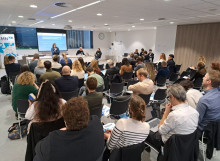
The Return Expert Group (REG) within the EMN conducted a successful workshop dedicated to advancing multistakeholder governance towards case resolution of undocumented migrants. Facilitated by EMN Belgium and the Belgian Federal Agency for the Reception of Asylum Seekers (Fedasil), this event focused on fostering connections between national authorities, local administrations and civil society organisations (CSOs).
Main Theme: Return & Readmission
Keywords: undocumented migrants, case resolution, multistakeholder governance

In a press release published today, Doctors of the World declared that it opposes a new article of the draft law presented by Nicole de Moor, providing for the possibility of carrying out medical examinations under constraint to facilitate the forced return of third-country nationals. Doctors of the World says this measure risks further complicating access to health care for these particularly vulnerable people.
Main Theme: Return & Readmission
Keywords: proactive return policy, medical examination, constraint

Nicole de Moor presented today a draft law which aims, in accordance with the federal government agreement, to enshrine in law a proactive return policy. The draft law inter alia provides for the obligation to cooperate in the return procedure and for the intensive individual follow up of third-country nationals who have received an order to leave the territory.

After the terrorist attack perpetrated by an illegally staying failed asylum seeker in the centre of Brussels on 16 October, various policymakers plead for better follow-up of failed asylum seekers and stricter enforcement of orders to leave the territory.