On 9 April 2026, the European Court of Human Rights delivered its judgment in M.V. and Others v. Belgium and held that Belgium had violated several provisions of the European Convention on Human Rights in relation to the reception conditions of four applicants for international protection.
Hoofdthema: Reception
Trefwoorden: European Court of Human Rights, Belgium, violation, European Convention on Human Rights, inhuman and degrading treatment, right to a fair hearing
The Belgian Council of State has suspended a ministerial instruction that systematically limited material assistance to international protection applicants who had already obtained protection in another EU Member State. The court ruled that the instruction exposed these individuals to the risk of severe hardship and potential homelessness. It also noted that, due to its regulatory character, the instruction should have been submitted for review by the Council of State’s Legislation Section.
Hoofdthema: Reception
Trefwoorden: Council of State, suspension, instruction, limitation, material reception condition
Belgium plans to progressively return several defence sites used for the reception of applicants for international protection to military use as part of a broader plan to expand defence infrastructure towards 2040. The measure concerns around 4.000 reception places located on military premises across the country. Authorities state that the reduction in capacity can be absorbed within the existing reception network. The transition will take place gradually, with closures scheduled at different times depending on the site.
Hoofdthema: Reception
Trefwoorden: reception place, reception capacity, defence, military site

The Netherlands has decided to resume Dublin transfers of single, non-vulnerable male asylum seekers to Belgium, following a period in which such transfers were suspended after a Dutch court ruling. In April 2025, the District Court of The Hague, sitting in Groningen, found that single male asylum seekers risked being deprived of adequate reception conditions in Belgium, which could expose them to inhumane or degrading treatment. The ruling led to a halt in transfers under the EU Dublin system.
Hoofdthema: Reception, International Protection
Trefwoorden: Dublin Regulation, Dublin transfer, Belgium, reception condition
Myria, the Federal Migration Centre, has advised against a draft law proposing to remove the legal possibility of activating a mandatory distribution plan for reception places in times of crisis. The plan allows the federal government to require municipalities to provide local reception initiatives according to objective allocation criteria. Myria stresses that this mechanism is important to safeguard human dignity and the right to reception, particularly during periods of structural shortages.
Hoofdthema: Reception
Trefwoorden: reception place, distribution plan
CIRÉ, together with partner organisations, has lodged an urgent appeal at the Council of State challenging a ministerial instruction that continues to exclude asylum seekers who have already been granted protection in another EU member state from reception facilities. The move follows a recent temporary suspension of the measure by the Constitutional Court. CIRÉ argues the instruction undermines judicial authority and the rule of law.
Hoofdthema: Reception
Trefwoorden: limitation, material reception condition, appeal procedure, Council of State

The Belgian Constitutional Court has temporarily suspended legislative measures introduced in 2025 that tightened rules on material reception conditions for asylum seekers and family reunification for beneficiaries of subsidiary protection. The suspensions concern two separate laws, and the Court has referred several preliminary questions to the Court of Justice of the European Union (CJEU) to clarify their compatibility with EU law.
Fedasil has released its management plan for 2025–2030. Approved in December 2025 and submitted by Director General Pieter Spinnewijn to the Minister for Asylum and Migration, the plan sets out the Agency’s priorities, including restoring the core functioning of the reception system, strengthening its capacity to respond to fluctuations in the number of applicants to be accommodated, and improving the quality, resilience, and effectiveness of services.
Hoofdthema: Reception
Trefwoorden: Fedasil, management plan, reception policy
In a judgment delivered in Case C-184/24 (Sidi Bouzid), the Court of Justice of the European Union has clarified the limits of sanctions that may be imposed on applicants for international protection who refuse to be transferred to another accommodation centre. The Court found that such a refusal cannot justify the withdrawal of all material reception conditions. While Member States may impose sanctions for serious breaches of reception rules, these must remain proportionate and respect the applicant’s dignity.
Hoofdthema: Reception
Trefwoorden: reception centre, transfer, refusal, sanction, material reception condition, withdrawal
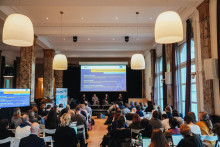
Op 15 en 16 december 2025 organiseerde EMN België een conferentie in Brussel die betrokken actoren uit België, EMN leden en waarnemerslanden, evenals Europese en internationale organisaties samenbracht. Het evenement bood een forum om alternatieve vormen van opvang en begeleiding voor verzoekers om internationale bescherming te onderzoeken vanuit juridisch, beleidsmatig en operationeel perspectief, en om na te gaan hoe deze zijn ingebed in bredere opvangsystemen.
Hoofdthema: Opvang
Trefwoorden: materiële opvang, opvangmodaliteit, accomodatie, community-based benadering, financiële toelage
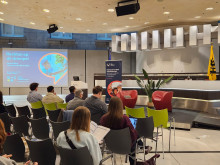
Op 20 november 2025 woonde EMN België de lancering bij van het jaarverslag “Rechten op de drempel” van de Vlaamse Kinderrechtencommissaris, naar aanleiding van de Internationale Dag van de Rechten van het Kind. Het verslag belicht aanhoudende uitdagingen die buitenlandse kinderen en jongeren in opvangcentra treffen, waaronder verschillen in leefomstandigheden, veiligheid, hygiëne en toegang tot basisvoorzieningen.
Hoofdthema: Kwetsbare groepen, Opvang
Trefwoorden: kind, verzoeker om internationale bescherming, opvangcentrum, minimumnormen
On 13 November 2025, several civil society organisations held a silent protest outside the Palais de Justice in Brussels to draw attention to the shortage of reception places for third-country nationals. Participants, including advocates, volunteers, and citizens, brought sleeping bags to symbolise people forced to sleep outdoors. The demonstration called for urgent measures to ensure that all individuals entitled to accommodation can access it.
Hoofdthema: Reception
Trefwoorden: reception crisis, reception capacity, reception place, shortage
On 30 September 2025, seven organisations, including humanitarian groups, published the fifth edition of their Belgian report on the country’s non-reception policy and its effects on asylum seekers. The report provides data on reduced access to accommodation and essential services during the first half of 2025, following policy changes introduced by the coalition government formed in January. It documents impacts on housing, healthcare, mental health, and legal support for people seeking international protection.
Hoofdthema: Reception
Trefwoorden: reception crisis, reception capacity

The Committee of Ministers of the Council of Europe examined the execution of the European Court of Human Rights judgment in Camara v. Belgium. The case highlighted a systemic failure to enforce judicial decisions ordering the State to provide accommodation and material support to asylum-seekers. While some progress has been made in freeing up reception places and improving operational support, concerns persist over reductions in capacity and the risk to the rule of law. The Committee urged the Belgian authorities to adopt sustainable measures and provide detailed information on enforcement.
Hoofdthema: Reception
Trefwoorden: reception crisis, Camara, reception place, rule of law, reception network
A European pilot project is underway to improve access to sustainable housing for beneficiaries of international protection and beneficiaries of temporary protection. Running from November 2024 to October 2027, PATHS brings together IOM, Orbit and Fedasil in Belgium, with partners in France and Greece. The initiative focuses on preventing homelessness through housing platforms, stronger intermediary organisations and greater engagement with property owners.
Hoofdthema: Reception
Trefwoorden: housing shortage, suitable housing, beneficiary of international protection, beneficiary of temporary protection
On 23 July, Belgium officially published two new laws aimed at reducing the burden on international protection procedures and limiting access to reception for certain applicants. In particular, these laws redefine which applications are considered subsequent by including those who have already received protection or a final decision in another EU country, and they limit access to reception facilities and material assistance for this group. The laws reflect the government’s intention to streamline asylum processing and manage reception capacity effectively.
Hoofdthema: Reception, International Protection
Trefwoorden: Aliens Act, subsequent application, Reception Act, material assistance, material reception condition
The Dutch Council of State has ruled that single male asylum seekers may no longer be transferred to Belgium under the Dublin Regulation. The judgment cites systemic failures in Belgium’s reception and legal protection for this group, exposing them to a real risk of inhuman treatment. These individuals must now remain in the Netherlands while their asylum claims are processed.
Hoofdthema: Reception, International Protection
Trefwoorden: Dublin Regulation, Dublin transfer, shortage, reception place, inhuman treatment
Fedasil heeft een verdere vermindering aangekondigd van het aantal opvangplaatsen voor niet-begeleide minderjarige vreemdelingen (NBMV). Tegen 1 september 2025 zullen 279 plaatsen uit het netwerk worden gehaald. Deze maatregel, die in april werd goedgekeurd, is een reactie op de aanhoudende daling van het aantal aankomsten sinds 2023. Het merendeel van de betrokken plaatsen zal worden omgevormd tot generieke opvangplaatsen.
Hoofdthema: Opvang
Trefwoorden: opvangcapaciteit, Niet-begeleide minderjarigen
Op 17 mei, de Internationale Dag tegen Homofobie, Bifobie en Transfobie (IDAHOBIT), heeft de organisatie Prisme een reeks aanbevelingen bekendgemaakt die de uitdagingen benadrukken waarmee LGBTQIA+ personen die om internationale bescherming verzoeken in België worden geconfronteerd. Deze bevindingen wijzen op verschillende tekortkomingen in het opvang- en asielsysteem en schetsen maatregelen om inclusievere procedures te waarborgen.
Hoofdthema: Kwetsbare groepen, Opvang, Internationale bescherming
Trefwoorden: LGBTQIA+, verzoeker om internationale bescherming, opvangcentra, speciale behoeften, opleiding, inclusie
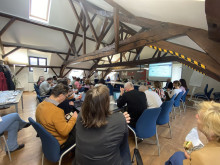
Tijdens een lunch-and-learn sessie ontmoette het EMN België-team ongeveer 30 medewerkers van Fedasil om het werk van het Europese Migratienetwerk voor te stellen, actieve deelname aan het EMN netwerk aan te moedigen en updates te geven over recente en aankomende publicaties en activiteiten.
Hoofdthema: Opvang
In a judgment issued on 11 April 2025, the District Court of The Hague, sitting in Groningen, found that single, non-vulnerable male asylum seekers face a real risk of being deprived of adequate reception facilities in Belgium, which could lead to inhumane or degrading treatment. This ruling follows previous decisions by Dutch judges who determined that Dublin transfers to Belgium could not be carried out due to insufficient guarantees of proper accommodation.
Hoofdthema: Reception
Trefwoorden: Dublin Regulation, reception condition, reception crisis, inhuman or degrading treatment, Article 3 ECHR
Last year, Fedasil’s mobile and multilingual Reach Out team provided information to 1.702 migrants in precarious situations in Brussels and Flanders. Representing more than 75 nationalities, these individuals received counselling on a wide range of topics, from international protection and reception to healthcare, employment, and voluntary return.
Hoofdthema: Reception
Trefwoorden: migrant, precarious situation, Reach Out Team, counselling
In een nieuw rapport dringt Amnesty International er bij de Belgische regering op aan om ervoor te zorgen dat alle asielzoekers adequate huisvesting en toegang tot gezondheidszorg krijgen, inclusief gespecialiseerde psychologische ondersteuning, ongeacht hun huisvestingssituatie. De Belgische autoriteiten worden ook opgeroepen om het "spreidingsplan" uit de nationale wetgeving te activeren en noodplannen te implementeren om schommelingen in het aantal asielaanvragen op te vangen.
Hoofdthema: Opvang
Trefwoorden: opvangcrisis, opvangcapaciteit, huisvesting, toegang tot gezondheidszorg

On 25 March 2025, the Belgian Contact Point to the European Migration Network (EMN) participated in a study morning dedicated to the presentation of a new tool: "The Reception Centre as Seen by Children." The new tool provides practical methods for capturing children's experiences, enabling professionals to better understand their needs and enhance the quality of care in these centres.
Hoofdthema: Reception
Trefwoorden: reception centre, child, child-friendly environment
The Minister for Asylum and Migration has decided to discontinue the Impuls Fund, which had been established to provide additional support to local authorities in covering the extra costs associated with opening new Local Reception Initiatives. The Minister will now move towards a more collective approach to reception, with existing Local Reception Initiatives being gradually phased out.