Nicole de Moor presents new migration code to replace and clarify outdated legislation
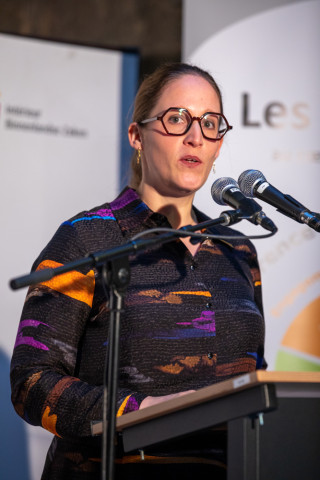
Today the Secretary of State for Asylum and Migration, in the presence of all relevant asylum and immigration services, presented the new migration code. This new code aims to clarify procedures, simplify the texts and better fight against abuse.
The Law of 15 December 1980 on access to the territory, residence, settlement and removal of foreign nationals and the Law of 12 January 2007 on the reception of asylum seekers and other categories of foreign nationals have been adapted so many times over the past decades that this legal framework has become unreadable and unworkable.
In order to clarify the outdated legislation, the Council of Ministers approved on 4 February 2022 a concept note comprising the overall structure for a new migration code. 3 years of work were necessary to complete the drafting of this code. The involvement of hundreds of employees within the administration, the academic world, civil society, independent bodies, the Fragomen law office and the cabinet of the Secretary of State for Asylum and Migration was crucial to achieving this result.
The new migration code consists of 16 parts and arises from 19 lines of action, including (i) a clear and readable code, (ii) special attention to people in vulnerable situations, (iii) simple and efficient procedures; (iii) accessible, transparent and clear texts, (iv) proper decision-making within a reasonable period of time, (v) effective legal remedy, (vi) clear appeal procedures, (vii) transparent and dynamic reception system, (viii) effective return procedures etc.
In addition to increased certainty and accessibility, the new migration code also aims to ensure a better fight against abuse. For example, access to reception will be limited when parents resubmit an application for international protection in the child's name and when the parent has already received a negative decision. As another example, someone will, from now on, only be allowed to act as a guarantor for 1 student.
The new migration code must still obtain the approval of the entire government, before being sent to the Council of State, and then to Parliament to be voted on. Five months before the elections, this appears to be a challenge.
For further details, please read (in Dutch) the press release from the Secretary of State on Asylum and Migration, which also contains an explanatory brochure.