Publicatie datum: 01 maart 2025
Dit rapport biedt een diagnose van de sterke en zwakke punten van het Vlaamse kader voor het beheer van economische migratie en aanbevelingen voor mogelijke hervormingsgebieden. Het rapport presenteert ook enkele van de eerste empirische analyses en inzichten met betrekking tot het behoud en aantrekken van economische migranten in Vlaanderen.
Lees meer
Hoofdthema: Integratie, Economische migratie
Publicatietype: Rapport
Trefwoorden: aantrekking van talent, behoud van talent, geschoolde werknemer, activeringsbeleid, gecombineerde vergunning, gedetacheerde werknemer, knelpuntberoep
Publicatie datum: 20 juni 2024
Deze ad hoc vraag bekijkt de mogelijkheid voor derdelanders om reeds te starten met werken, in afwachting van de afgifte van hun gecombineerde vergunning (single permit).
Lees meer
Hoofdthema: Economische migratie
Publicatietype: Ad Hoc Vragen
Trefwoorden: gecombineerde vergunning, verwerkingstijd, toegang tot werk, toegang tot de arbeidsmarkt
Publicatie datum: 30 juni 2023
FAIRWORK Belgium's 2022 annual report analyses inter alia the complex system of single permits. Given current practices, this system "benefits dishonest employers" according to the organisation.
Lees meer
Hoofdthema: Economic migration
Publicatietype: Report
Trefwoorden: migrant workers, single permit, undocumented migrants
Publicatie datum:
Flanders granted around 21.460 work permits to non-EU nationals in 2025, the highest level in recent years. Seasonal work and medium- to high-skilled positions accounted for a large share of the permits. New rules introduced in January 2026 give priority to domestic and EU labour before non-EU recruitment. Stakeholders, including employer organisations and political parties, have expressed differing perspectives on these developments.
Lees meer
Hoofdthema: Data & Statistics, Economic migration
Trefwoorden: Flanders, work permit, single permit, third-country nationals, seasonal work, shortage occupation
Publicatie datum:
The Walloon administration announces that new regulations come into force on 1 September 2024 regarding salaried economic migration for foreign workers in Wallonia. The system remains largely unchanged in its principles, still falling within the broader framework of the Single Permit for work and residence authorization for foreign workers. However, a new decree of the Walloon Government organizes new features and modifications.
Lees meer
Hoofdthema: Economic migration
Trefwoorden: foreign workers, employer, single permit, EU blue card
Publicatie datum:
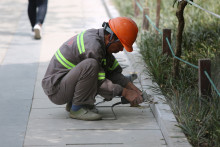
Through its campaign “So what, we continue the exploitation?”, the CIRÉ underlines that undocumented workers who informally fill the labour needs, are at risk of being exploited. It pleads to give them access to legal work, particularly through the single permit procedure.
Lees meer
Hoofdthema: Cross-sectional
Trefwoorden: undocumented migrants, undocumented worker, single permit, labour shortages, labour exploitation

Publicatie datum:
De Minister-President van Wallonië, Elio Di Rupo, heeft een brief geschreven aan Premier Alexander De Croo om te pleiten voor de regularisatie van immigranten zonder geldige verblijfsstatus die geschikt zijn om te werken in sectoren waar een tekort aan arbeidskrachten heerst, zoals gemeld door L'Echo.
Lees meer
Hoofdthema: Economische migratie
Trefwoorden: tekort aan arbeidskrachten, knelpuntberoep, regularisatie, single permit
Publicatie datum:
Myria has published the fourth thematic section of its 2023 annual report. This section entitled "Economic migration, free movement en students" reports that 8.098 long-stay visas were granted for professional reasons to third-country nationals in 2022 (46% more than in 2021) and 19.721 single permits were issued to third-country nationals in 2022 (75% more than in 2021).
Lees meer
Hoofdthema: Economic migration
Trefwoorden: long-stay visa, single permit, posted worker, student

Publicatie datum:
In the House of Representatives today, Nicole de Moor responded to numerous questions regarding possible fraudulent cases of applications for single permits. All involved actors, including the Flemish Region, the Federal Public Service Foreign Affairs and the Immigration Office, are now part of a working group to foster information exchange and avoid future abuses.